

What exactly does airtightness mean?
Airtightness describes how well the building envelope prevents an uncontrolled exchange of air between the interior and the exterior. It ensures that heated air remains within the building and that no cold outside air penetrates through joints or leaks.
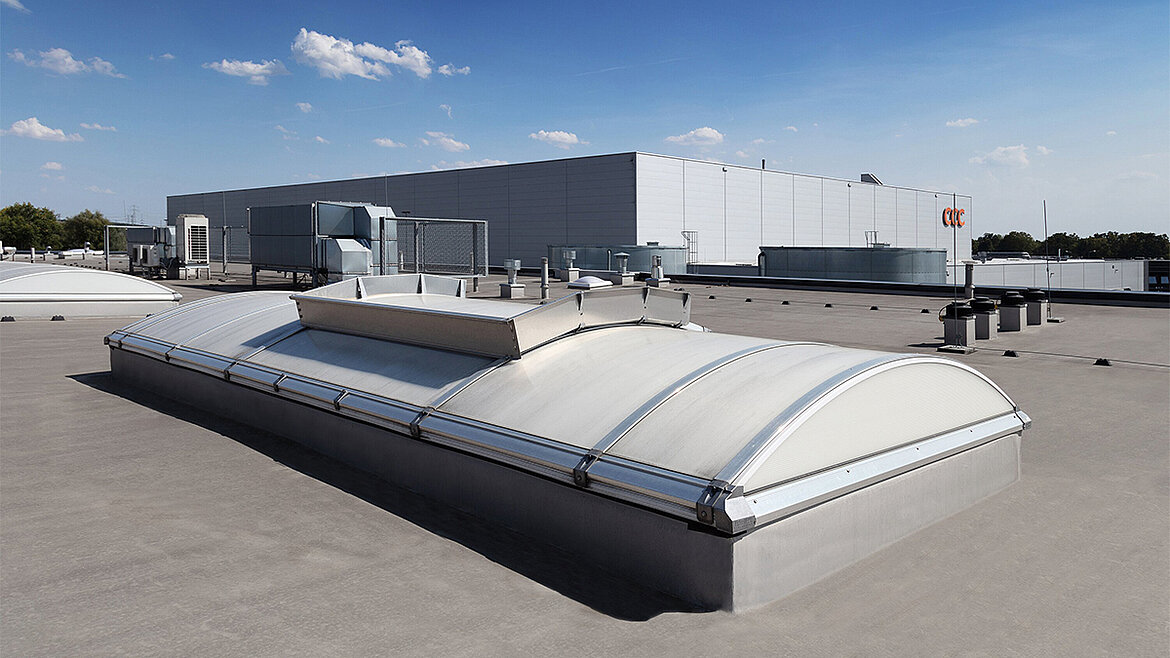
Airtightness describes how well the building envelope prevents an uncontrolled exchange of air between the interior and the exterior. It ensures that heated air remains within the building and that no cold outside air penetrates through joints or leaks.
Airtightness is often confused with thermal insulation. They fulfil distinct functions:
- Thermal insulation reduces the heat flow through the building envelope, i.e. losses through thermal conduction.
- Airtightness reduces the mass flow through the building envelope, i.e. losses through air exchange.
Only the interplay of both factors enables a truly energy-efficient building envelope. Therefore, alongside the U-value, the airtightness of continuous rooflights and other roof openings should be factored into the planning process.
What are the consequences of leaky buildings?
An airtight building envelope not only reduces energy consumption but also improves an occupant comfort, value retention, and cost-effectiveness. Conversely, even minor leaks can have a noticeable impact, particularly in large industrial and commercial buildings.
The most significant consequence is the loss of heating or cooling energy. If heated indoor air escapes to the outside in an uncontrolled manner, the newly entering outdoor air must constantly be heated to the desired room temperature to compensate. This increases energy demand and, consequently, operating costs.
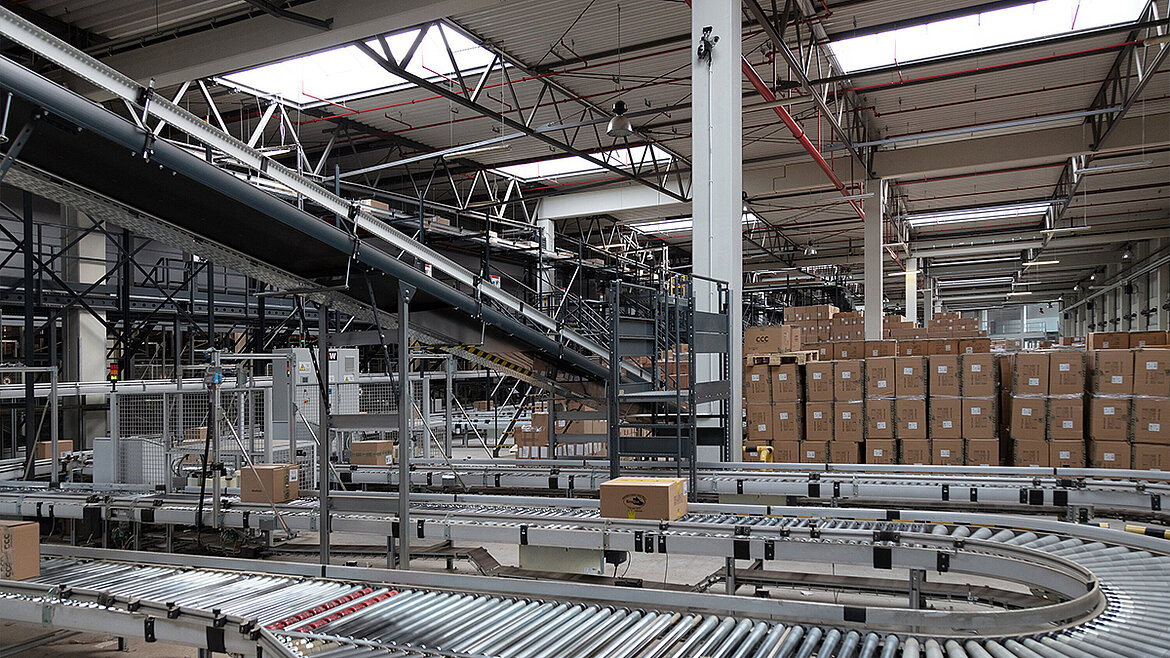
Furthermore, leaks can cause additional problems:
- higher heating and cooling costs
- draughts and reduced thermal comfort
- moisture ingress into the building structure
- increased risk of mould and structural damage
- reduced efficiency of ventilation systems
- higher CO2 emissions
Particularly in industrial and commercial buildings with large internal volumes, these effects quickly add up. An elevated level of airtightness therefore not only contributes to meeting energy requirements but also improves the long-term cost-effectiveness and sustainability of a building.
What roles do continuous rooflights play in the airtightness of industrial buildings?
If you want to operate industrial and commercial buildings cost-effectively, it is almost impossible to avoid continuous rooflights for natural daylighting, ventilation, and smoke and heat exhaust ventilation (SHEV). At the same time, they represent large openings in the building envelope and can lead to significant energy losses if the wrong product is selected or if installation is poor.
This is particularly relevant because regulations and industry bodies require sufficient daylighting areas on industrial roofs. As a rule of thumb, at least 10 per cent of the roof area should be allocated to daylighting elements. Continuous rooflights thus often make up a substantial portion of the building envelope and incorporate ventilation or SHEV flaps.
The larger the opening in the building envelope, the more important its airtightness becomes. Therefore, the energy performance of a continuous rooflight should not be assessed solely based on its U-value. Only the combination of thermal insulation, daylight utilisation, and high airtightness determines its ultimate contribution to the building’s energy efficiency.
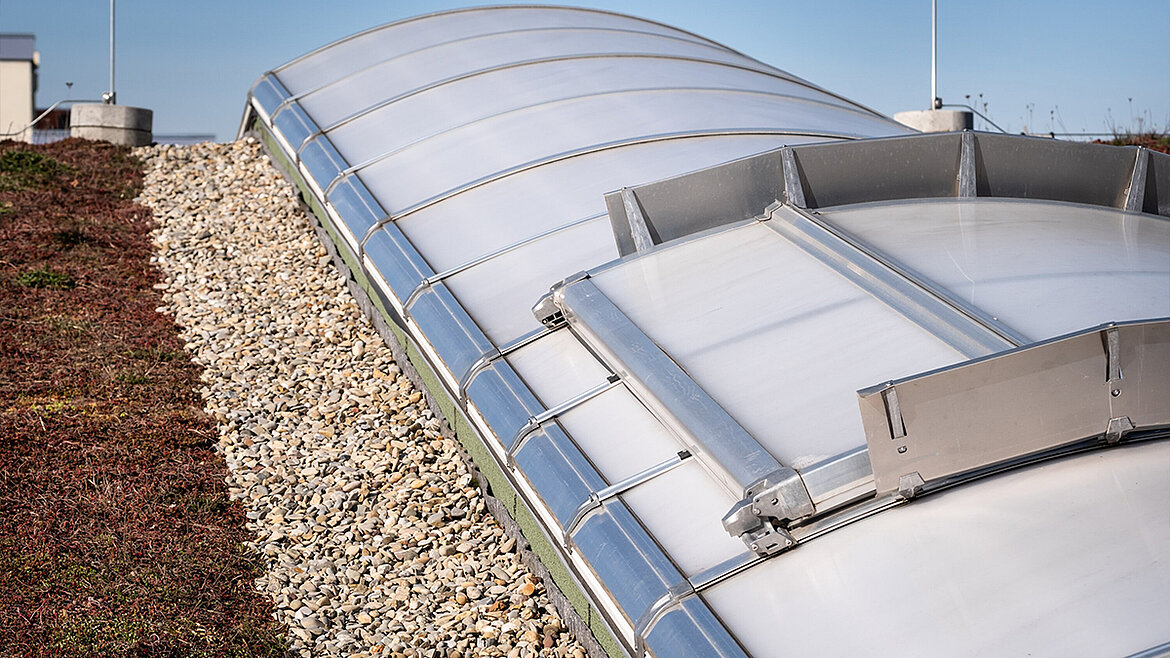
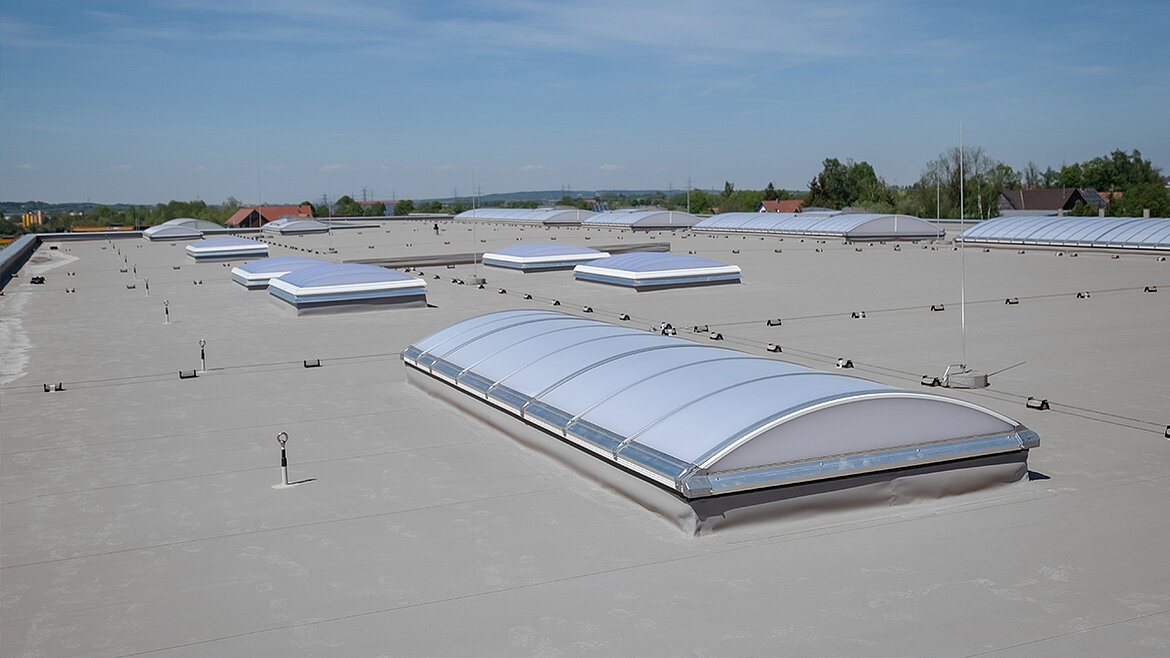
LAMILUX Continuous Rooflights
Energy-efficient, airtight, secure, and highly versatile: LAMILUX continuous rooflights combine daylight, natural ventilation, and SHEV in a single system. Find out more about the benefits and product variants.
Airtightness classes for continuous rooflights: What do they mean?
To make the airtightness of building components comparable, they are divided into different classes based on their measured air permeability. The better the class, the less air flows through the system at a defined test pressure, and the lower the energy losses will be.
It should be noted that the harmonised product standard EN 14963 for continuous rooflights did not originally include a classification for air permeability. The European Commission closed this gap with the Delegated Regulation (EU) 2019/1342, establishing binding performance classes A, B, and C for air permeability in the Office Journal of the European Union. In practice, however this regulation is unknown, which is why the airtightness classes for continuous rooflights are often not specified or are interpreted in diverse ways.
Therefore, the following classes are distinguished for continuous rooflights:
- Class A: extremely high airtightness, minimal energy losses from leaks
- Class B: good airtightness, moderate energy losses from leaks
- Class C: poor airtightness, minimum values for Class B not achieved, increased energy losses from leaks
For planners and building owners, these classes provide an objective basis for evaluating the energy performance of different systems. However, the prerequisite for this is that the airtightness has been evaluated in the first place.
What makes airtightness Class A so special?
This is precisely where an often-underestimated peculiarity of continuous rooflights lies: many systems have no independent proof of their airtightness. In practice, therefore, Class C is often applied as a blanket assumption. This does not necessarily mean that a continuous rooflight achieves the properties of Class C at the threshold to Class B, but often simply indicates that no test has been conducted.
This makes reliable testing and certification even more important. With the LAMILUX Continuous Rooflights B, LAMILUX is currently the only manufacturer to offer a continuous rooflight system with proven airtightness up to Class A in accordance with ETA 09/0347. For planners, this creates transparency, comparability, and the certainty of being able to reliably incorporate the continuous rooflight’s airtightness – using proven leakage values - into the building’s overall energy assessment.
Just how significant the differences between the individual airtightness classes really are becomes clear when looking at the resulting energy losses and operating costs.
Calculation example: How much does airtightness impact a building’s energy balance?
It makes sense that different airtightness classes affect energy consumption. What is surprising, however, is just how significant these differences can be in practice.
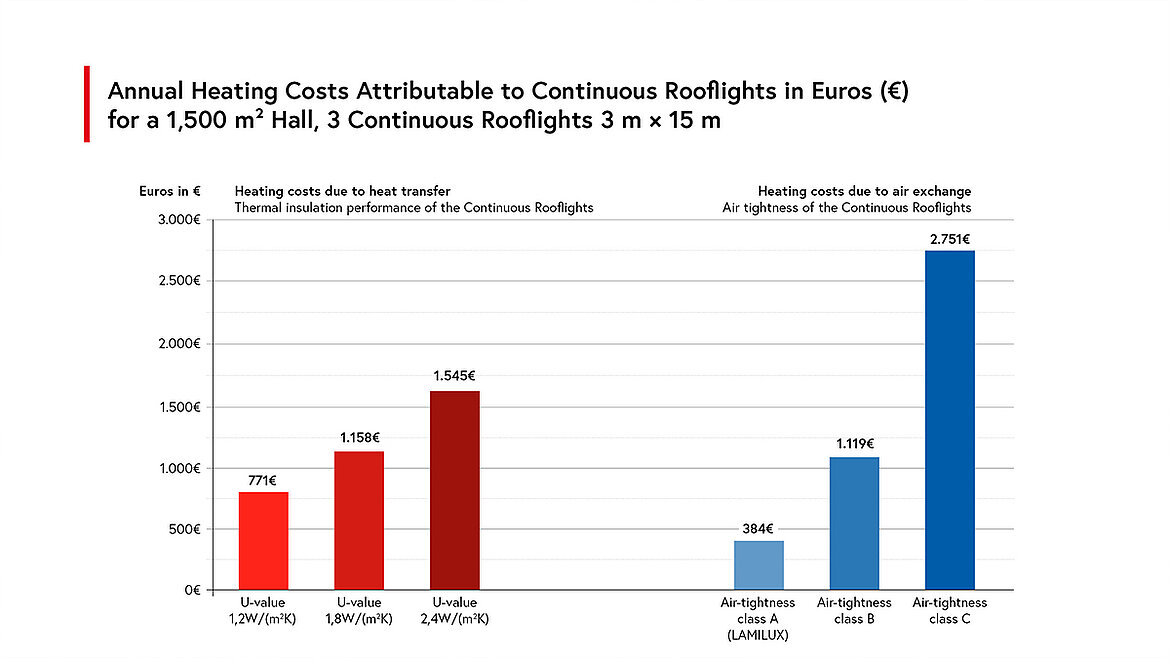
To investigate the impact of airtightness, LAMILUX examined a reference continuous rooflight measuring 3 x 15 metres, with polycarbonate glazing and two SHEV flaps (125/200), in a 1,500 m2 industrial building. The only variable: the airtightness of the continuous rooflight.
| Airtightness class | Annual energy loss | Annual heating costs* |
| Class A (LAMILUX) | 1,280 kWh | € 128 |
| Class B | 3,727 kWh | € 373 |
| Class C | 9,172 kWh | € 917 |
*a heating energy price of €0.10/kWh; pressure difference of 10 Pa; degree days 3,310 K*d/a with 60% heating utilisation
The results are clear: A Class C continuous rooflight causes air-related energy losses more than seven times higher than a Class A system. Therefore, the improved airtightness alone can save almost € 800 in annual heating costs for a single continuous rooflight.
However, airtightness is only one side of the coin. High-performance thermal insulation is equally important. If we consider the impact of the U-value, the following annual heating costs due to heat loss apply to the same reference continuous rooflight:
| U-value of the continuous rooflight | Annual heating costs* |
| 1.2 W/(m2K) | € 257 |
| 1.8 W/(m2K) | € 386 |
| 2.4 W/(m2K) | € 515 |
*a heating energy price of €0.10/kWh; pressure difference of 10 Pa; degree days 3,310 K*d/a with 60% heating utilisation
The comparison shows: An important level of airtightness can save even more on heating costs than a good U-value. In practice, however, both work together and are crucial factors for energy-efficient buildings. The greatest potential for savings, therefore, does not come from optimising a single parameter, but from the interplay of both factors.
For planners, it means that assessing continuous rooflights solely by their U-value falls short. Only the combination of excellent thermal insulation and proven airtightness up to Class A enables an energy-efficient building envelope and permanently low operating costs.
LAMILUX continuous rooflights: More than just energy-efficient
Incorporating the airtightness of a continuous rooflight right from the planning stage lays the foundation for energy-efficient and cost-effective building operation. After all, modern continuous rooflight influence not only energy consumption, but also the supply of daylight, the indoor climate, safety, and user comfort.
With the LAMILUX Continuous Rooflight B, LAMILUX is currently the only manufacturer to offer a continuous rooflight system with tested airtightness up to Class A in accordance with ETA 09/0347. This is complemented by thermally optimised designs, excellent U-values, and versions suitable for passive house.
Furthermore, LAMILUX continuous rooflights offer:
- maximum daylight utilisation
- natural ventilation
- integrable SHEV systems
- high resistance to driving rain and wind
- durable, low-maintenance designs
- solutions for new builds and refurbishments
This results in continuous rooflights that combine energy efficiency, comfort, and safety in a single solution, thereby making a valuable contribution to the cost-effectiveness of modern industrial and commercial buildings.
Quality saves costs in the long term
The airtightness of continuous rooflights has a direct impact on a building’s energy consumption, operating costs, and carbon footprint. Opting for high-quality systems, such as those from LAMILUX, with good thermal insulation and high airtightness right from the new build stage reduces heat loss, permanently lowers energy demand, and avoids unnecessary CO2 emissions. This has a positive effect on both the cost-effectiveness and the sustainability of the building.
At the same time, modernising existing rooflight systems is highly worthwhile. Older continuous rooflights often no longer meet today’s requirements for energy efficiency and airtightness. If the system has reached the end of its life cycle, refurbishment or replacement can significantly improve the energy balance, sustainably reduce energy consumption, and thereby also cut CO2 emissions.
Because, particularly when it comes to continuous rooflights, the investment is a one-off cost, whereas the savings in energy, operating costs, and emissions will pay off for decades to come.
Would you also like to benefit from outstanding airtightness? Then request a free consultation today!


