

Definition and Importance: What Is the Building Life Cycle?
The life cycle of a building describes all phases from planning and construction through use and maintenance to deconstruction and recycling. In the context of energy-efficient construction, the building life cycle is increasingly coming into focus because buildings worldwide account for a significant share of energy consumption and related CO₂ emissions.
To achieve climate targets, not only the operational phase of a building must be optimised for energy use, but also the upstream and downstream processes – from the extraction of building materials to disposal. Considering the entire life cycle of a building makes it possible to transparently assess the environmental impacts of a structure and exploit optimisation potential in all phases. An energy-efficient approach based on the life cycle is therefore a key strategy for systematically implementing ecological sustainability in construction.
The Phases of the Building Life Cycle
The life cycle of a building encompasses several successive phases, which are considered as part of a holistic life cycle analysis (LCA). Here are the six most important life cycle phases for sustainable construction:
1. Planning phase
2. Construction and build phase
3. Use and operation
4. Maintenance, modernisation and renovation phase
5. Repurposing and extended use
6. Deconstruction, recycling and disposal
This detailed breakdown enables a precise analysis of environmental impacts in each phase of a building’s life cycle.
Planning Phase in the Building Life Cycle
In the planning phase, the decisive course is set for the sustainability of a building – and therefore for its entire life cycle. What is planned and decided at this stage fundamentally influences resource consumption, energy efficiency and environmental impacts in all subsequent phases. The life cycle of a building thus does not begin with construction, but with well-founded, sustainable planning. Using life cycle assessment databases and Environmental Product Declarations (EPDs), architects and planners can already assess the environmental impacts of various materials and construction methods in this early phase and deliberately choose ecological alternatives.
This makes it possible to significantly reduce CO₂ emissions and minimise future renovation and operating costs. Certified skylights, such as those offered by LAMILUX, also make a valuable contribution here. Well-conceived planning thus lays the foundation for a future-proof, energy-efficient and economically sustainable building. Anyone taking a holistic view of the life cycle of a building begins right here – with planning that considers all phases of the building life cycle.
Construction phase as a major consumer of resources in the building life cycle
The construction phase represents a particularly resource-intensive stage in the life cycle of a building, as large quantities of construction materials are processed, long transport distances are covered and energy-intensive machinery is used. In particular, the production of cement, concrete and steel results in high CO₂ emissions, while the transport of building materials also consumes additional energy.
However, these impacts can be reduced through the use of modern construction methods. Prefabricated building components that can be installed directly on site without additional assembly work optimise material use and shorten construction times. In addition, digital methods such as Building Information Modelling (BIM) enable more efficient use of materials and minimise planning errors that would otherwise lead to unnecessary resource consumption.
Another important aspect is the use of regional, sustainable building materials. Especially for roofs, materials such as timber from sustainable forestry, recycled aluminium for roof structures or natural insulation materials like sheep’s wool, wood fibre or cellulose can provide sustainable alternatives. Modern skylights such as those from LAMILUX also help to reduce energy consumption during later operation by lowering the need for artificial lighting. Careful construction planning additionally contributes to waste reduction and increased overall efficiency.
Use and operation of the building in the life cycle
The use phase is the longest and most cost-intensive phase in the life cycle of a property. It begins as soon as the building has been completed and put into operation. During this period, the building is used, occupied or operated, which includes energy consumption as well as maintenance and modernisation.
Numerous operating costs arise during this phase, including heating and cooling costs, electricity consumption for lighting and technical equipment, water consumption, and maintenance costs for the building envelope, technical systems and interior spaces. The efficiency of these systems therefore has a major influence on the building’s overall ecological footprint. A poorly insulated or inefficiently operated building can thus generate high costs over the years and account for up to 80% of the CO₂ emissions across the building life cycle.
Maintenance and modernisation are also a central component of the use phase. Regular servicing helps to prevent major damage and extends the service life of the building. The use phase ends either with comprehensive refurbishment, a change of use – through a new function or different types of use – or with the deconstruction of the building.
Refurbishment as an important part of the building life cycle
The refurbishment phase is a key stage in the life cycle of a property, during which structural, technical and energy-related measures are implemented to extend the building’s service life, preserve its value or improve its use. This phase typically occurs after several decades of use, when initial signs of wear appear or new legal and energy requirements must be met.
Refurbishment makes a significant contribution to reducing the energy consumption and CO₂ emissions of existing buildings. In Germany for example, around 35% of total energy consumption is attributable to buildings, which is why their optimisation is a central component in achieving the climate targets by 2045. In addition, refurbishment improves living and usage quality and increases the long-term value of the property.
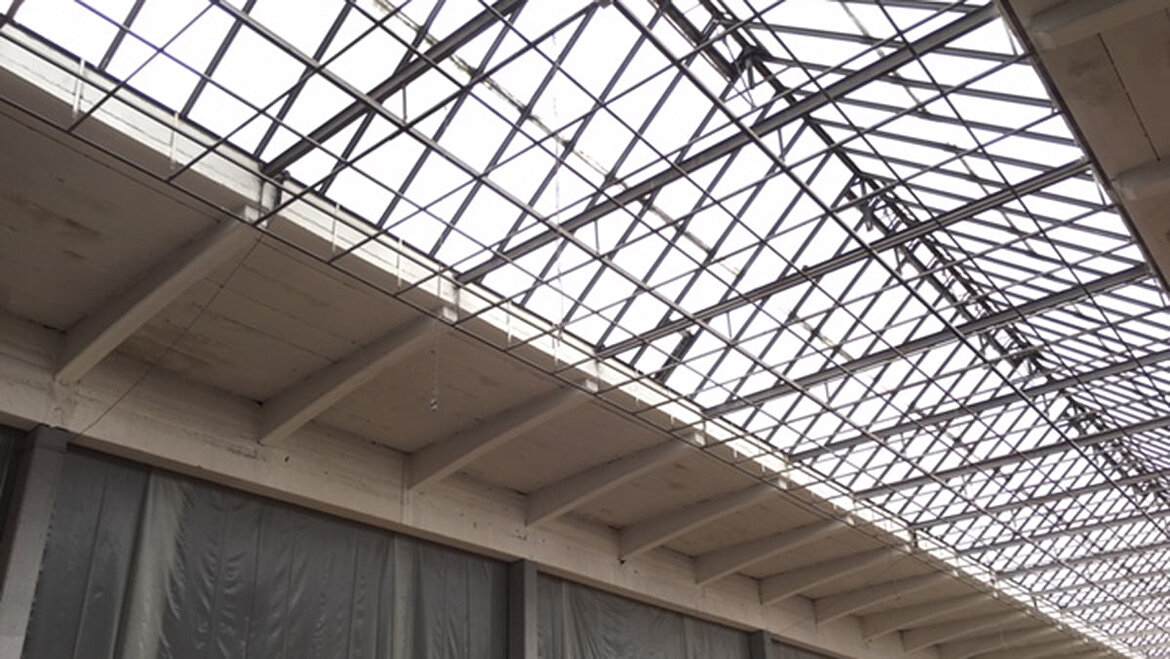
For this reason, roof refurbishment is also a particular focus, as it offers major savings potential through improved insulation and the use of daylight. LAMILUX provides intelligent, energy-efficient skylights that help to create a sustainable and durable building envelope. The refurbishment phase is therefore crucial for a building’s sustainability. It reduces energy consumption, extends the period of use and helps adapt buildings to modern standards. Investing in well-planned refurbishment can deliver long-term cost savings and significantly improve a building’s environmental performance.
Our skylights
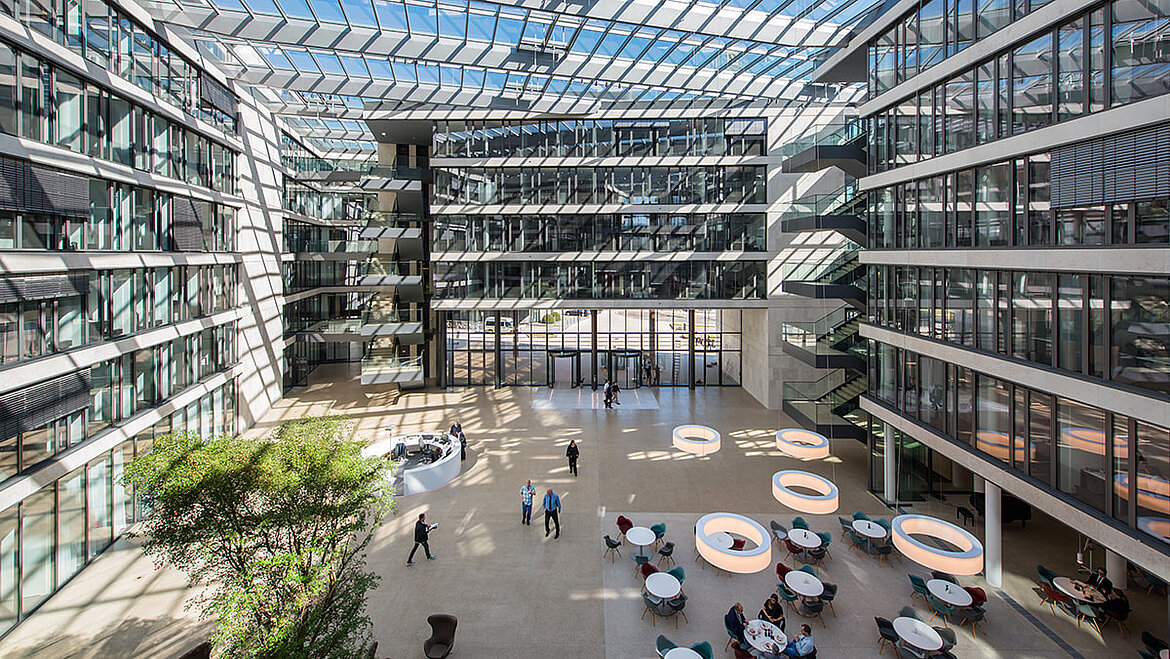
Whether skylights, glass roofs or continuous rooflights – LAMILUX offers a wide range of systems for your roof. With genuine Made-in-Germany quality, they provide long-lasting solutions for flat roofs, combined with aesthetic design.
Repurposing buildings for a longer life cycle
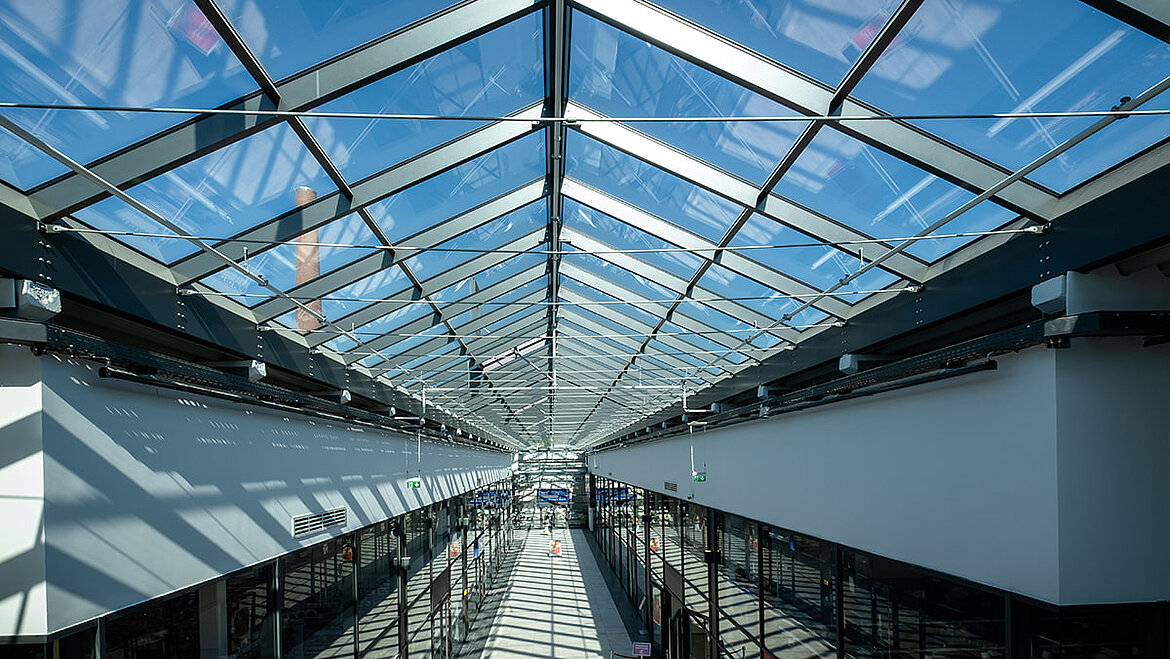
In the life cycle of a building, continued use always follows the refurbishment phase, as conversion or extended use is often only possible after comprehensive repair or modernisation measures. Instead of demolishing buildings completely and constructing new ones, refurbishment followed by repurposing allows the existing building fabric to remain in use. This conserves raw materials, reduces waste and lowers CO₂ emissions by up to 50–75% compared with new construction. As a result, industrial buildings can be transformed into new living spaces or warehouses into modern, energy-efficient office buildings. Flexible and forward-looking planning therefore makes it possible to adapt buildings to changing usage requirements.
Deconstruction, Recycling and Disposal at the End of the Life Cycle
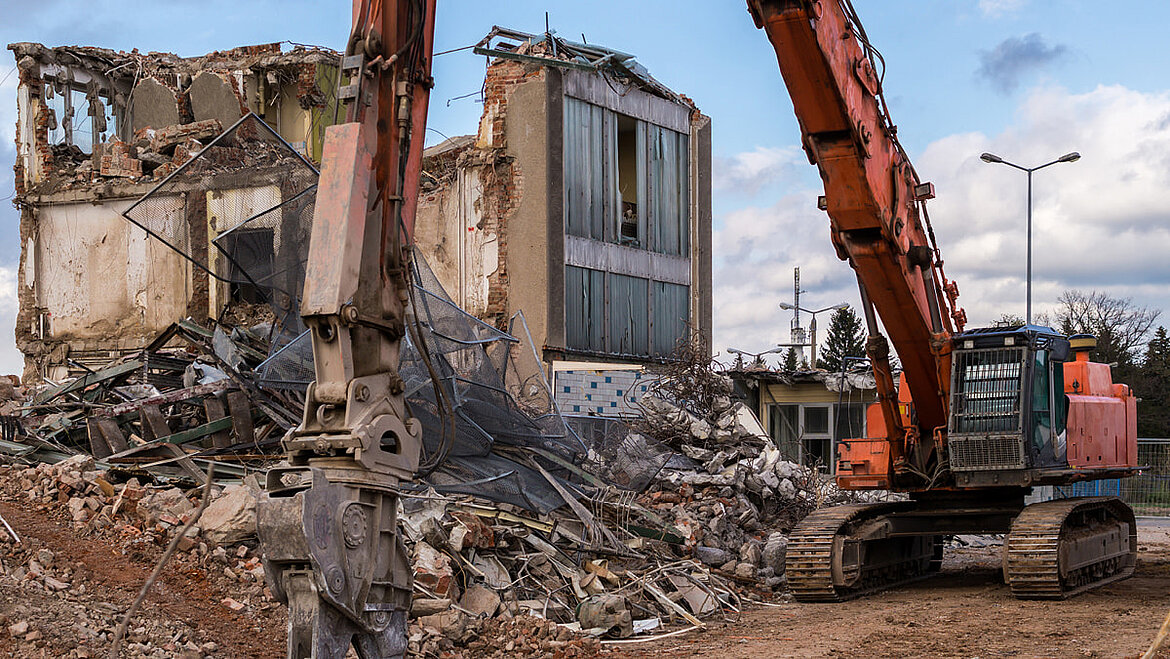
At the end of a building’s life span comes deconstruction. Through careful planning and product selection, materials can be reused or recycled, reducing resource consumption and environmental impact. Documenting the materials used – for example through a building resource passport – simplifies this process. Such documentation was introduced by the German Sustainable Building Council (DGNB) and serves as a source of information for all phases of a building’s life cycle. It also helps to establish a circular economy in construction. Materials that cannot be reused should be disposed of in an environmentally responsible manner.
Life cycle costs – indicators of economic efficiency and resource conservation
The life cycle costs of a building comprise the total of all costs incurred over its entire service life, from planning and construction through use and maintenance to deconstruction and disposal. They are decisive for assessing the economic viability of a property. The term Life Cycle Costing (LCC) originated in the United States in the 1960s and was developed to enable long-term cost considerations in the construction and real estate industry. A life cycle cost analysis (LCCA) evaluates the economic sustainability of a building by taking into account not only acquisition costs, but also operating, maintenance and disposal costs.
Although a life cycle cost calculation can never provide an exact forecast – as future developments such as energy prices or maintenance requirements are difficult to predict – it still offers a valuable basis for decision-making. Sustainable materials and energy-efficient technologies may involve higher initial investment costs, but they often lead to lower operating costs and greater economic efficiency in the long term. Investments in energy-efficient systems, for example, frequently pay for themselves through reduced energy expenditure. A comprehensive analysis of a building’s life cycle therefore helps to make well-founded, forward-looking economic decisions and to design the property sustainably over its entire life cycle.


