

Significance and Opportunities of Rooftop Extensions
Expanding living space through rooftop extensions has become an efficient and sustainable solution for creating additional space in urban areas without further burdening scarce land resources. In most cases, one or more storeys are added to an existing building – depending on the building type, this can represent either a minor or a major architectural challenge.
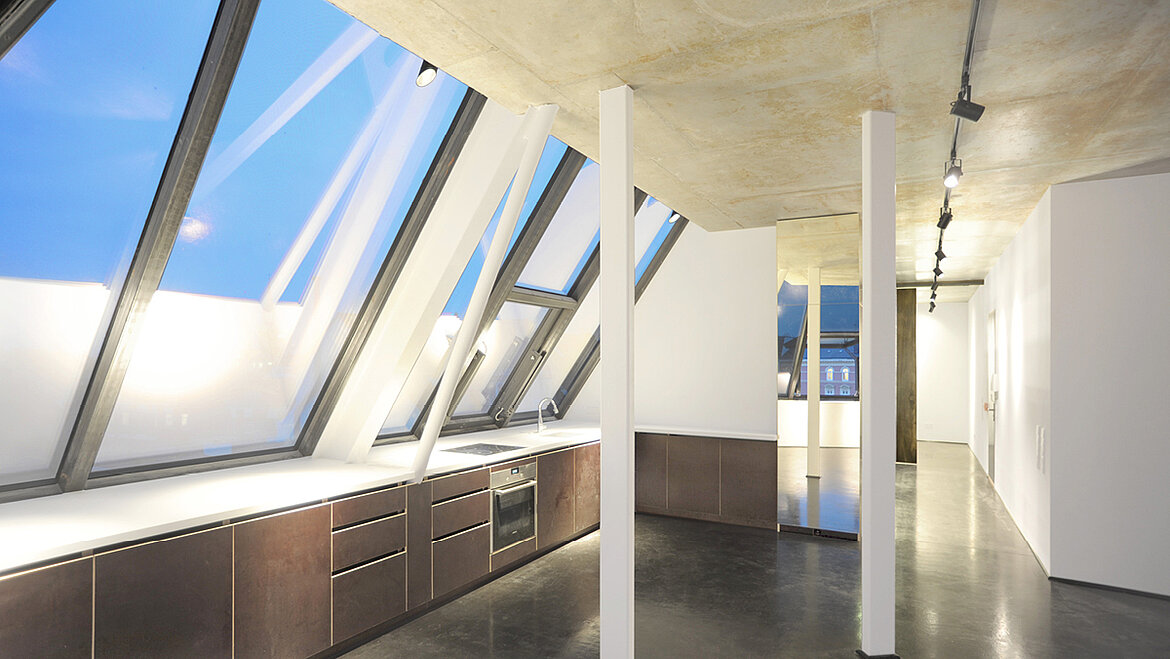
Johannes Vogelsanger, an architect based in Hamburg, highlights the uniqueness of this construction approach: “Adding one or even several storeys to an existing building is not a conventional conversion, but rather an architectural fine-tuning at lofty heights. Almost every project, every rooftop extension, is unique – a balancing act between structural requirements and vision, budget and building regulations. This can result in new spaces for living, working, hobbies or sports, or simply a stylish retreat from everyday life. In principle, almost anything can be extended – from residential or office buildings to disused bunkers or parking garages.”
The so-called “roof lifting” is a special form of rooftop extension. In this case, the existing roof structure is removed or hydraulically lifted to create additional living space beneath it. Instead of simply adding a new storey, the roof space is expanded by inserting new walls or floors.
Rooftop extensions enable entirely new spatial concepts that can be tailored to different lifestyles and needs. Open, light-filled areas, flexible usage zones and refined architectural accents create spaces that are both functional and aesthetically appealing. Highlights such as glazed roof surfaces and private terraces add a distinctive charm and enhance the overall living experience. In this context, Vogelsanger emphasizes: “Planning rooftop extensions opens up a wide range of design possibilities. Generous ceiling heights, flowing room sequences, unconventional floor plans and well-conceived daylight concepts using glass roofs in a variety of forms are just some of the qualities that define modern rooftop extensions.”
Structural and Economic Requirements for Rooftop Extensions
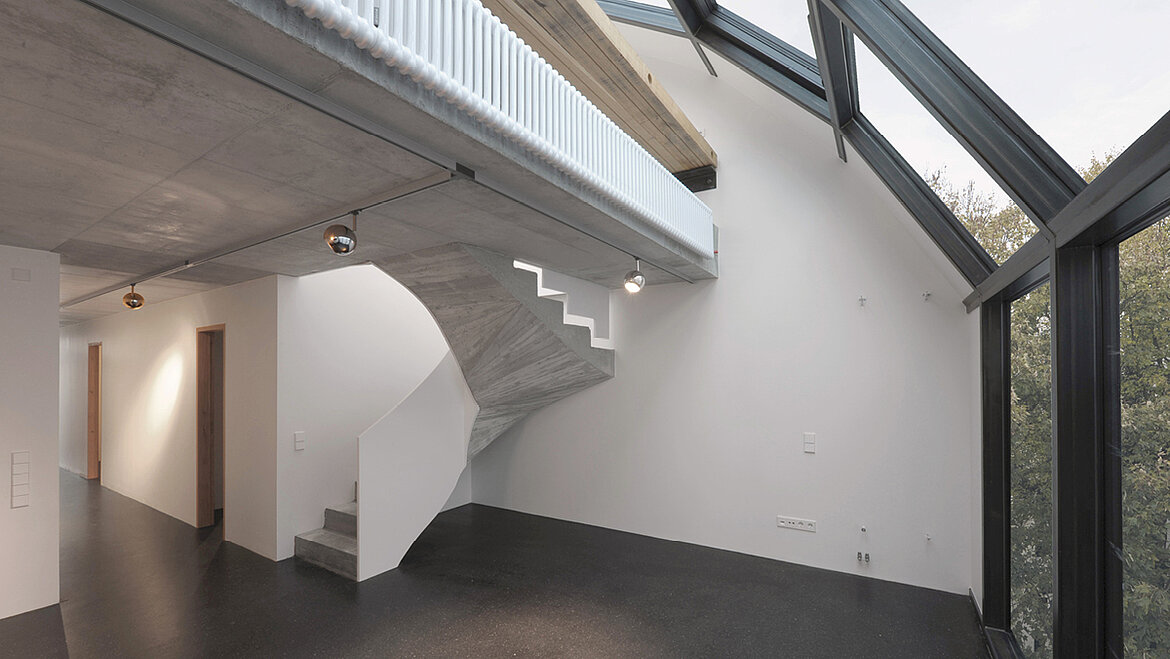
Whether a building is suitable for a rooftop extension depends on a range of structural factors. The existing load-bearing capacity plays a central role. While modern buildings with concrete structures often allow for several additional storeys, older buildings from previous construction periods require particularly in-depth expertise. Vogelsanger explains: “Buildings from the Gründerzeit era are especially demanding. They require not only an experienced structural engineer, but also specialists such as wood biologists and building physicists who are familiar with masonry, timber framing and wooden beam ceilings that are sometimes more than 100 years old. If the structural capacity is insufficient, targeted reinforcement measures can usually provide a solution.”
This technical feasibility offers a high degree of flexibility, as virtually any building can theoretically be extended vertically. From an economic perspective, rooftop extensions provide decisive advantages over new construction – even if they may initially appear more expensive. “At first glance, a rooftop extension seems costly. But if no land has to be purchased, the picture changes. In popular urban districts, buildable plots are scarce, while unused flat roofs and attics are common. These areas are rough diamonds – plots in the third dimension. Rooftop extensions can achieve densification of up to 25 percent in such locations,” says Vogelsanger. The newly created space can be used for residential or office purposes or as a retreat, opening up opportunities to develop existing buildings in a sustainable and economically viable way.
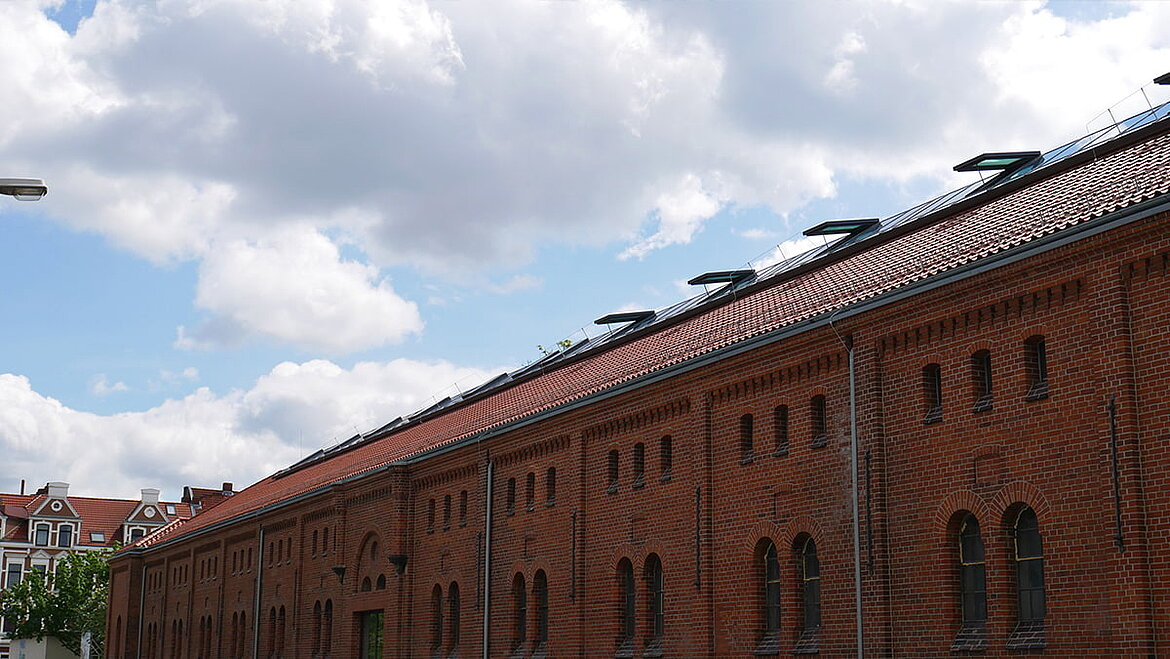
Historic building renovation
Heritage-appropriate renovation is a balancing act between preservation and modernity. Here, you’ll learn how this can be achieved and the important role that daylight plays in the process.
Rooftop Extension Costs and Building Approval at a Glance
The costs of a rooftop extension vary depending on the building type, the scope of construction and the level of fit-out. In addition to material and construction costs, the approval process often represents a significant challenge.
Approval procedures are complex and time-consuming, as numerous authorities and regulations must be taken into account. Vogelsanger points out: “Approval processes have become a real bottleneck over the years. Many stakeholders and departments have a say, including building authorities, heritage conservation, urban planning, development regulations, planning law, exemptions and deviations. As a result, even permits for small projects can take a year or longer – or be rejected altogether. This discourages many developers and leaves considerable potential untapped, with buildings standing vacant for years.”
Despite the duration and complexity of these procedures, rooftop extensions generally lead to a noticeable increase in property value, which from an economic perspective justifies the effort involved.
Energy Efficiency and Value Creation Through Rooftop Extensions
Rooftop extensions not only create additional living space but, in most cases, also enable comprehensive energy refurbishment of the building. Older roofs in particular are often weak points in the building envelope and responsible for significant heat loss.
Vogelsanger explains how rooftop extensions can be used to optimize energy efficiency: “In older buildings, a substantial amount of energy is lost through the roof. During a rooftop extension, the roof is rebuilt and thermally insulated to modern standards. This energy-efficient refurbishment, combined with the roof extension, significantly increases the value of the building."
A holistic improvement in energy performance can also be achieved through façade renovations, which can be carried out cost-effectively as part of the construction project, since the required scaffolding is already in place. Such measures strengthen climate resilience and sustainably improve indoor comfort.
Improving Living Quality Through Skylights
Natural light is a key factor in residential quality. Well-designed and generously planned daylight concepts can create bright and pleasant spaces, particularly in rooftop extensions. Vogelsanger emphasizes: “Daylight is a central aspect of every design. Depending on the function of the space, more or less daylight may be required. I personally value large glass surfaces that visually merge interior and exterior spaces, enhancing the sense of openness.”
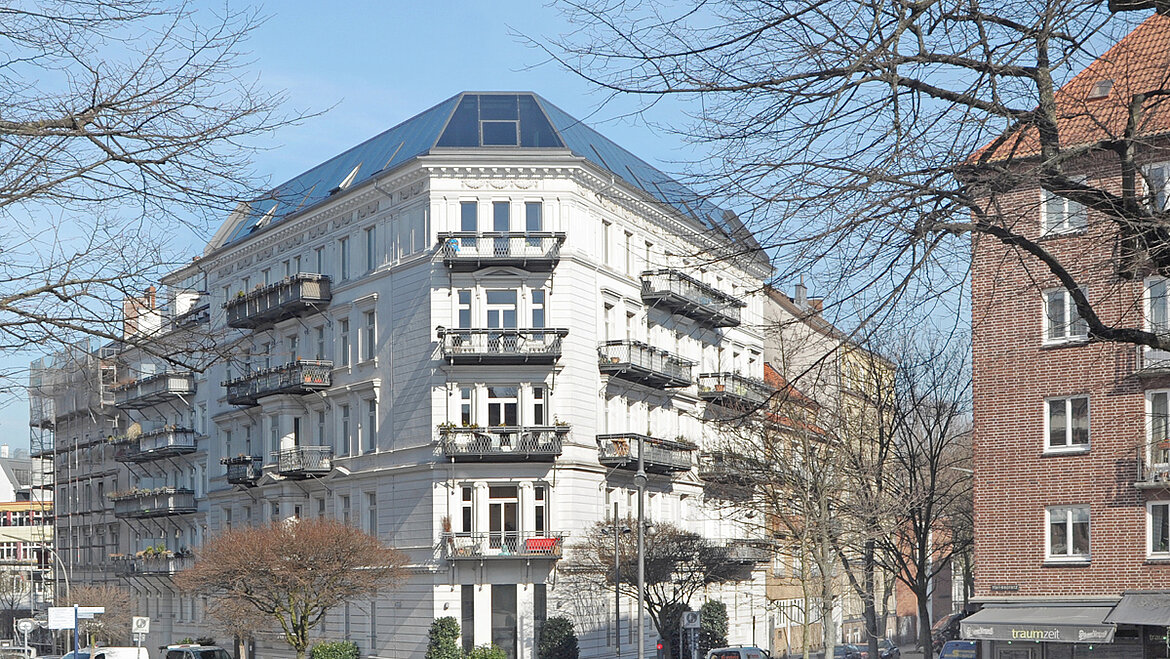
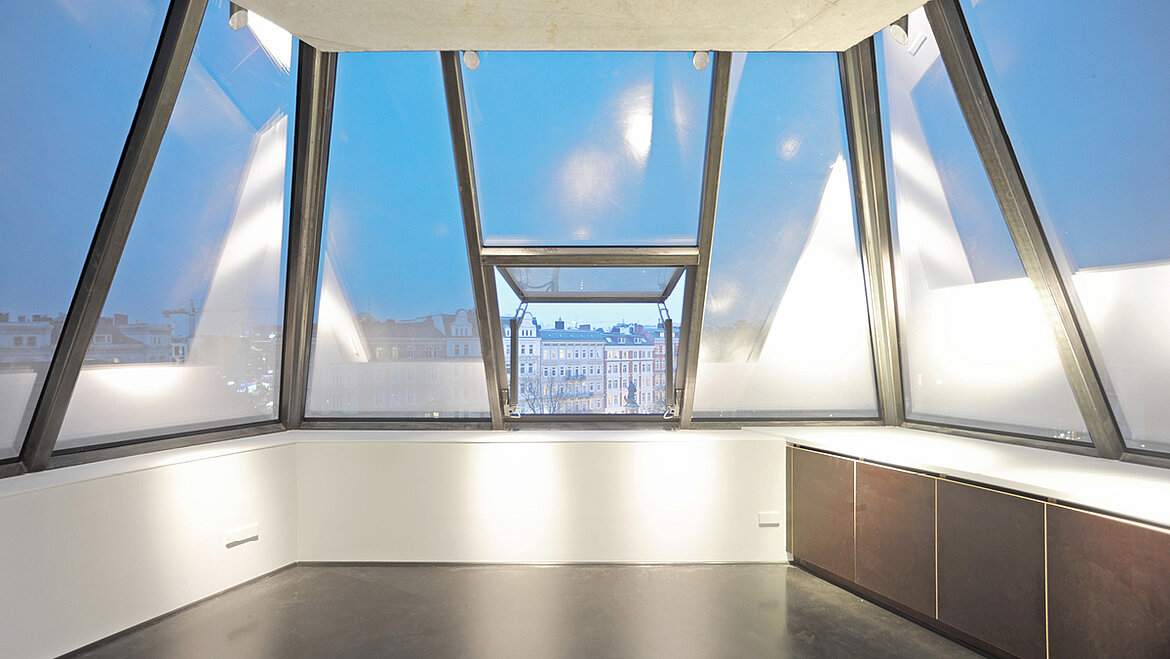
An example project in Hamburg illustrates the design and functional possibilities offered by modern skylights from manufacturers such as LAMILUX. On Rostocker Straße in Hamburg, a listed building required the roof surfaces to appear externally like slate roofing, while the interior was designed to be fully transparent, offering an unobstructed view of the sky and the skyline. “Under such a glass roof, winter blues are hardly an issue – which already answers the question of improved well-being,” Vogelsanger notes.
Thus, skylights in rooftop extensions not only enhance comfort but can also effectively counteract seasonal mood fluctuations during the winter months.
LAMILUX Glass Roof PR60
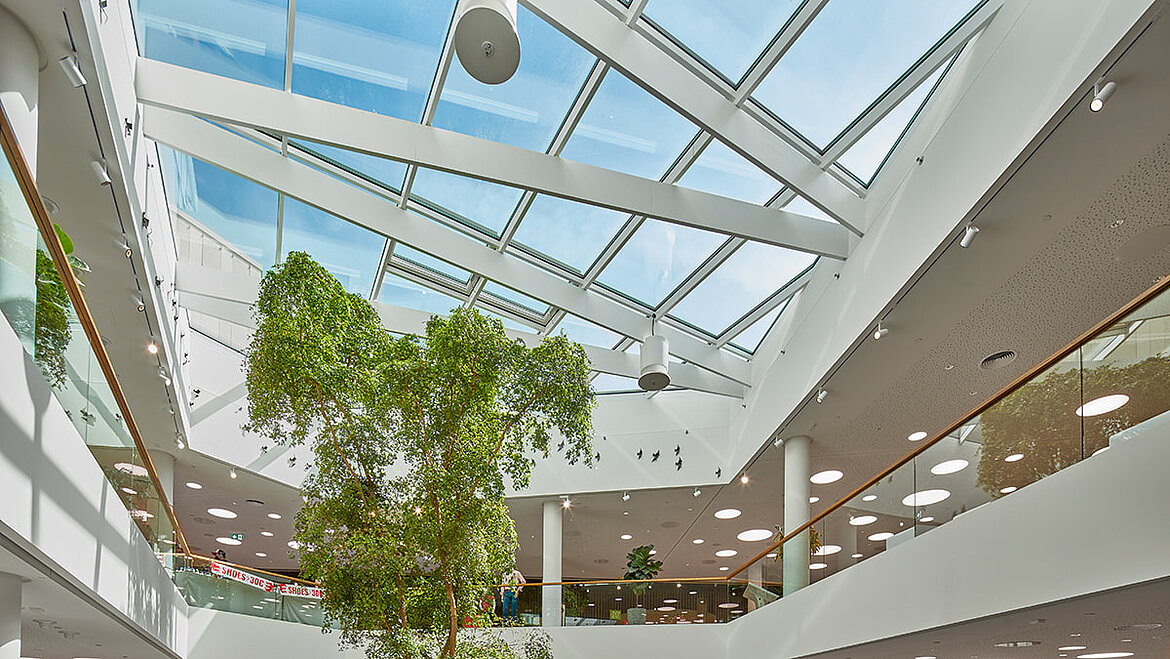
Whether shopping center, school, or office complex – the LAMILUX Glass Roof PR60 creates customized roof glazing solutions for any building. Thanks to its flexible post-and-beam system, it integrates seamlessly into any roof and enables unique glass architecture.
Discover more about the LAMILUX Glass Roof PR60!
Future Trends: Transformation of Living Space and Societal Change
The demands placed on living space are changing fundamentally as a result of generational shifts and broader societal developments. Generations Z and Alpha place great value on sustainability, urban living and flexible lifestyles. Vogelsanger outlines the resulting challenges and opportunities: “These generations expect a high quality of life in urban environments – less car traffic, more space for bicycles, central living, scooters, e-bikes, more greenery and cities that are adapted to ongoing climate change.”
Urban life is naturally evolving towards more diverse and flexible living and housing models, which require new qualities and spatial concepts. Rooftop extensions represent a forward-looking solution that offers both architectural and ecological benefits. “Living space expansion, rooftop extensions and adaptive reuse are all elements of the solution, but their potential must be recognized much more clearly as an opportunity. Roofs are now the fifth façade – a place where climate protection can be realized and terraces, communal spaces and gardens can be created for residents,” Vogelsanger concludes.


