

Why skylights in fire protection are more than just a source of light
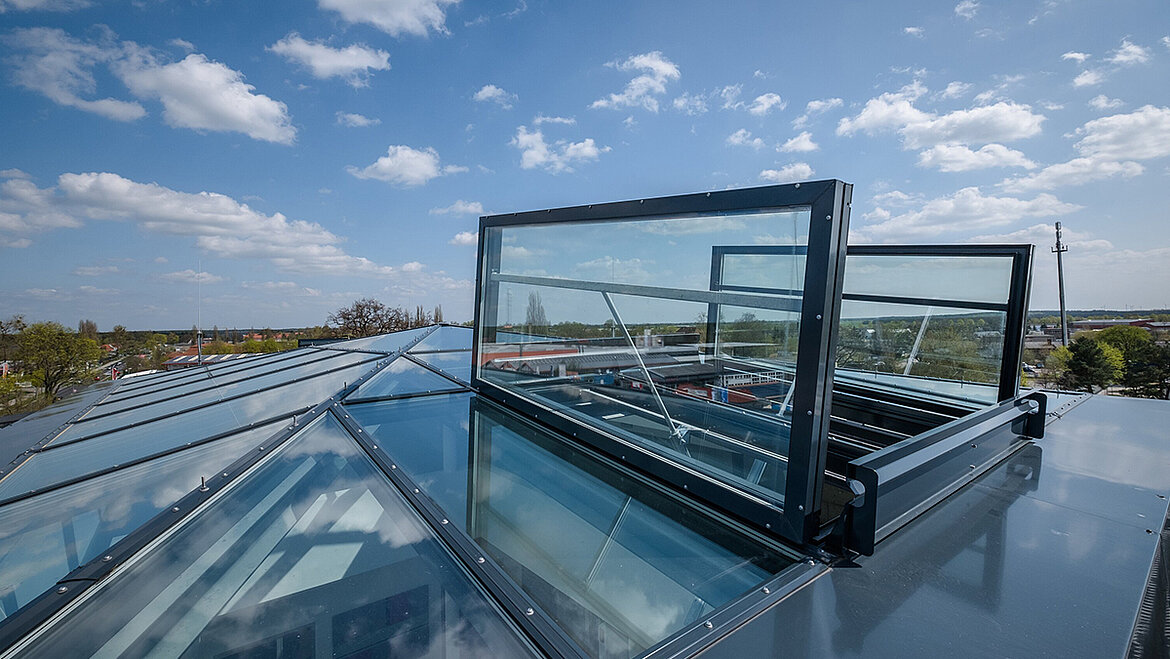
In the event of a fire, there are two key tasks: smoke must be removed reliably, and building components must resist flames and heat for long enough. Only when both work properly can escape and rescue routes remain usable and building safety be maintained.
The roof plays a crucial role here. As hot smoke rises, the roof area is particularly suitable for controlled smoke extraction. At the same time, roof openings and glazing are exposed to high thermal loads in the event of fire and, depending on the requirement, must either open deliberately or remain closed.
This is exactly where skylights operate. They can:
- support natural smoke and heat exhaust ventilation as an NSHEV
- provide a defined level of fire resistance as fire-resistant roof windows
- while also bringing daylight, ventilation and architectural quality into the Building
This makes them active components of the fire protection strategy, not an afterthought.
Important for planning: anyone who considers rooflights, continuous rooflights, flat roof windows or glass roofs too late risks conflicts with smoke extraction, fire resistance, structural design and the building envelope. Anyone who integrates them early can combine several requirements in one solution.
Would you like to coordinate daylight, smoke extraction and fire protection at an early stage?
Smoke extraction with skylights: what matters in NSHEV planning
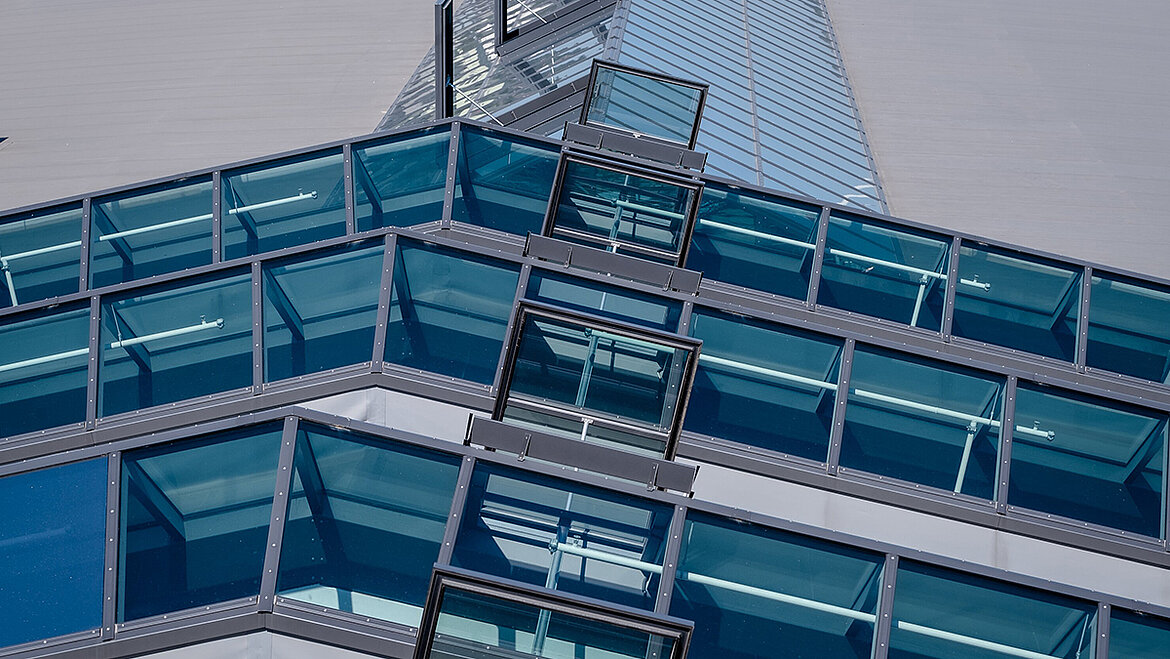
In smoke and heat exhaust ventilation, the main objective is to create a smoke-free layer. Smoke and hot gases collect beneath the ceiling and are vented to the outside through openings in the roof. Skylights can perform this task, provided they are designed as NSHEVs.
For architects, this means one thing above all: it is not just the roof opening itself that matters, but the tested system, its performance values and the way it is integrated into the fire protection concept.
NSHEVs: why tested systems are indispensable
Not every rooflight is suitable for smoke extraction. For a skylight to perform this function, it must be tested and classified as an NSHEV in accordance with EN 12101-2.
An NSHEV is not defined simply by the fact that it can be opened. What matters are clearly defined performance characteristics that must function reliably in the event of fire. These include in particular:
- the aerodynamic free area for smoke extraction (Aa)
- the opening angle and opening speed
- operational reliability under external influences such as wind and snow loads
- reliable activation in the event of fire
Only tested systems ensure that the unit opens reliably in an emergency and delivers the required performance under real conditions.
For planning, this means that it is not the visible opening or the format alone that matters, but the verified performance value of the system.
Which skylights can be used as NSHEVs
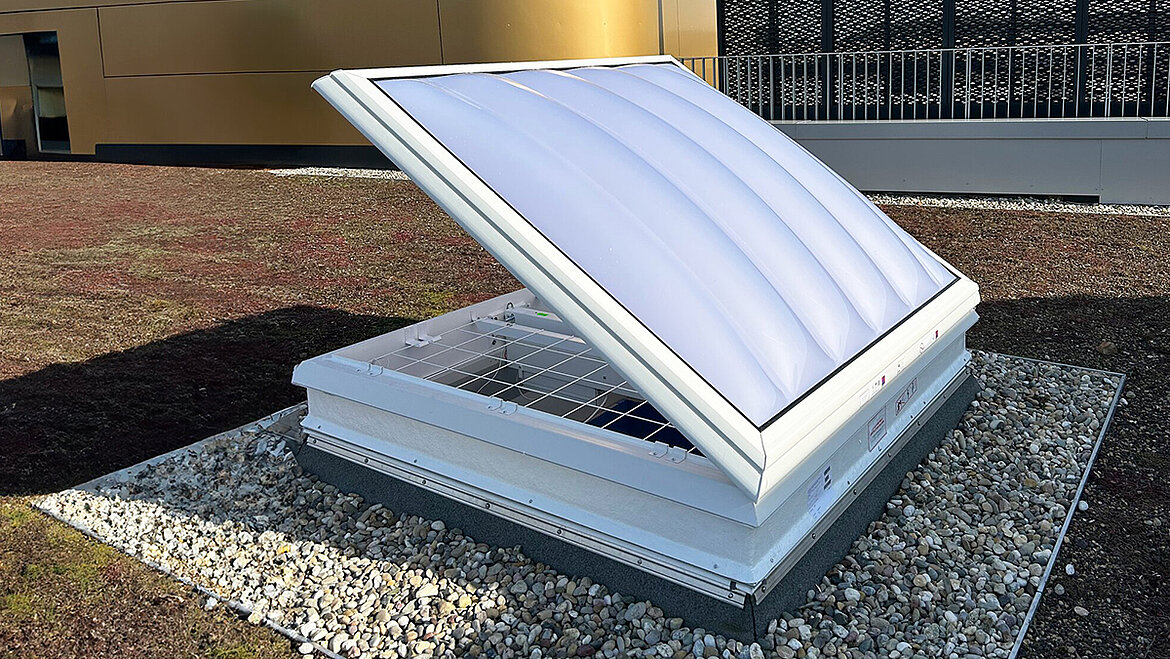
Not all NSHEVs are the same, which means planners have a range of daylight solutions available for natural smoke extraction depending on the building and the requirements.
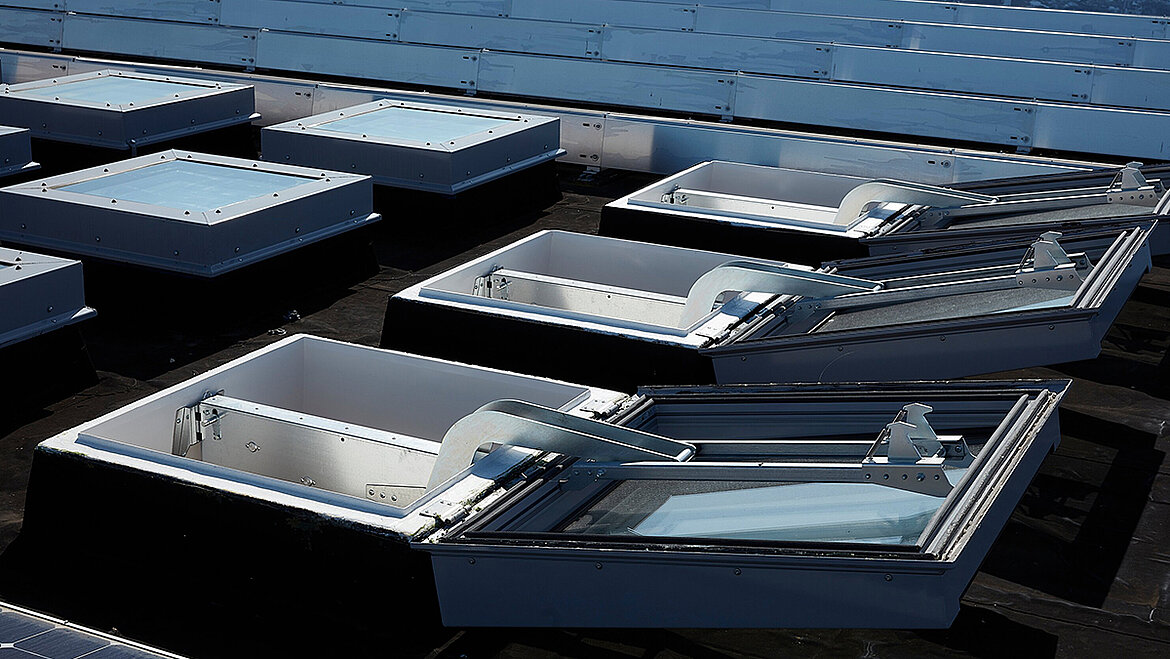
Rooflights are used primarily in industrial, logistics and sports buildings where clearly defined smoke extraction points are required. In the event of fire, they open suddenly by 180° via integrated fittings and actuators, creating a clear opening in the upstand. This allows smoke to be vented directly to the outside without deflection.
Their advantage lies in their simple, robust design and in the ability to position the units precisely in line with smoke compartments. In large halls with a clear layout, this allows smoke extraction concepts to be implemented very accurately.
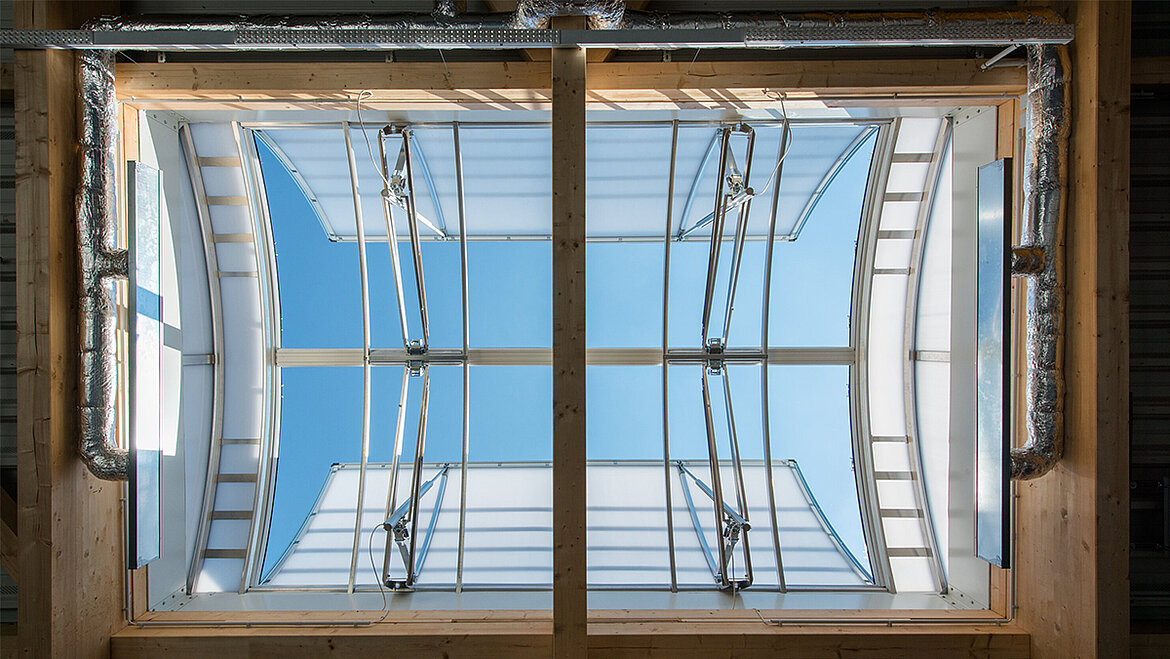
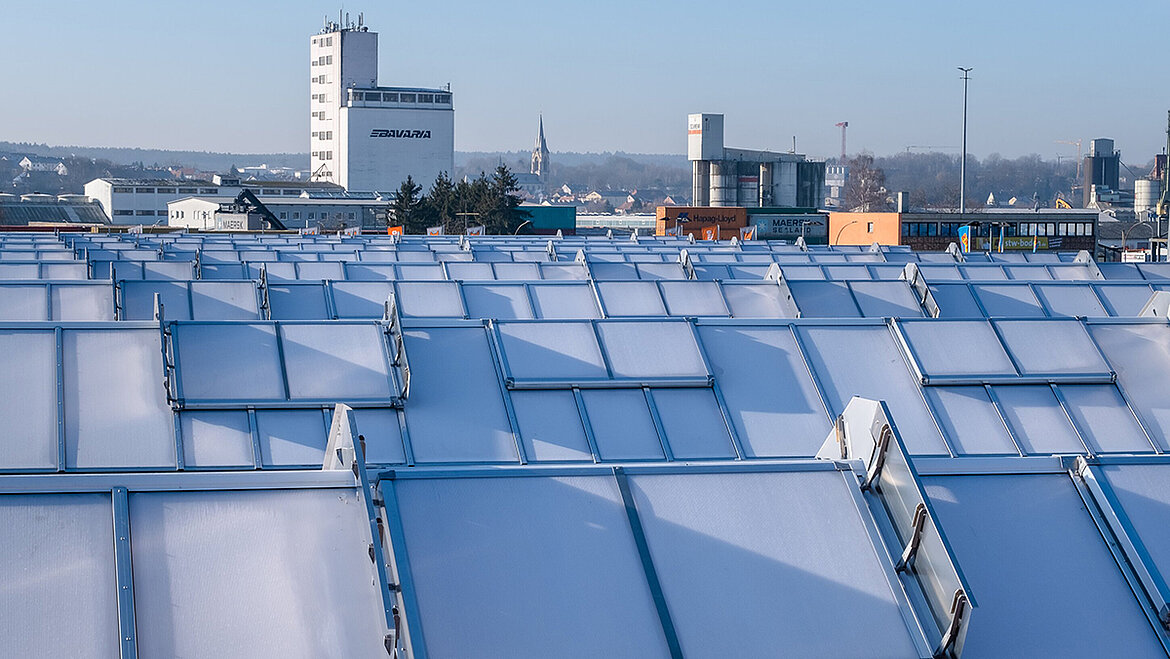
Continuous rooflights are used in particular on large roof areas such as production halls or sports facilities. Unlike the point-specific solution provided by a rooflight, they work with integrated ventilation sashes and smoke extraction flaps along the length of the system.
In the event of fire, these open in sections or over defined lengths, enabling uniform smoke extraction across the roof area. This allows larger volumes to be ventilated more efficiently while maintaining homogeneous daylight distribution within the building.
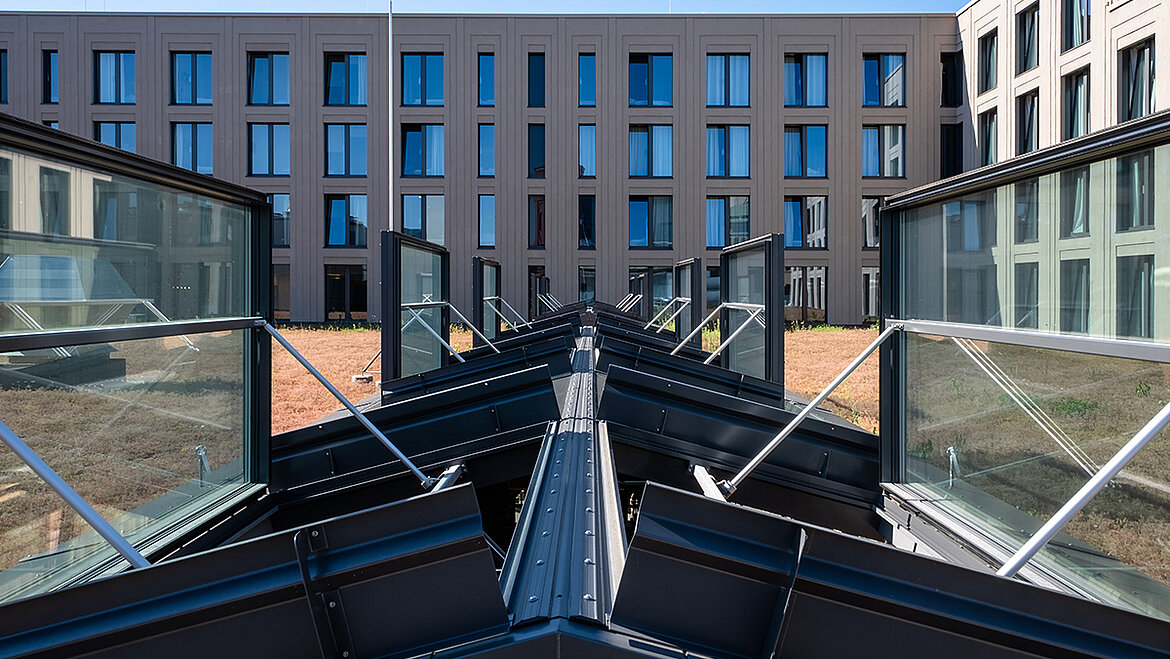
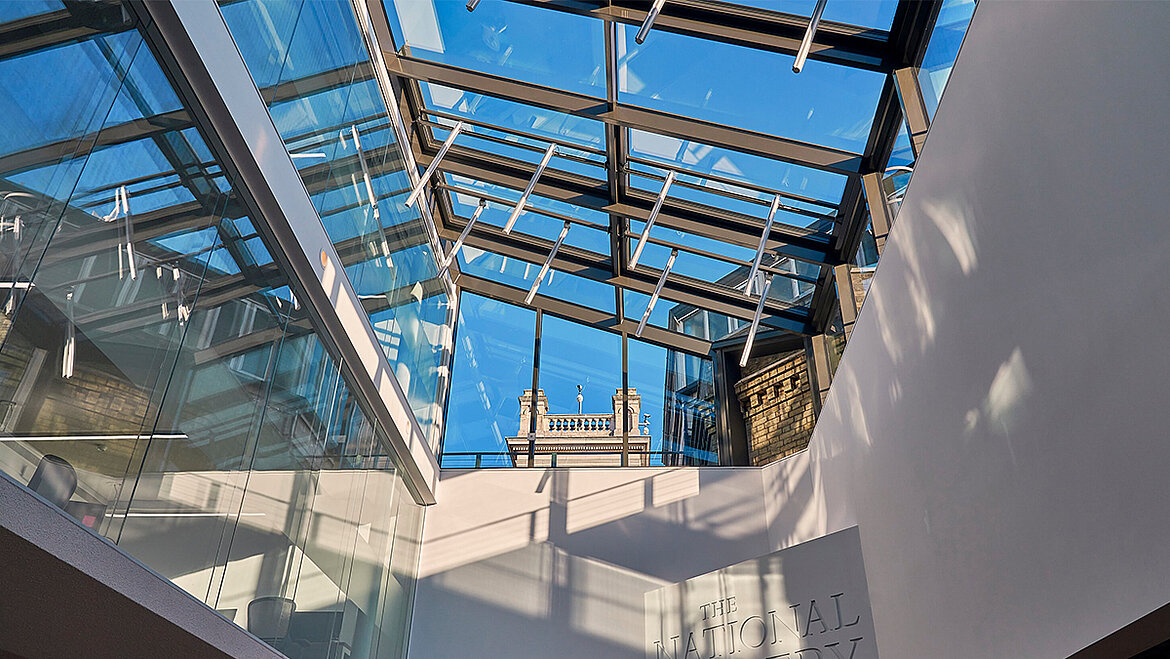
Flat roof windows are used mainly in office buildings, educational buildings or high-spec refurbishment projects. In the event of fire, they open to defined positions via electric actuators and thereby perform the function of an NSHEV.
Their multiple use is particularly relevant here: the same ventilation sashes that provide natural ventilation in everyday operation are used specifically for smoke extraction in the event of fire. At the same time, thanks to their glass constructions, they offer better insulation values, higher light quality and a significantly higher design standard than conventional solutions.
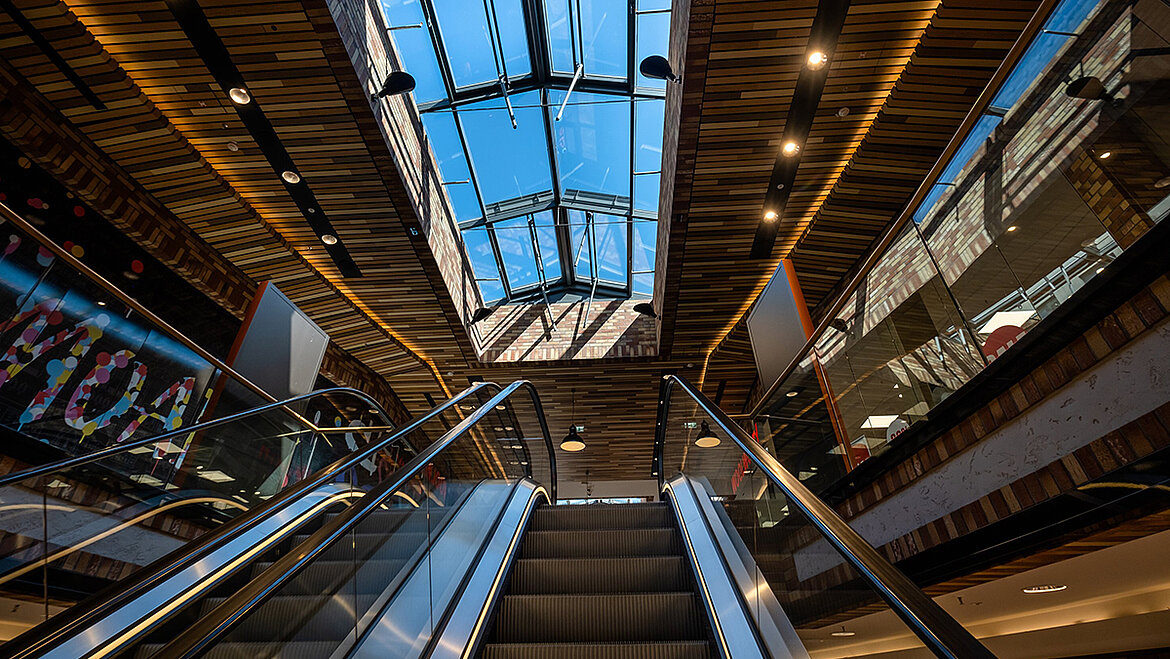
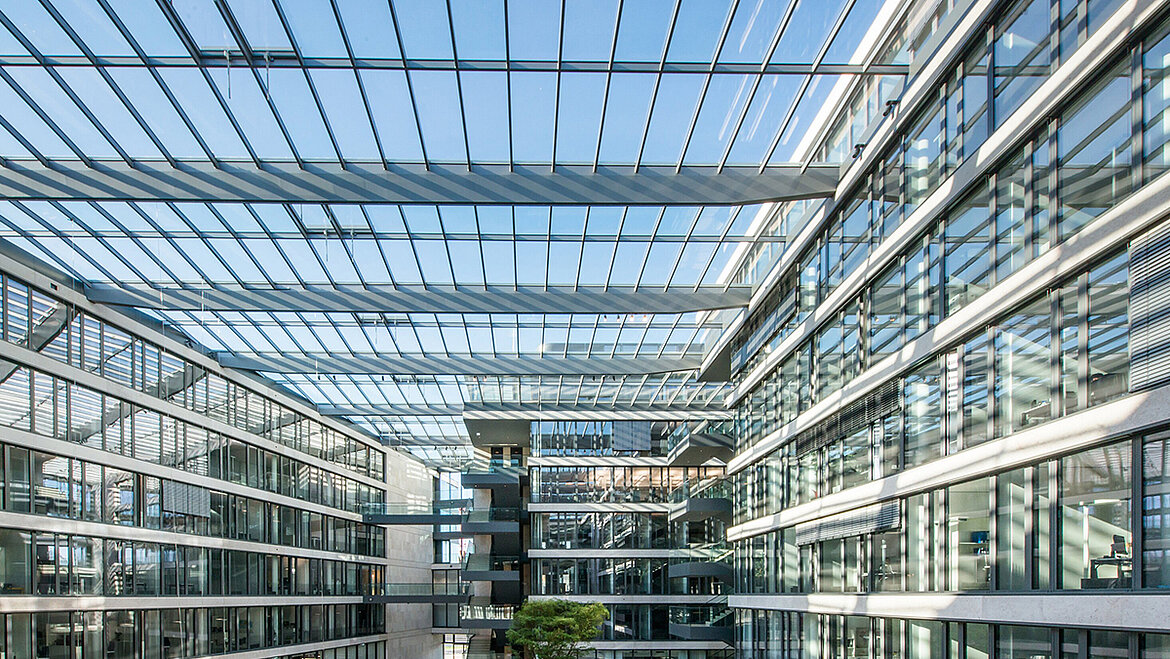
Glass roofs are used mainly in atria, foyers or retail buildings with large room heights. Smoke extraction is achieved via ventilation sashes integrated into the structure or separate smoke extraction flaps.
These are positioned strategically within the roof area and open in the event of fire in order to extract large volumes of smoke in a controlled way. Their key advantage is that the smoke extraction function is fully integrated into the roof architecture and can also be implemented in complex geometries and bespoke designs.
The choice of system always depends on the building’s smoke extraction strategy. What matters is not which product is used, but how effectively smoke extraction, daylight and roof construction can be combined into a functioning overall system.
Our SHEV solutions
Fire safety starts on the roof. LAMILUX SHEV systems channel smoke and heat away in a controlled manner, create smoke-free escape routes, and effectively protect both people and buildings.
How much smoke extraction area is required – and what an NSHEV must deliver
The effectiveness of smoke extraction is not determined by the number of openings, but by their performance. The decisive factor is the aerodynamic free area for smoke extraction (Aa), meaning the area through which smoke is actually removed in the event of fire.
As a rough guide, the required smoke extraction area in single-storey halls is often around 1.5–2.5% of the floor area, depending on the use and the building. In more complex projects, it is defined individually within the fire protection concept.
One important point: the geometric opening is not the same as the effective area. A rooflight with a 1 m² opening often achieves an Aa value of only around 0.5–0.7 m².
For planning, this means that it is not the size of the opening that matters, but the verified performance value of the NSHEV. To prove this, the system must demonstrate a defined opening function, tested Aa values and reliable activation in the event of fire.
What really matters when planning smoke extraction
Natural smoke extraction only works reliably if all components are coordinated with one another. The decisive factors are:
- positioning the openings in the roof, depending on geometry and smoke compartments
- interaction with air inlet areas, because only then can smoke be extracted effectively
- reliable activation in the event of fire, with automatic triggering and dependable operation
- integration into the fire protection concept, with early coordination of roof build-up, structure and building envelope
A common mistake in practice is to plan daylight, ventilation and fire protection separately. This creates unnecessary interfaces and uncertainty in performance. If these requirements are considered together at an early stage, systems can be combined in a targeted way and integrated much more efficiently.
Skylights should therefore be planned from the outset as part of the fire protection concept, not as a later addition. Only then can they realise their full potential in smoke extraction.
Typical planning mistakes with NSHEVs – and how to avoid them
In practice, it becomes clear that mistakes rarely stem from the individual product, but from late or incomplete planning. The most common problems include:
1. Selecting NSHEVs by size only instead of Aa value A large opening does not automatically mean high effectiveness. What matters is the tested Aa value, not the format alone.
2. Failing to consider sufficient air inlet areas Smoke can only be extracted effectively if enough replacement air can flow in from below. Without a coordinated overall concept, the NSHEV loses effectiveness.
3. Bringing skylights into the planning too late Anyone who only considers rooflights or glass roofs at a late stage risks conflicts with the structure, roof build-up, interfaces or fire protection requirements.
4. Misjudging the difference between NSHEVs and fire resistance Not every roof opening is intended to open in the event of fire. In some areas, the exact opposite is required: a defined fire resistance performance with the system remaining closed.
5. Underestimating tested details and the installation situation The classification applies only to the tested system, including the installation situation, frame, fixings and connection details. Any deviation can compromise the fire protection function.
Practical tip: the earlier the manufacturer, specialist planners and the fire protection concept are brought together, the lower the risk of redesigns and additional costs.
Preventive fire protection with fire-resistant roof windows: transparent solutions for fire resistance
Not every fire protection requirement can be solved through openings and smoke extraction. In many cases, the opposite is required: roof openings must remain closed in the event of fire and reliably prevent the spread of fire and heat.
This is precisely where fire-resistant roof windows for preventive fire protection come into play. They allow daylight into the roof area while at the same time meeting defined fire resistance classes and thereby protecting fire compartments or escape routes.
For planning, this means that instead of extracting smoke deliberately, the aim is to limit the effects of fire for a defined period of time.
When fire resistance is more important than opening capability
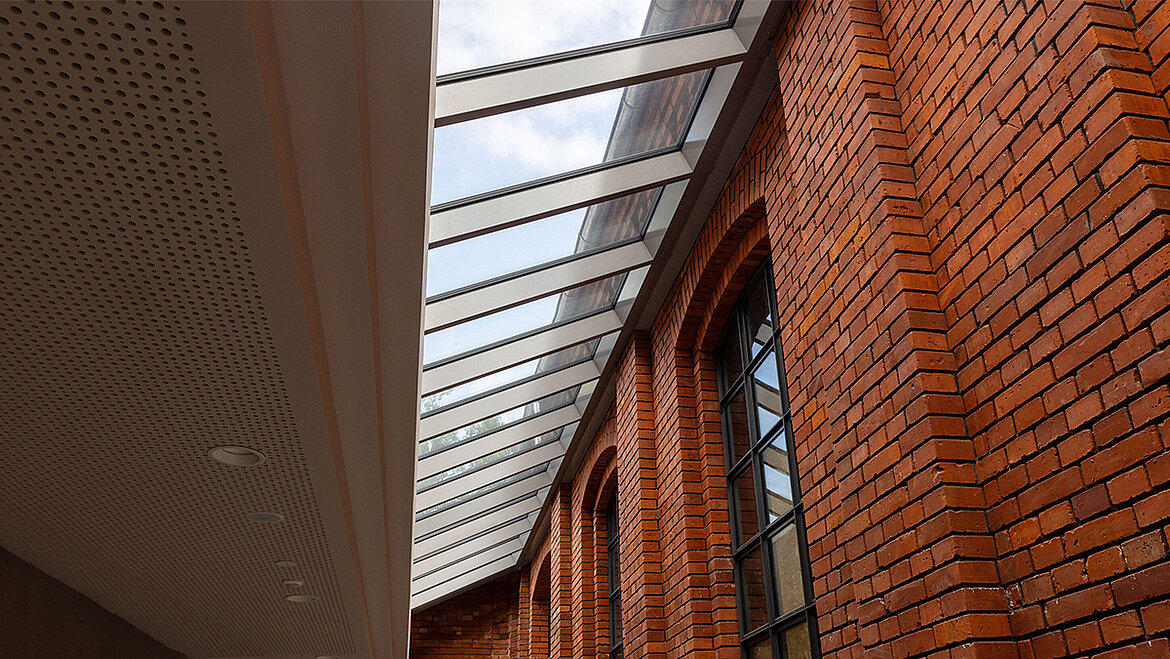
Fire-resistant roof windows are used wherever roof openings are critical from a fire protection perspective, for example above escape and rescue routes, at fire compartment boundaries or in buildings with high occupant density.
Typical situations include:
- roof openings above required corridors or stairwells
- buildings with increased requirements for fire compartments
- public buildings such as schools, assembly buildings or office buildings
In these cases, the opening must not open in the event of fire, but must retain its function as a closing element. For architects, this means in practical terms:
The question here is not “smoke extraction or not?”, but “which fire resistance class is required?”
E, EW, EI and REI: fire resistance classes in practice
The classification of fire-resistant roof windows follows a clear system that is derived directly from the fire protection concept.
- E (integrity): prevents the passage of flames and smoke
- EW: additionally limits thermal radiation on the unexposed side
- EI: additionally provides insulation and prevents excessive temperature rise on the reverse side
- REI: additionally includes the load-bearing capacity of the building component under fire exposure
The number that follows, for example 30, 60 or 90, indicates how long this function is maintained in the event of fire.
What matters in practice is this: depending on the use and building class, it is clearly defined which class is required. An EI 30 element, for example, fulfils a completely different protective function from an REI 90 system.
Fire protection solutions in the roof area: flat roof windows and glass roofs with fire resistance
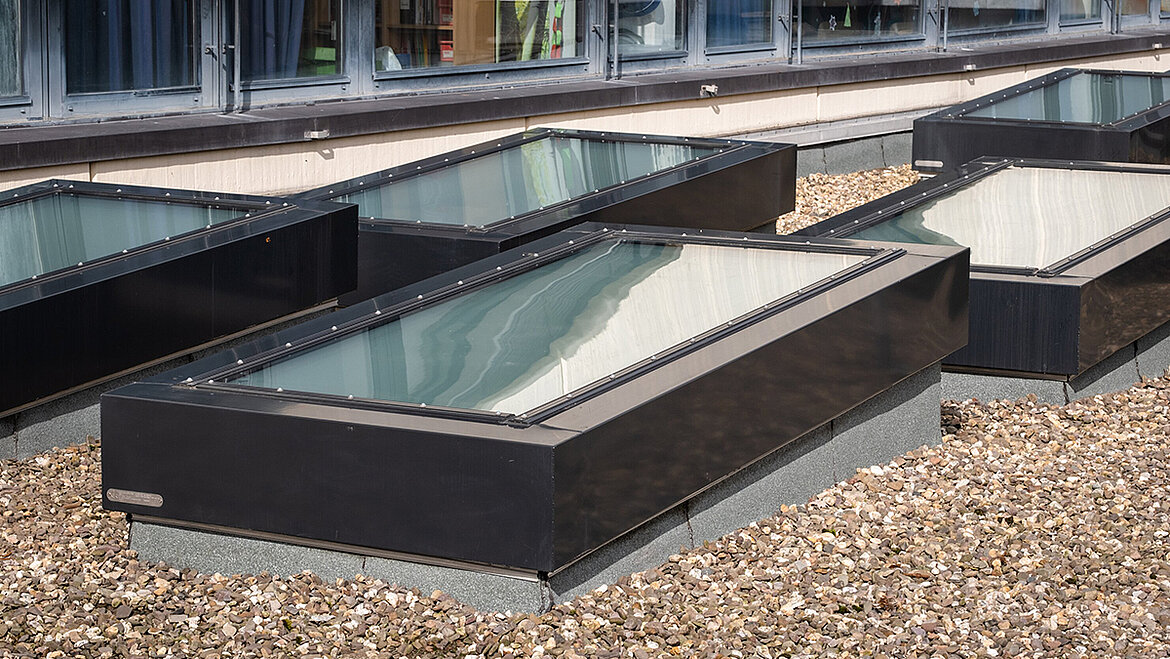
Today, there are solutions available for preventive fire protection in roof areas that combine fire resistance and daylight in a targeted manner.
With the Flat Roof Window Fire Resistance, LAMILUX offers a solution for roof openings that remain closed in the event of fire while meeting defined fire resistance classes. Depending on requirements, versions in REI 30, REI 60 and REI 90 are available. This makes it possible to meet different safety requirements, for example above escape and rescue routes or in buildings with strict fire compartment requirements. At the same time, the glazing provides high-quality daylight and allows neat architectural integration into the roof area.
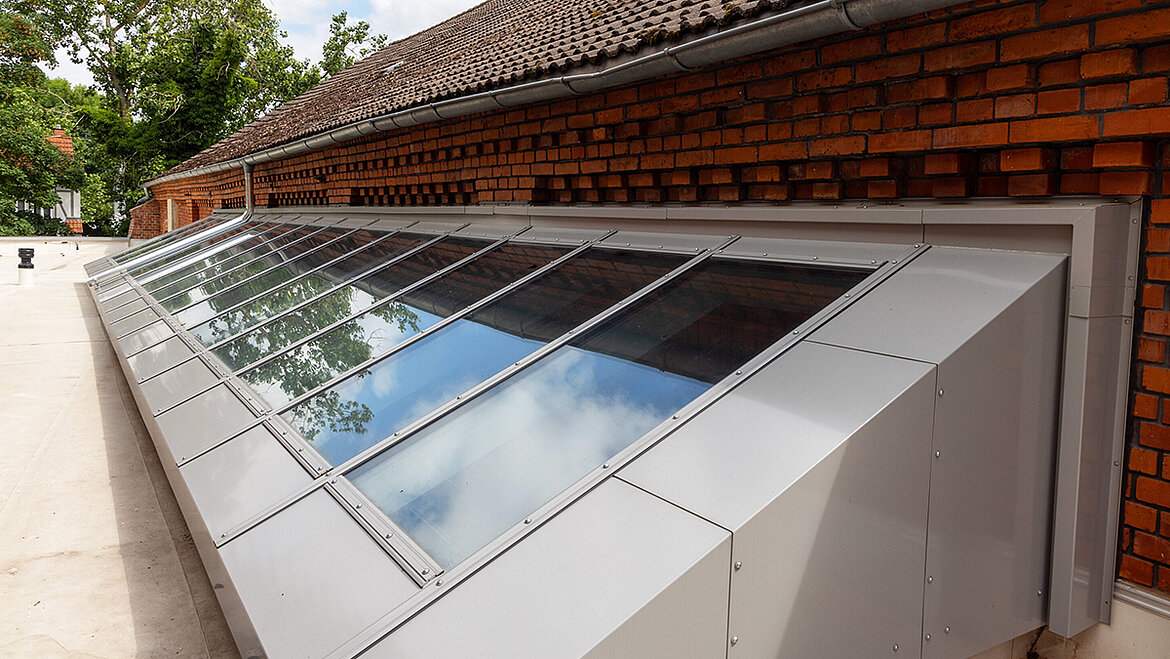
For larger openings, LAMILUX Glass Roof Fire Resistance systems are used. These are generally designed as REI 30 or REI 60 systems and are particularly suitable for atria, foyers or central circulation areas. They combine large-area daylight with defined fire resistance and can be tailored individually to the respective building structure.
For planning, this means that even with demanding fire protection requirements, daylight does not have to be sacrificed. Instead of closed roof surfaces, transparent solutions can be used that satisfy both functional and design requirements.
Why the overall system is decisive
A fire-resistant roof window is always a tested system, not just a special type of glazing. What matters is the interaction between glass, frame, seals, fixings and installation situation.
The fire resistance class applies only if:
- the system is installed exactly in accordance with the test specification
- approved frame and connection details are used
- the installation situation matches the tested boundary conditions
Choosing a fire-resistant roof window is not simply a product decision. It must always be made in the context of construction, detailing and approval requirements.
Would you like to clarify which fire resistance class is required for your project?
NSHEV or fire-resistant roof window: which solution is right when?
In practice, one question is particularly important: when is an openable solution for smoke extraction appropriate, and when is a closed system with fire resistance the right choice?
The answer depends on the usage concept and the fire protection objective.
Typical decision logic in planning:
- Industrial or logistics hall: often NSHEVs using rooflights or continuous rooflights
- Atrium or foyer: often a glass roof with integrated smoke extraction
- Office or educational building: depending on the concept, flat roof windows with ventilation and NSHEV function
- Required corridors or escape routes: often fire-resistant roof windows with a defined fire resistance class
- Fire compartment separations in roof areas: solutions with fire resistance instead of openable smoke extraction
What matters is this: the right decision never results from the product alone, but always from the interaction between use, fire protection concept, building geometry and architectural ambition.
Which standards and regulations are relevant in planning
Several regulations play a role when planning skylights for fire protection. These include in particular:
- EN 12101-2 for natural smoke and heat exhaust ventilators (NSHEVs)
- DIN 18232 for smoke and heat control
- building law requirements from the Model Building Code and state building codes
- and, depending on the type of building, further requirements such as special building regulations or Guidelines
For architects, the key point is this: the fire protection function must always be considered in the specific context of the project. Standards and classifications provide guidance, but they do not replace project-specific coordination.
The benefits of skylights in fire protection at a glance
When planned correctly, skylights used in fire protection offer far more than compliance with individual requirements. They create tangible added value for planning, use and architecture:
- Multiple functions in one system: daylight, ventilation, smoke extraction and fire resistance can be combined in a targeted way
- Fewer interfaces: integrated solutions reduce coordination effort between trades
- Greater planning reliability: early system decisions minimise later conflicts
- Architectural quality: even high fire protection requirements can be combined with transparent roof solutions
- Economic benefits: fewer individual solutions often mean lower complexity in planning and execution
- A future-ready building envelope: safety, energy efficiency, daylight and user comfort are considered together
The right planning partner for your fire protection project
The biggest challenge in fire protection lies not in the individual product, but in making the right decision at the right time. Which solution suits the intended use? How can daylight, smoke extraction and fire resistance be combined effectively? And how can this become a functioning overall concept?
This is exactly where LAMILUX comes in. As an experienced manufacturer and planning partner, LAMILUX supports architects in integrating skylights into the fire protection concept at an early stage and in a systematic way.
This includes, among other things:
- support with system selection depending on use and requirements
- provision of tested solutions for NSHEVs and fire resistance
- planning documents and technical details for reliable implementation
- coordination of daylight, smoke extraction and the building envelope as one integrated System
The result is not only a functioning fire protection solution, but a well-conceived roof concept that combines safety, efficiency and architecture.


