

Why skylights drive energy-efficient refurbishment
Today, renovating means more than simply carrying out technical repairs on buildings. Existing buildings must improve their energy efficiency, accommodate new uses, enhance comfort and remain cost-effective. This is precisely where the planning challenge lies: in existing buildings, almost nothing is freely scalable. Roof structures, load-bearing capacity, existing openings and ongoing operations impose strict limitations. At the same time, the pressure is high. Buildings account for around 40% of final energy consumption and 36% of energy-related greenhouse gas emissions in Europe; 75% of the building stock is considered energy-inefficient.
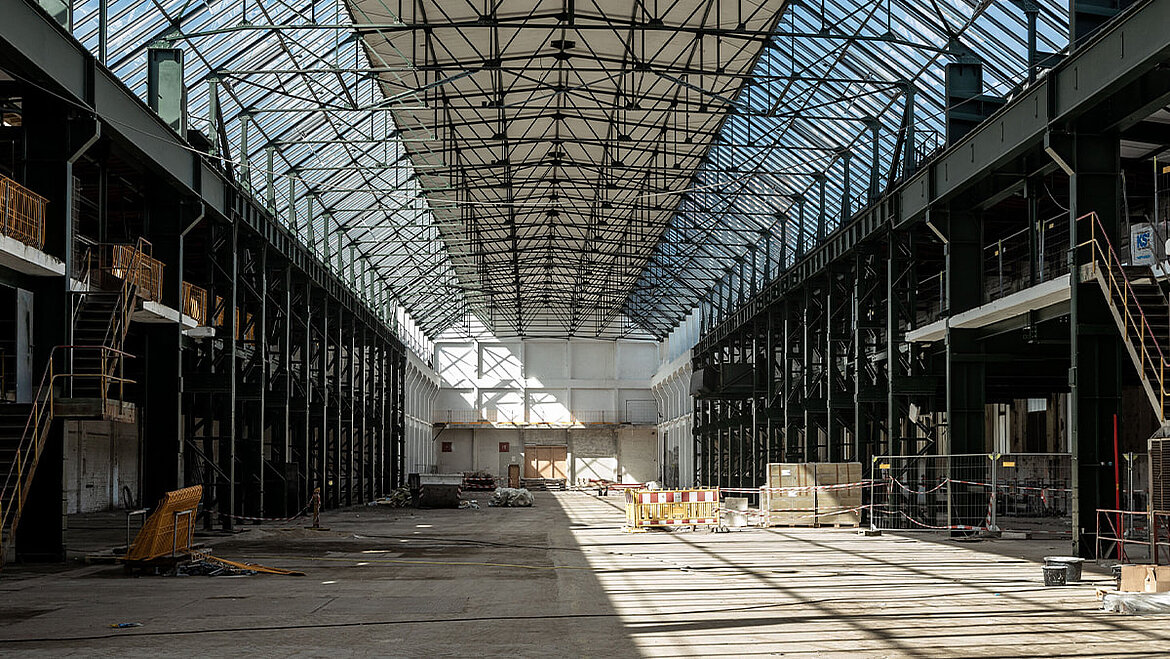
The roof, in particular, thus becomes the focal point of energy-efficient refurbishment. This is where energy efficiency, smoke extraction, ventilation, daylight and user comfort all come together. Skylights are therefore not an afterthought, but part of the building envelope and thus part of the overall energy and functional concept. If they are only considered at a late stage, conflicts of interest arise almost inevitably — for example, between daylighting and thermal insulation, between architectural quality and installation costs, or between smoke extraction and additional roof technology.
How do skylights address these challenges in energy-efficient refurbishment?
The complexity of renovation projects arises not from individual requirements, but from their interplay. In the roof area in particular, energy efficiency, fire safety, user comfort and cost-effectiveness come into direct conflict and must be resolved within existing structures.
Skylights are one of the few building blocks that can address several of these requirements simultaneously. When properly planned, they evolve from a detail into a performance lever for the entire energy-efficient refurbishment.
Targeted improvements in energy efficiency and operating costs
Roof openings always involve energy-related interventions. Without a tailored solution – due to incorrect planning, glazing or design choices – they can quickly lead to heat loss or overheating in summer.
Modern skylights, however, achieve the opposite and support the energy concept through highly thermally insulated variants. They combine lighting with efficient thermal insulation, thereby significantly reducing the need for artificial lighting – one of the biggest energy consumers in existing buildings.
This can have a significant impact on operations, particularly in industrial and functional buildings: lighting often accounts for up to 30–50% of electricity consumption here. Through consistent daylight planning combined with lighting control systems, this proportion can be significantly reduced – savings of 40–70% in lighting energy are realistic in practice.
Combining fire safety, ventilation and daylight
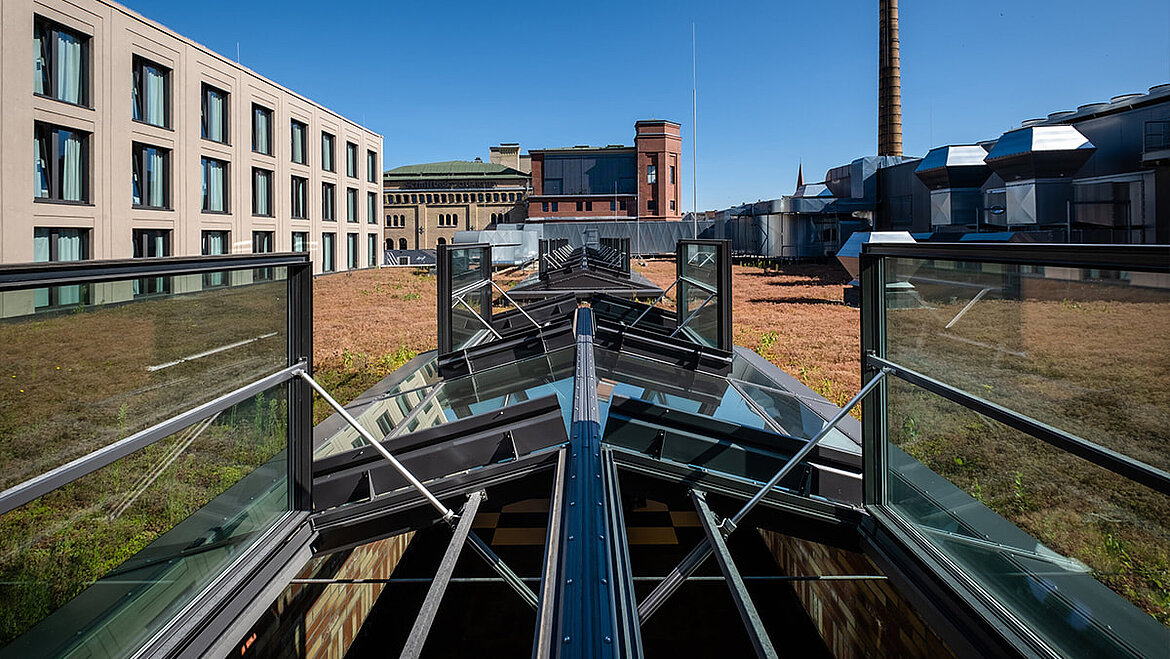
In renovation projects, every additional component is a potential interface and thus a risk for planning and design. Skylights offer a clear advantage here: in addition to providing light, they can also perform functions such as smoke and heat extraction or ventilation, which may even be mandatory depending on the type of building. Rather than planning several systems in parallel, requirements are thus combined. This reduces complexity, simplifies coordination with specialists and manufacturers, and ensures sleeker, more aesthetic solutions in the roof area. Particularly in heritage conservation, multi-functional systems are worthwhile for preserving and enhancing the existing architecture.
Measurably improving user comfort and indoor environment quality
Daylight is no longer merely a ‘soft factor’, but a clearly defined quality parameter in planning. Standards such as EN 17037 demonstrate that daylight is a requirement. This is because it is not just about brightness, but also about light distribution, glare control and visual connection to the outside world. Particularly in refurbishments and conversions – for example in office, educational or public spaces – the quality of lighting plays a decisive role in determining the usability of the rooms. There is ample evidence that this quality has a direct impact on people: daylight can increase productivity by up to 15%, improve concentration and have a positive effect on health and well-being. Properly implemented skylights therefore create evenly lit spaces, enhance the quality of the environment and make existing buildings significantly more attractive.
Ensuring value appreciation and future viability
Renovations are always investment decisions. Skylights affect not only the building’s operation but also its long-term value. Better lighting, a higher quality of stay and a modern building envelope increase the building’s appeal to users and tenants. At the same time, they help meet rising standards for energy efficiency and sustainability.
In this way, they help to keep buildings competitive in the long term and make them suitable for future uses.
Implementing renovations efficiently and reliably
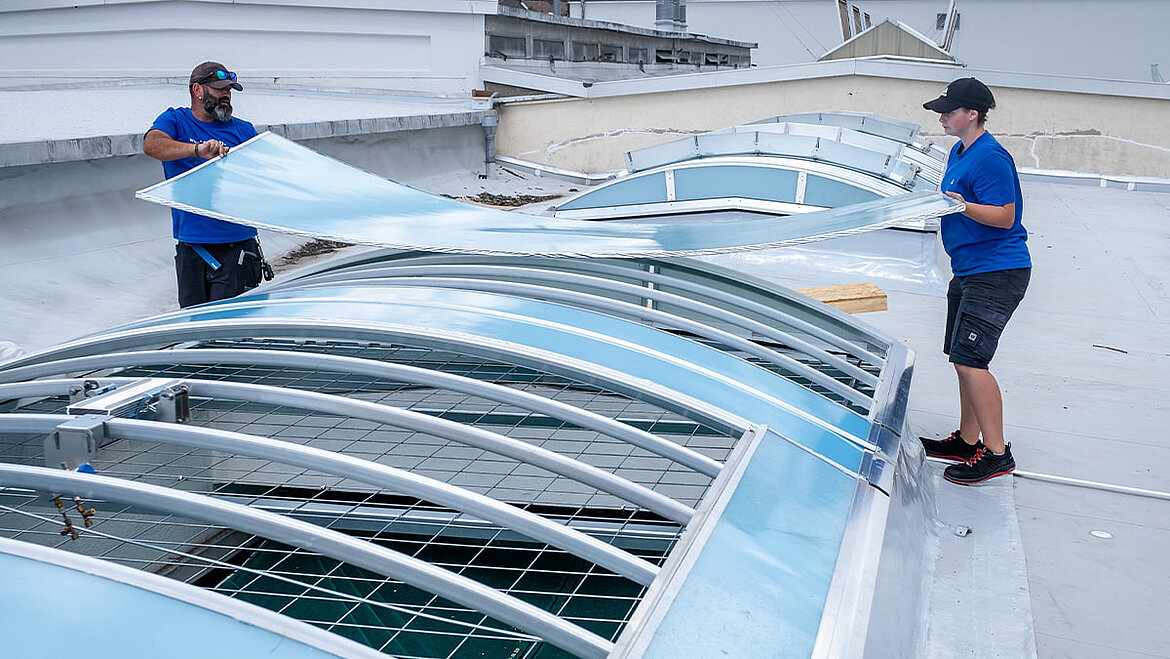
A decisive factor in practice is feasibility. Many refurbishments take place whilst the building is in use – time, scope of work and planning certainty thus become critical factors.
Modern skylights are designed precisely to meet these requirements. They can often be integrated into existing upstands or roof structures and allow for short installation times with minimal disruption. Particularly in replacement or retrofit projects, this transforms a complex construction project into a predictable, cost-effective solution.
Which roof light is suitable for which refurbishment project?
In practice, the key question is not which system offers the greatest technical capabilities, but which system provides the best balance of lighting, integration, cost and architectural requirements under the conditions of the existing building. Here you will find the most common solutions at a glance:
Rooflight Domes: the robust refurbishment solution for industry and industrial buildings
Rooflight domes really come into their own on large, functional roof areas — in industrial halls, warehouse and logistics buildings, production environments and similar existing buildings. They are particularly relevant in these settings because they bring daylight into the space cost-effectively without creating high additional loads or requiring complex substructures.
In renovation projects, their greatest advantage is their compatibility with the existing structure: existing openings can often be reused, and when replacing existing elements, adapter solutions for existing upstands offer a real time and cost advantage. For projects where operations continue, this is often the strongest argument.
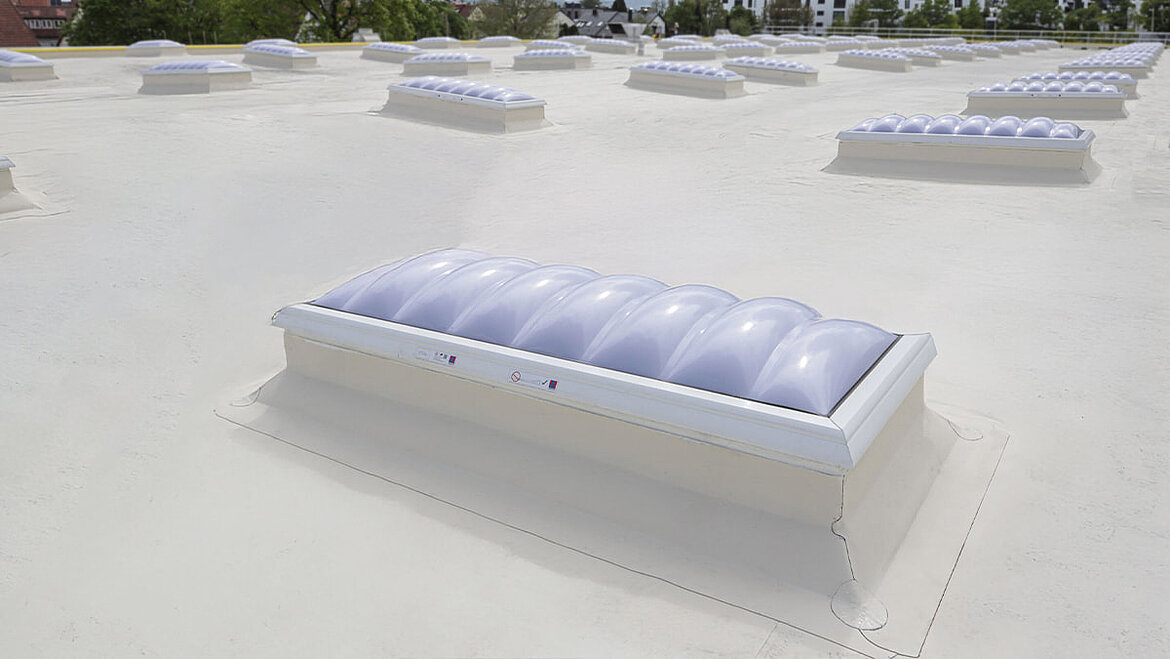
Rooflight domes are suitable where robustness, quick replacement, minimal disruption and technical functions are paramount. Added to this is their durability: particularly on exposed roof surfaces, wind, snow and weather loads are not peripheral issues, but central considerations for usage. LAMILUX Rooflight Domes in particular stand out here thanks to their corrugated shape and unrivalled load distribution. Replacing old skylights is therefore worthwhile for all ageing buildings to prevent damage and save on exorbitant costs.
Glass Skylights: the all-rounder for energy-efficient refurbishment
Where rooms are not only to be lit but also upgraded in terms of quality, the choice of system often shifts towards Glass Skylights. They are particularly well suited to offices, educational establishments, residential buildings and high-quality conversions – in other words, to projects where the quality of the environment, views and architectural impact are key considerations.
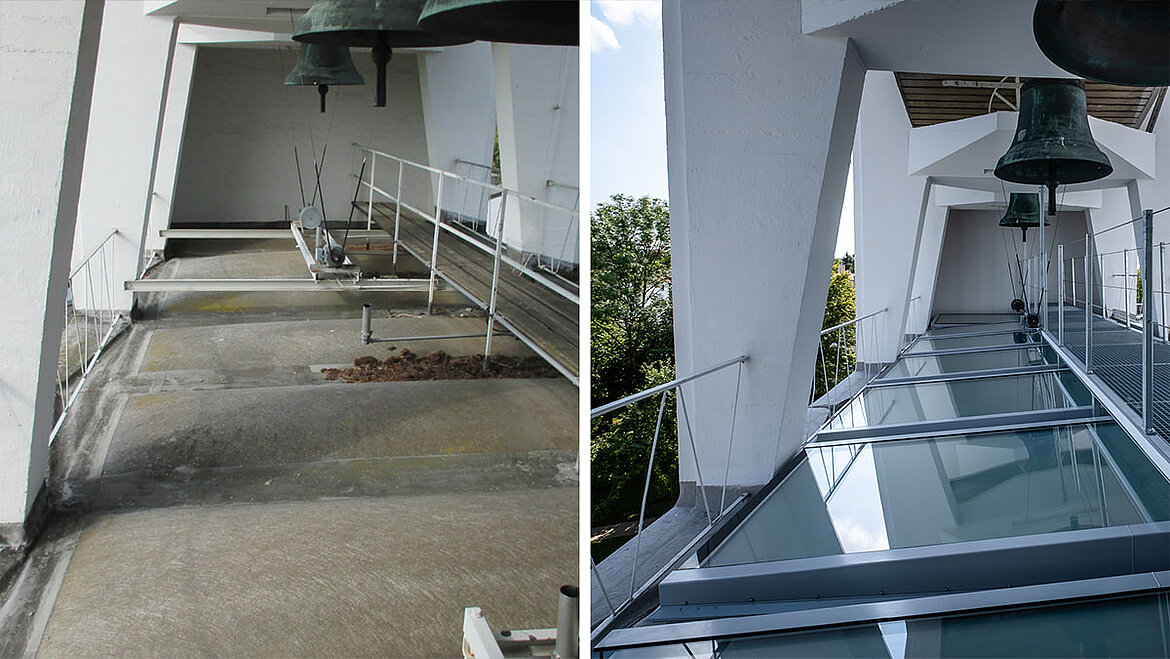
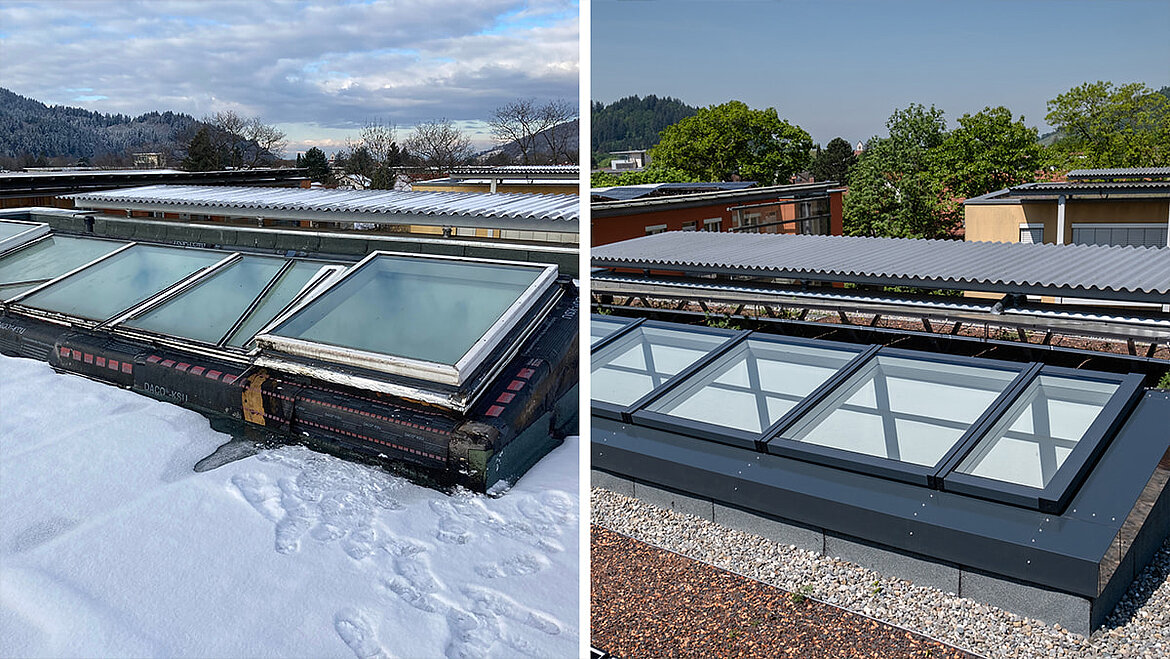
The major advantage in renovation: much like skylights, Glass Skylights can also be fitted onto existing upstands, allowing them to be integrated into existing roof structures in a surprisingly cost-effective manner. At the same time, they cover a wide spectrum – from more functional square formats to architecturally precise pyramid or hipped roof constructions. This is precisely what makes them an all-rounder.
High-quality systems also achieve excellent insulation values – with LAMILUX, even up to the certified Passivhaus standard. The real glass offers additional benefits in terms of sound insulation, durability and material quality.
Glass Roofs: when the renovation needs to be visually apparent
Glass roofs are the right choice when a renovation is intended not only to improve technical aspects but also to redefine the space. Typical applications include schools, shopping centres, public buildings, atriums and prestigious existing properties. Their key advantage lies not only in the extensive natural light they provide, but also in their customisability: glass roofs can be adapted with millimetre precision to the geometry, supporting structure and architectural concept.
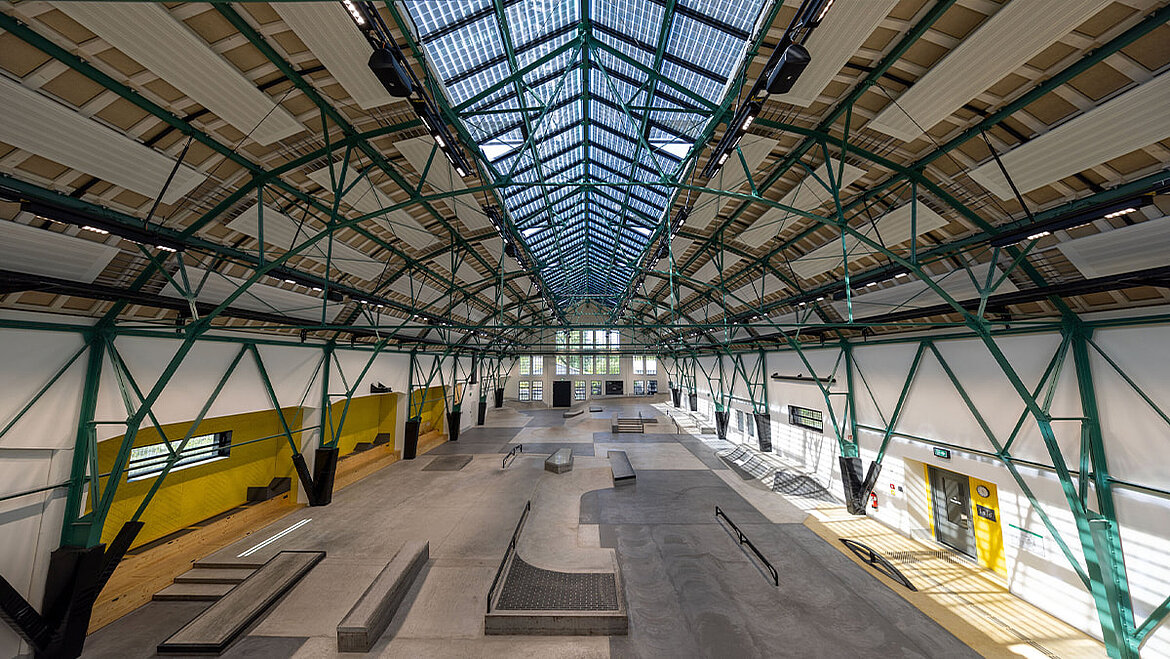
Various glazing configurations, optional PV integration, printed coatings to reduce solar loads, light-directing systems and project-specific geometries – Glass Roofs can achieve all of this, which is why they are also used for challenging refurbishments, for example in heritage conservation.
Modular Glass Skylights such as the MS78 from LAMILUX also support renovation projects, as they offer a high degree of prefabrication, thereby bridging the gap between customisation and construction time savings.
Continuous rooflights: the efficient large-scale solution for industrial and sports buildings
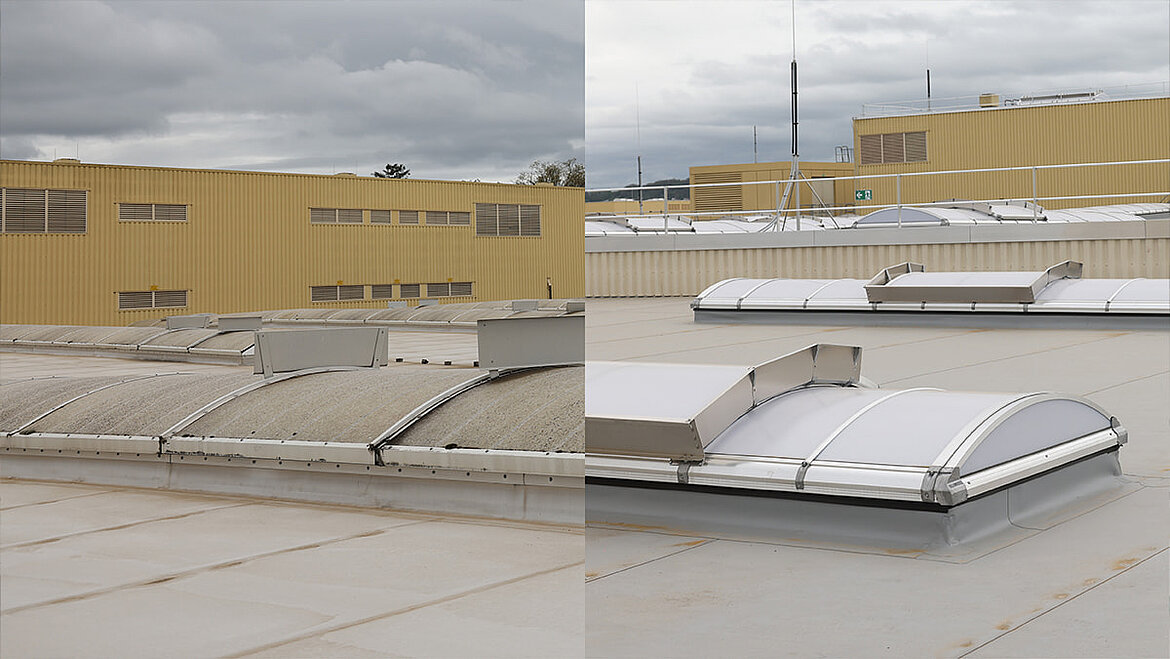
When entire halls, rather than individual zones, need to be evenly lit, continuous rooflights are usually the more systematic solution for industrial and logistics buildings, as well as sports halls. Their advantage lies in the linear, homogeneous illumination of large areas.
In existing buildings, they are particularly effective when existing roof geometries can be incorporated. Added to this is the functional added value: SHEV and ventilation units can be integrated into the system, meaning that lighting, smoke extraction and ventilation do not need to be installed separately. This reduces coordination efforts and the potential for errors, particularly in refurbishment projects with tight trade interfaces.
Flat roof access hatches: Access and natural light in a single system
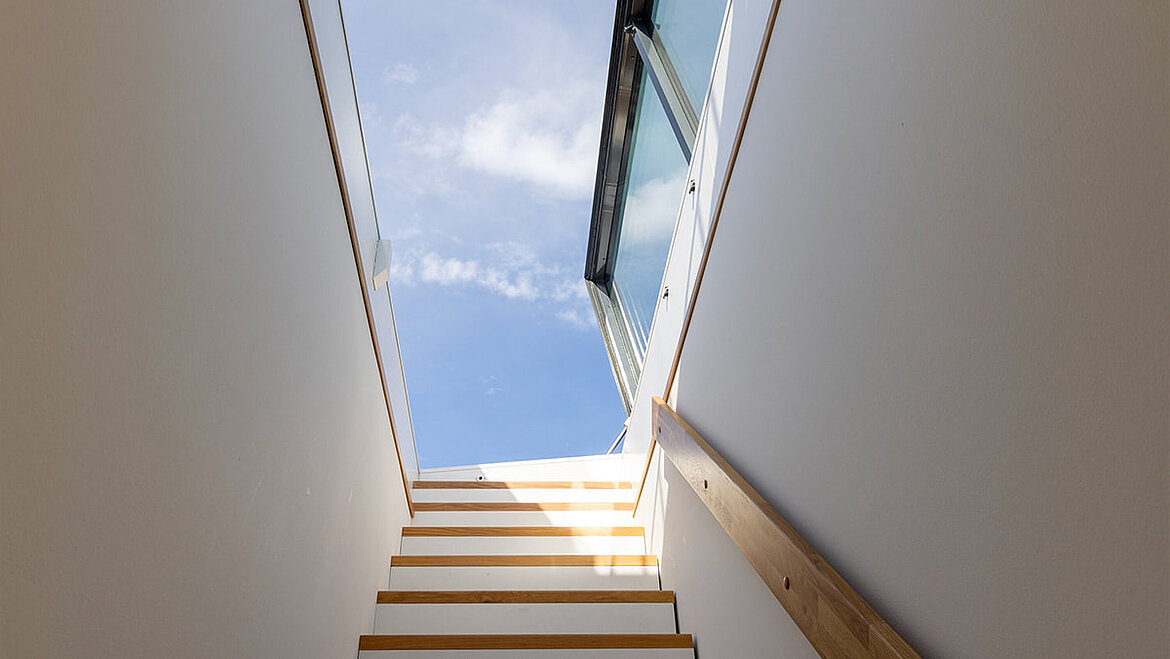
In addition to lighting, fire safety and ventilation, access to the roof also plays an important role in many renovation projects – particularly when roof areas are to be repurposed.
Flat roof access hatches offer the simplest solution here: they provide direct access via the interior of the building, without the need for additional structures or external solutions. This allows architectural interventions to be kept to a minimum, particularly in existing buildings. At the same time, they bring daylight into the rooms below, combining two functions in a single component – compact, efficient and reliable for planning.
A comparison of skylights
| Rooflight Dome | Glass Skylight | Glass Roof | Continuous rooflight | |
|---|---|---|---|---|
| Daylight entry | Selective | Localised | Large-scale | Large-scale |
| Fire protection | Suitable for use as a ventilation system | Suitable for use as a ventilation unit | Suitable for use as a ventilation unit | Suitable for use as a ventilation unit |
| Glazing | Plastic | Real glass | Real glass | Plastic |
| Energy efficiency | Good heat insulation values | up to Passivhaus standard | up to Passivhaus standard | up to Passivhaus standard |
| Applications | Industrial buildings, production and logistics halls, sports facilities | Residential buildings, educational establishments, administrative buildings | Atriums in shopping centres, educational establishments, administrative buildings | Industrial buildings, production and logistics halls, sports facilities |
| Assembly | Quick assembly, even on existing upstands | Quick assembly, even on existing upstands | Professional assembly tailored to existing roofs | Professional assembly tailored to existing roofs |
| Customisation | Wide range of standard sizes | Wide range of standard sizes, wide variety of shapes | Customised shapes to customer specifications | Custom lengths and designs |
What really matters when planning skylights in a renovation project
Choosing the right system is only part of the task. What matters is how early and how consistently skylights are integrated into the overall planning. In existing buildings, the rule is: if you plan daylight in isolation, you are wasting potential. If you factor it in early on, you can meet several requirements at once and create energy-efficient, forward-looking existing buildings.
1. Existing building analysis as a starting point
Every planning process begins with the existing roof. Bearing capacity, roof structure and existing openings determine which systems can be used effectively. In renovation projects in particular, this analysis is not a mere formality, but the basis for every subsequent decision.
2. Clearly defining use and lighting requirements
Daylight requirements vary considerably depending on the use. Whilst uniform illumination is crucial in industrial or sports halls, the focus in office or educational buildings is on the quality of the environment and targeted lighting. The choice of system must be derived precisely from this – not the other way round.
3. Set energy targets early
Skylights form part of the building envelope and directly influence the energy balance. Requirements for thermal insulation, solar gains and summer heat protection should therefore be defined at an early stage. Only then can a solution be created that is both energy-efficient and functionally appropriate.
4. Consider additional functions
In many projects, several requirements can be combined within a single system. Daylighting, smoke and heat extraction, and ventilation should therefore not be considered in isolation. An integrated solution reduces interfaces and significantly simplifies planning.
5. Plan implementation in existing buildings realistically
Renovations rarely take place under ideal conditions. Ongoing operations, limited construction periods and restricted access are the norm. Systems with a high degree of prefabrication or the use of existing upstands offer clear advantages here. They shorten construction times, reduce risks and make projects more predictable overall.
Choosing the right planning partner is key to the success of a refurbishment project
The biggest challenge in refurbishment projects lies in making the right decision at the right time.
Which system is suitable for the existing building?
How can natural light, fire safety and energy efficiency be combined effectively?
And how can the whole project be planned in a way that is both cost-effective and feasible?
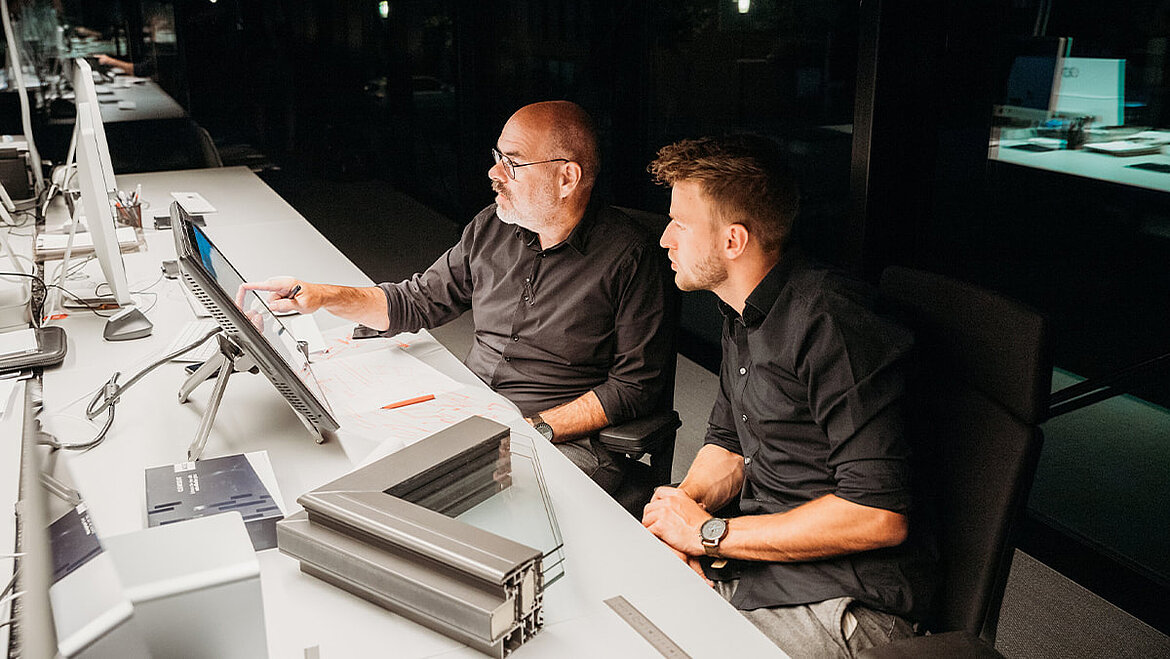
This is precisely where an experienced planning partner is needed. LAMILUX supports architects and specialist planners in integrating skylights correctly into the renovation concept from the very start – from the initial idea through to system selection and technical implementation. This is not about standard solutions, but about project-specific, individual approaches and solutions tailored to the actual conditions of the existing building.
This collaboration pays off particularly in renovation projects. Because the earlier skylights are properly conceived, the more they can reveal their true potential.


