

Why extreme weather poses a risk to roofs
Climate change is increasingly bringing extreme weather conditions. As a result, many existing roofs are reaching their limits. Heavy rainfall, hail with large grain sizes and intense UV radiation create a severe stress test that is clearly reflected in the condition of existing buildings.
Carsten Ficker, Head of the LAMILUX Academy, points out that many roofs from older construction periods are often no longer able to withstand rising climatic loads. Solar radiation is particularly insidious in this context: “UV radiation in particular is often underestimated. Over the years, such exposure leads to real problems.” The consequences are diverse, ranging from blistering in waterproofing layers and brittle materials to moisture penetration into the roof structure. As a result, the risk of roof damage increases even during moderate weather events.
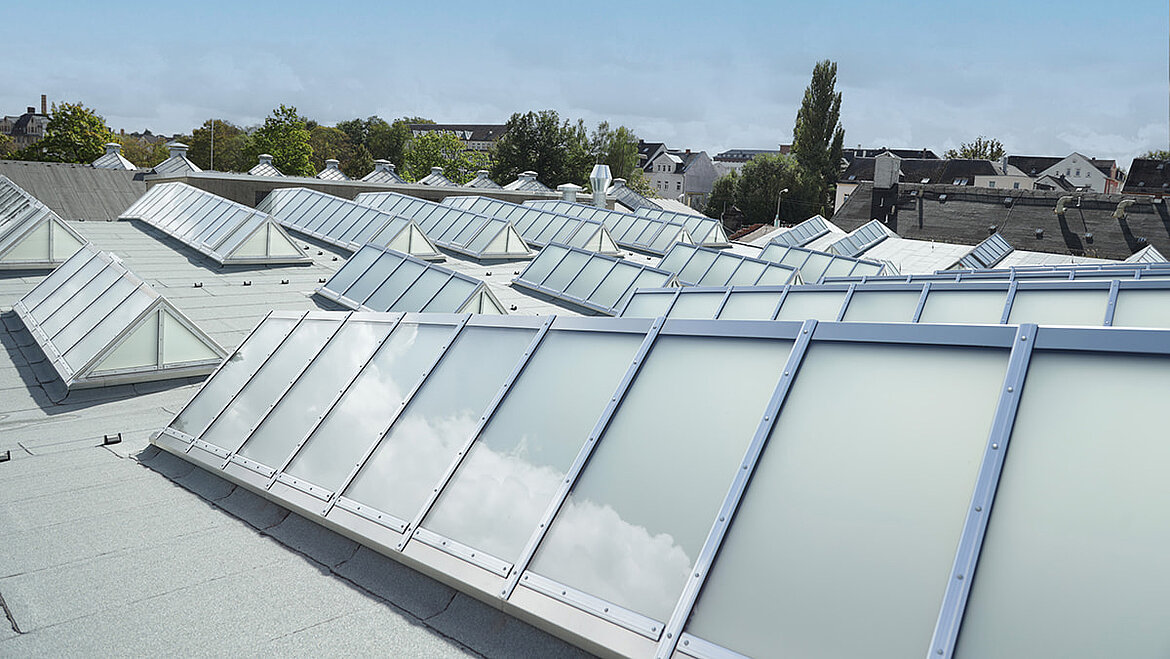
Legacy issues in existing buildings
In Germany, millions of buildings still have roofs dating back to the 1960s to 1980s. The majority of these roofs have logically exceeded the peak of their service life. Carsten Ficker emphasizes: “We have an enormous building stock in which many roofs have simply come of age.” Typical problems include worn bitumen membranes, insufficient insulation and inadequate drainage concepts. When such roofs are exposed to severe storms or heavy rainfall, damage is often unavoidable.
Refurbishment means prevention instead of repair
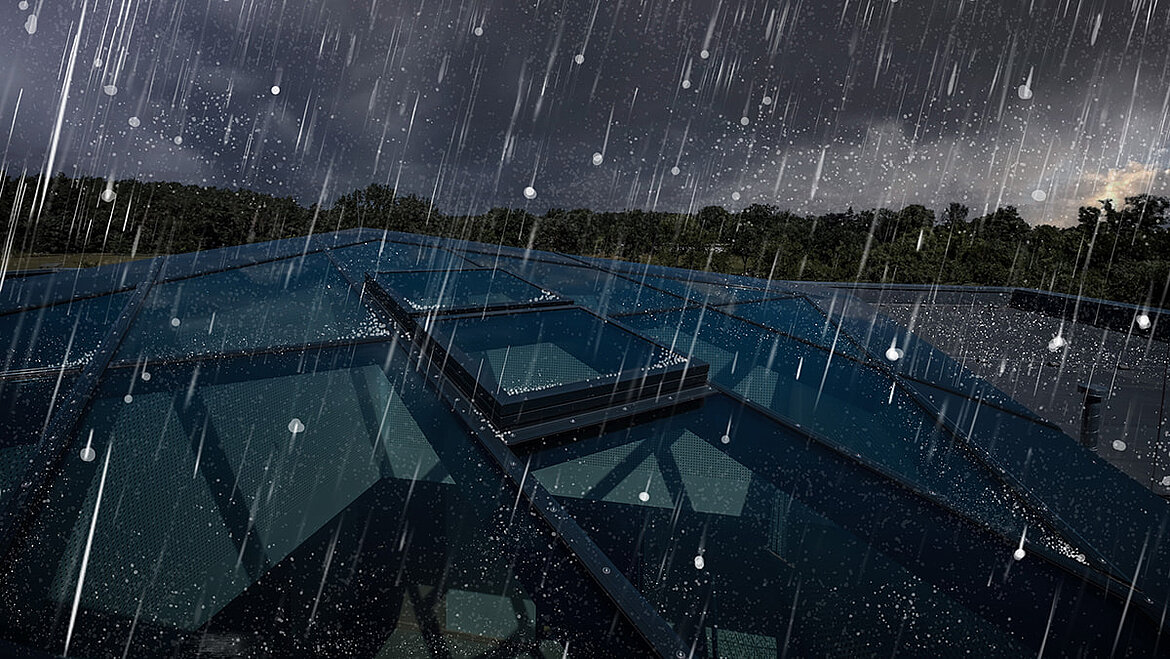
Patching up is no longer sufficient – modern refurbishment means prevention. Carsten Ficker puts it succinctly: “The goal is to make the roof future-proof, functionally, ecologically and economically.” This includes higher safety reserves for snow and wind loads, the use of more resilient and recyclable materials, and optimized insulation. In addition, roofs require concepts for water retention and emergency drainage to prevent damage during heavy rainfall, for example. These measures can be complemented by photovoltaic systems, green roofs and skylights.
According to Carsten Ficker, extreme weather events such as heavy rain or hail are no longer viewed solely as causes of damage, but increasingly as an opportunity to rethink the roof as a whole. For building owners, this means that repairs alone are no longer sufficient – a roof refurbishment can simultaneously improve energy efficiency and increase resilience.
Longevity as a sustainability factor
Anyone who decides to refurbish their roof is not only making a decision for the coming years, but for decades. Carsten Ficker explains: “A roof causes its largest CO₂ footprint during manufacturing, construction and dismantling. The longer it lasts, the smaller this footprint becomes per year of use.” This makes it clear that sustainability is not achieved solely through new materials, but through longevity. The longer a roof lasts, the more the environmental impact per year of use decreases – provided that planning, execution and materials are well coordinated.
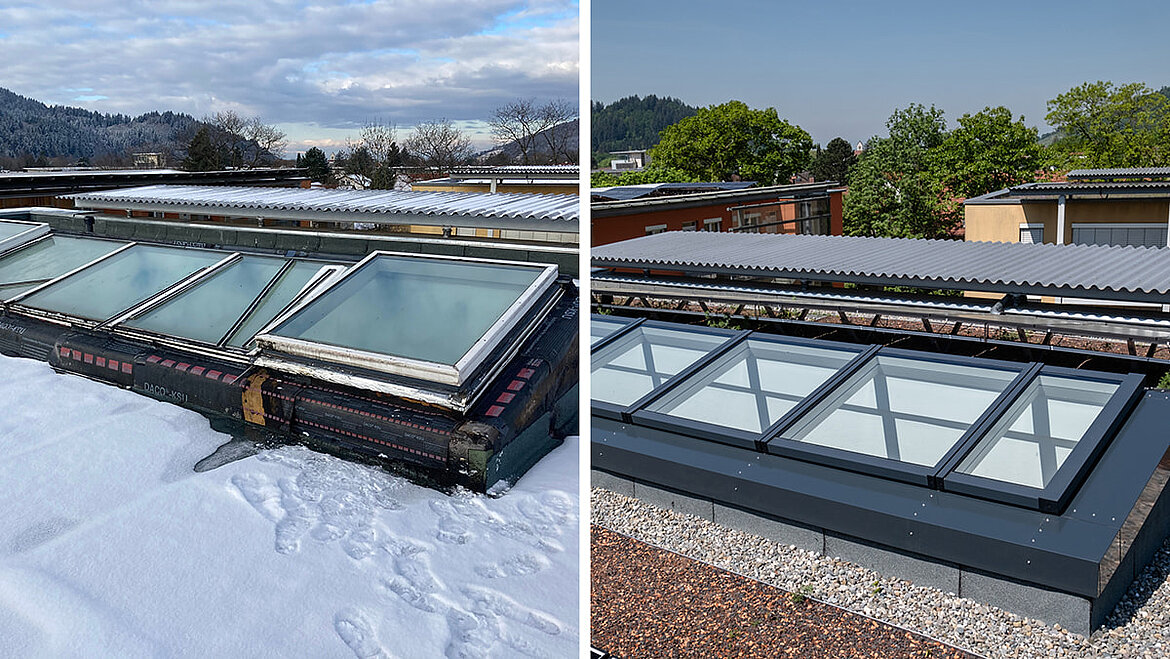
When the storm has passed: First steps
But what happens if a storm has already damaged the roof? According to Carsten Ficker, damage limitation is the top priority: “Initially, emergency sealing, pumping out water or technical drying are the main focus. Documentation and refurbishment follow afterwards.” It is particularly important to learn from each event: “It should always be checked whether preventive measures such as more robust materials or improved drainage could help avoid future damage.” Good coordination between all trades is crucial, especially when buildings need to remain in use or time pressure is high. Providers such as LAMILUX offer support through dedicated hotlines and rapid availability of tested replacement systems. This makes it possible to professionally repair storm damage to roofs without risking long downtime.

First aid for extreme weather damage
Storms, hail and snow place major demands on roofs. Outdated or refurbishment-ready rooflights can be damaged quickly. In such emergencies, LAMILUX provides fast support and replaces skylights within the shortest possible time.
How quickly should storm damage be reported?
This is very important: storm damage should be reported to the insurance company immediately – ideally within three days of discovering the damage. Otherwise, the policyholder risks benefit reductions or, in the worst case, a complete loss of coverage. For smooth claims processing, photos of the damage, weather reports and, if possible, early estimates or invoices for repairs should also be submitted. At the same time, it is advisable to prevent consequential damage, for example by covering open roof areas.
When does insurance cover storm damage?
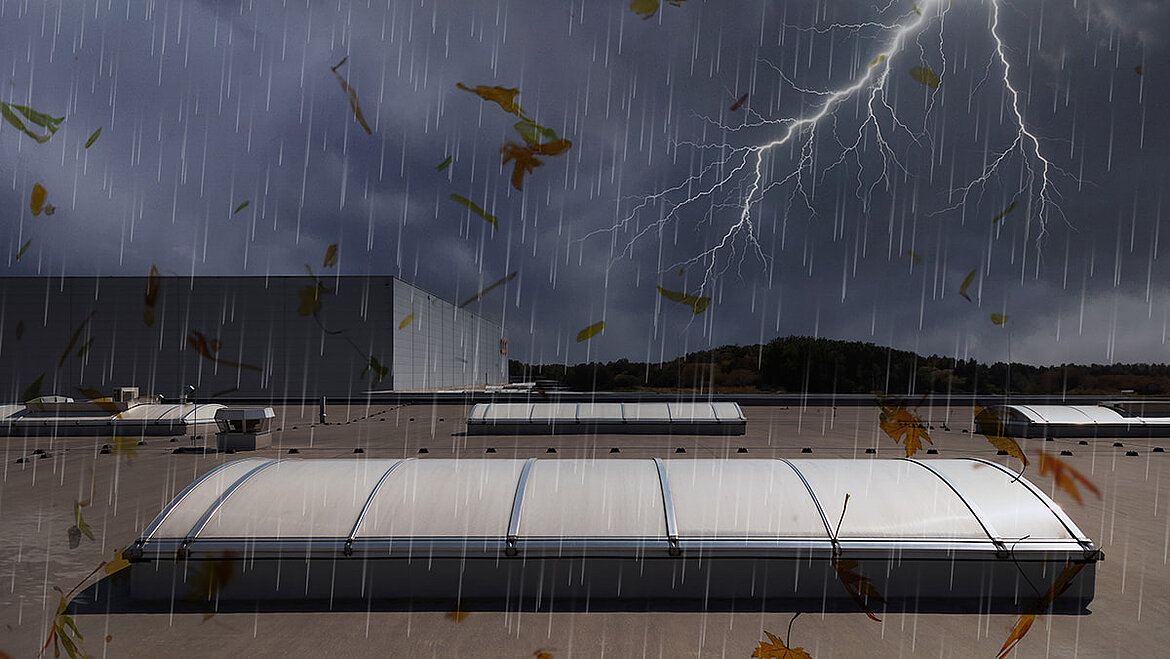
Storm damage to buildings is generally covered by residential building insurance if wind speeds of at least Beaufort scale 8 (approx. 62 km/h) were reached – only then is the damage officially classified as “storm damage” in insurance terms. If weather data proves that this wind strength occurred and the damage can clearly be attributed to the storm, the insurance company covers the costs of repairs to the roof, façade or other parts of the building.
Skylights in practical testing
Skylights and rooflights bring valuable daylight into interior spaces. At the same time, they must withstand the same loads as the rest of the roof. “Skylights improve the indoor climate and save energy. However, they must never become weak points in the roof,” says Carsten Ficker.
This is why LAMILUX relies on advanced testing methods. The LAMILUX Rooflight F100 W withstands heavy rainfall of eight litres per square metre in combination with hurricane-force gusts of up to 115 km/h. It can bear snow loads of up to 500 kg/m² and resists hailstones with a diameter of 50 mm at extreme impact velocities – meeting the highest hail resistance class HW5. Especially in the context of climate change, such performance values are becoming increasingly important.
Modern daylight systems therefore offer protection as well as comfort: they integrate into energy-efficient concepts without increasing the risk of roof damage.

LAMILUX Rooflight F100 W
Thanks to its innovative, wave-shaped geometry, the LAMILUX Rooflight F100 W withstands even extreme wind and snow loads. This protects flat roofs and the spaces below from severe damage caused by extreme weather.
Material selection and circular economy thinking
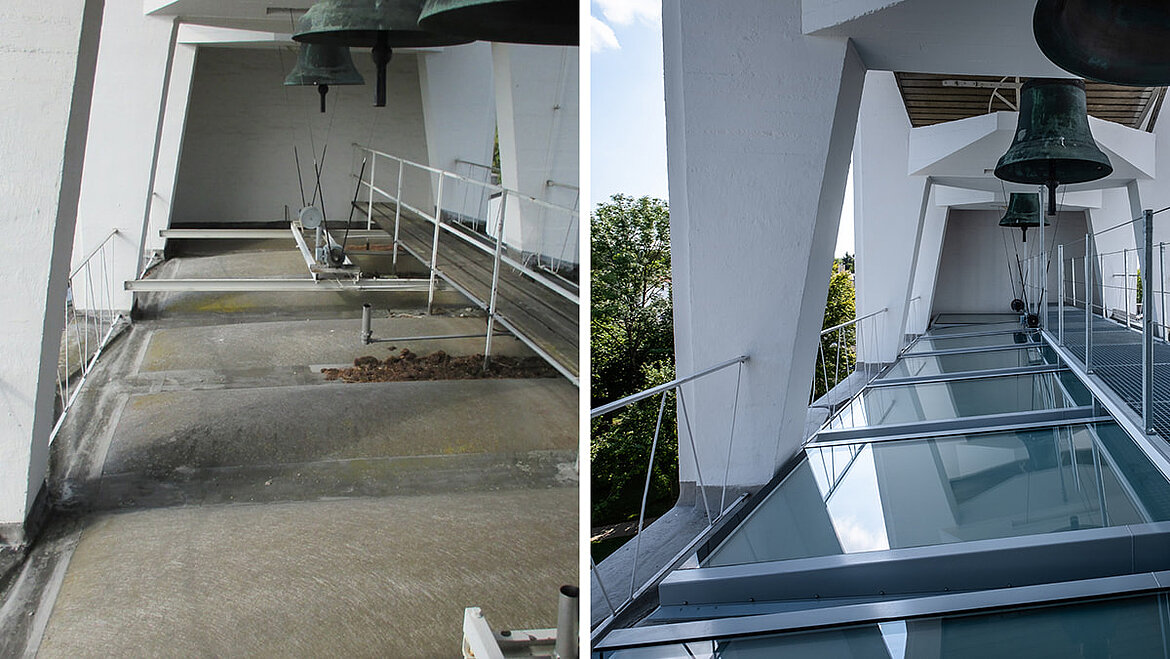
Another important aspect is the choice of materials. Carsten Ficker emphasizes: “At LAMILUX, we place great value on recyclable materials such as glass, aluminium or PVC. Anyone refurbishing today should not only think about the next weather situation, but about the entire life cycle of the product.” Those who refurbish a roof are therefore not only deciding on protection, but also on resource conservation. Circular materials make it possible to modernize roofs both ecologically and economically.
Planning as the key to success
Many risks do not arise from the weather itself, but already during implementation. Carsten Ficker observes: “Details such as the professional connection of a skylight or the precise consideration of regional climate loads are often addressed too late.” In addition, standards sometimes lag behind real weather scenarios. He therefore recommends relying on tested system solutions during the planning phase and working closely with manufacturers. This creates planning reliability and significantly reduces the likelihood of subsequent damage.


