Business meeting in a conference room behind glass walls

Daylight in the workplace


Daylight in the workplace is not only a health factor, but also a legal requirement – but what does that mean in practical terms for daylight lighting in the office?


Reading time: ca. 6 min.

Why daylight in the workplace is essential

Daylight in the workplace is a key foundation for healthy, productive work – and far more than just an architectural design element. Natural light has a direct effect on our biological rhythm. It regulates hormone balance, particularly the production of melatonin and serotonin, stimulates vitamin D synthesis and has been proven to improve mood and concentration. Studies show that employees who receive sufficient sunlight during the day are less likely to suffer from headaches or eye strain. At the same time, their productivity and general well-being increase. Daylight in the office therefore not only contributes to health, but also boosts the performance of the entire team.

A key advantage lies in the vertical illuminance, i.e. the light that strikes the eye directly. Whilst artificial lighting in the office often only reaches around 170 lux, daylight – particularly at a window-side workstation – can generate vertical illuminance levels ranging from several hundred to over a thousand lux. This difference significantly influences visual perception and subjective well-being in the workplace.

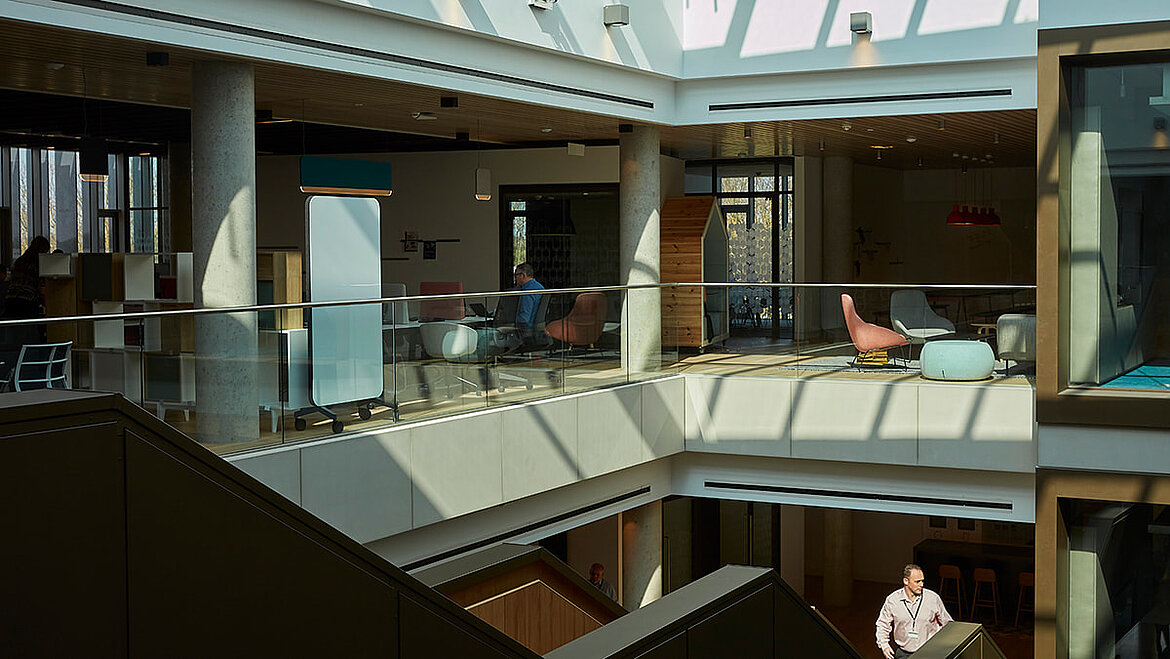
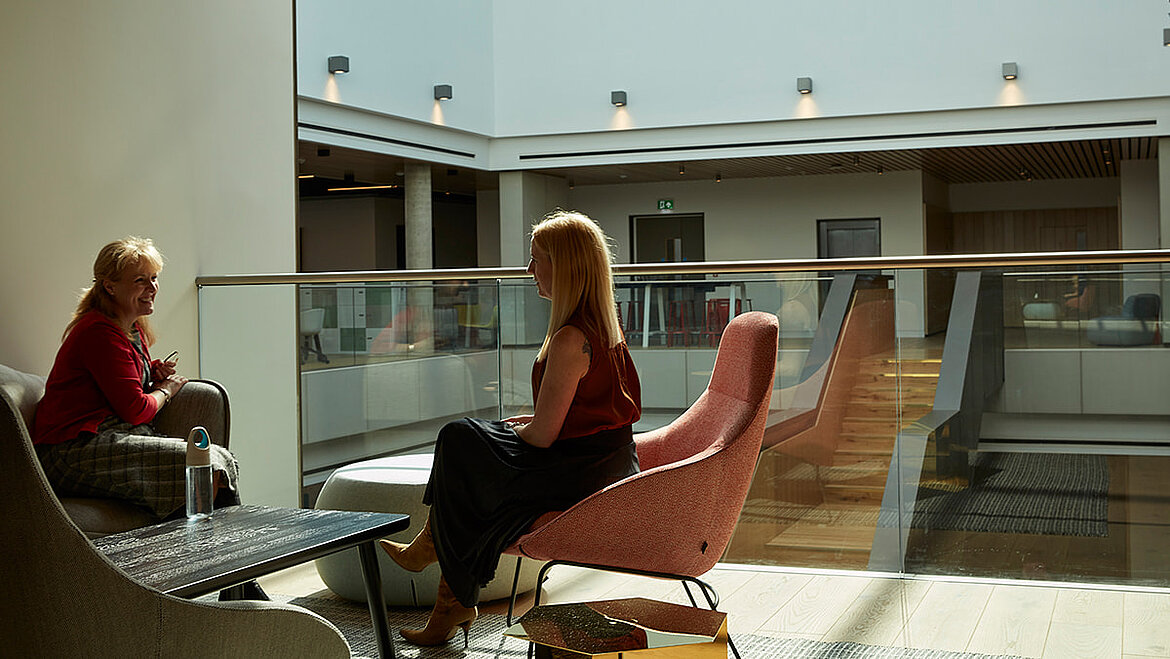
Two women converse in a modern, light-filled lounge with skylights

Does an office need to have a window? Legal regulations on daylight lighting

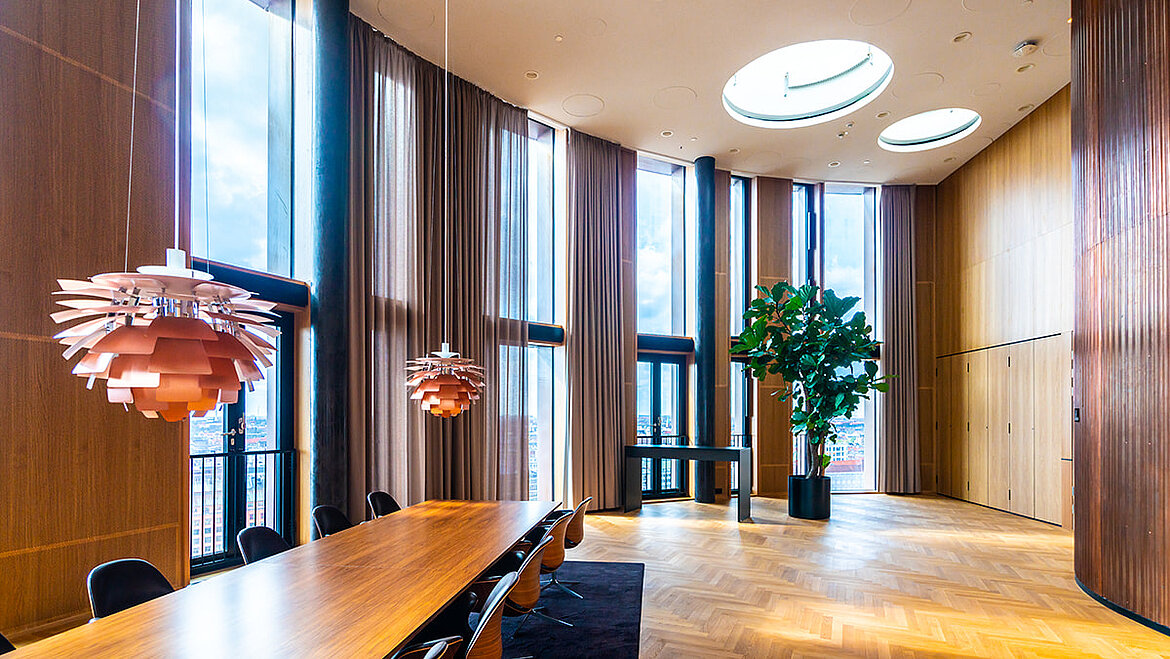
Modern conference room with round skylights

Faced with various workplace guidelines, many building owners ask themselves: Does an office need to have a window, and how much daylight does a workplace require according to regulations? The answer is provided by the Workplace Ordinance. It stipulates that workrooms must be provided with sufficient daylight and that there should be a visual connection to the outdoors. 

This fundamental requirement is specified in more detail by the Technical Rule for Workplaces ASR A3.4. This states that natural light is preferable to artificial lighting. The standard also makes it clear that the quality of light – that is, its direction, colour, intensity and variability throughout the day – cannot be achieved by artificial lighting alone.
Daylight in the office therefore brings not only brightness, but also dynamism and a sense of real-life atmosphere to the workspace – qualities that cannot be artificially simulated.


The European standard DIN EN 12464-1 also plays a central role. It sets out in detail the illuminance levels required in work areas. Increased lighting – ideally provided by daylight – is required, particularly for tasks requiring high precision or for older employees. And here too, it is emphasised that electrically operated lighting alone is not sufficient to fully meet the legal requirements.

The daylight factor: how well a room is supplied with daylight

An important indicator for assessing lighting conditions is the so-called daylight factor. It describes the ratio between the brightness at a specific point indoors and the illuminance outdoors under overcast skies. The aim is to achieve the highest possible level of daylight autonomy – i.e. the ability to use workspaces during the day with the aid of natural light ( ). In well-designed spaces, this autonomy can reach up to 80 per cent.

Whether an office achieves this figure depends on several factors. Among other things, the light transmission of the glazing used is crucial.

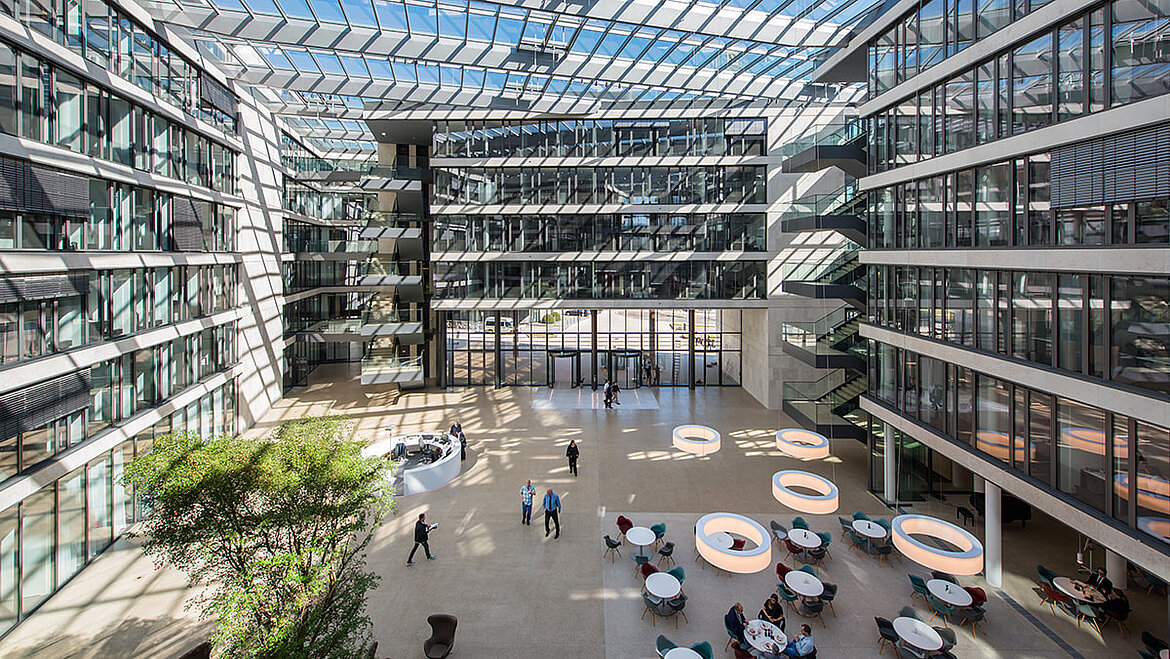
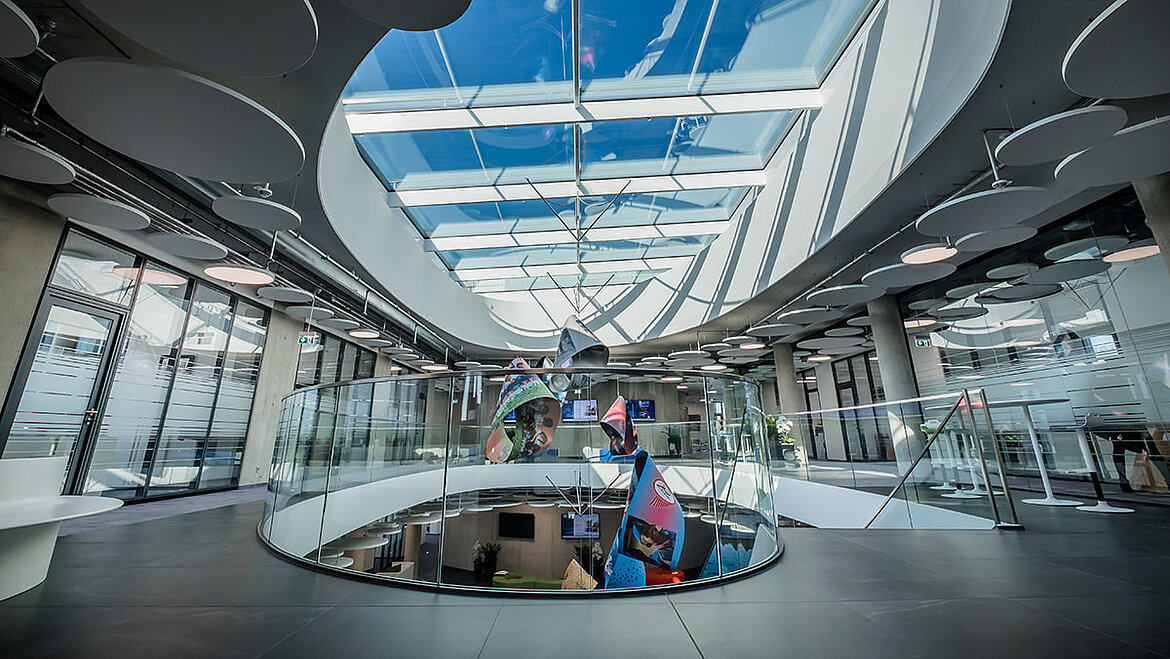
Modern atrium with oval glass roof and plenty of natural light

Clear glass achieves a light transmission of over 90 per cent, float glass is slightly lower, and modern insulation glass also achieves values of around 80 to 86 per cent, depending on the design. Sun protection insulating glass or certain plastics, such as those used in skylights, offer transmissions of 25 to 80 per cent, depending on the type. In addition, soiling affects light transmission – heavy soiling can reduce light incidence by up to 50 per cent. ASR A3.4 therefore requires that provision be made for regular cleaning of surfaces as early as the planning phase to ensure adequate light incidence at the desk.

Light incidence at the workplace via façade windows: advantages and limitations

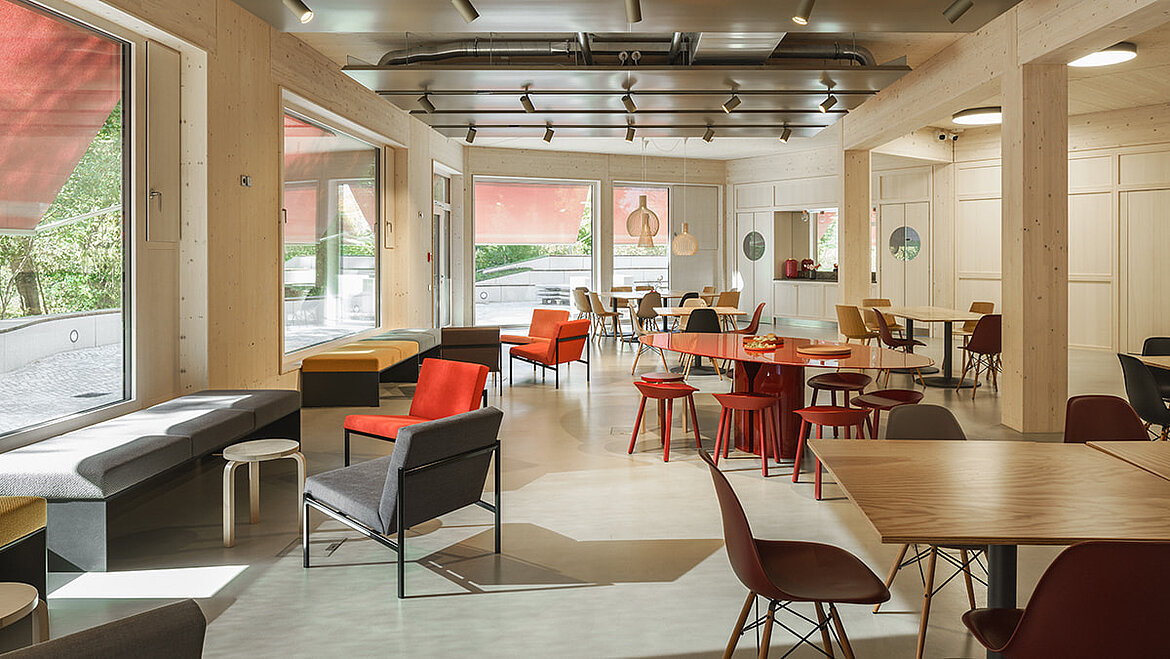
Bright dining room with plenty of natural light and modern furnishings

Facade windows are considered a classic solution for providing daylight. With shallow room depths – up to around 4.5 metres – and standard window heights, good daylighting is possible. Such windows also offer a valuable visual connection to the outside world, which has been shown to enhance well-being. However, the surroundings play a significant role.

Dense development, narrow courtyards or dark surfaces can significantly reduce the amount of light reaching the desk. Although light enters the building through the wall opening, how intensely and deeply it penetrates the room depends heavily on the surroundings

Daylight in the office with zenithal light: more light through roof lights

Skylights – such as light domes, Glass Roofs or Continuous rooflights – are therefore even more effective. They utilise so-called zenith light, which comes directly from above and is at its strongest. Under a uniformly cloudy sky, the light from the zenith is three times as bright as the light at the horizon. This results in an interesting effect: a workspace situated beneath a roof light requires significantly less window area to achieve the same illuminance than a workspace lit solely by side windows. To be more precise: a side window would need to be 5.5 times larger than a corresponding roof light to provide the same amount of light. 

Modern atrium with skylights that let in plenty of daylight

As a result, roof lights enable particularly efficient and uniform daylighting in the office, even in rooms with greater depth or complex layouts.


In terms of planning, this means that rooms up to four metres high should have one roof opening per 30 square metres. For taller rooms, the area required increases accordingly. For workstations requiring 300 to 500 lux, a skylight area of 15 to 20 per cent of the room’s floor area is generally sufficient. Where budget savings are necessary, plans are often drawn up with just ten per cent – though this comes at the expense of daylight autonomy.

Large glazed atrium of a modern office building with glass roof and abundant daylight.

Our skylights

Whether skylights, glass roofs or continuous rooflights – LAMILUX offers a wide range of systems for your roof. With genuine Made-in-Germany quality, they provide long-lasting solutions for flat roofs, combined with aesthetic design.

Discover our skylights

Workstations by the window or under a roof light – but glare-free

A high level of light at the workplace brings not only advantages – it also places demands on glare control. To avoid direct sunlight and distracting reflections, opal or frosted glazing is frequently used for roof lights. These materials diffuse the light evenly and create a glare-free, pleasant indoor environment. Particularly when combined with skylights, this allows for the creation of lighting conditions that comply with standards and ensure visual comfort.

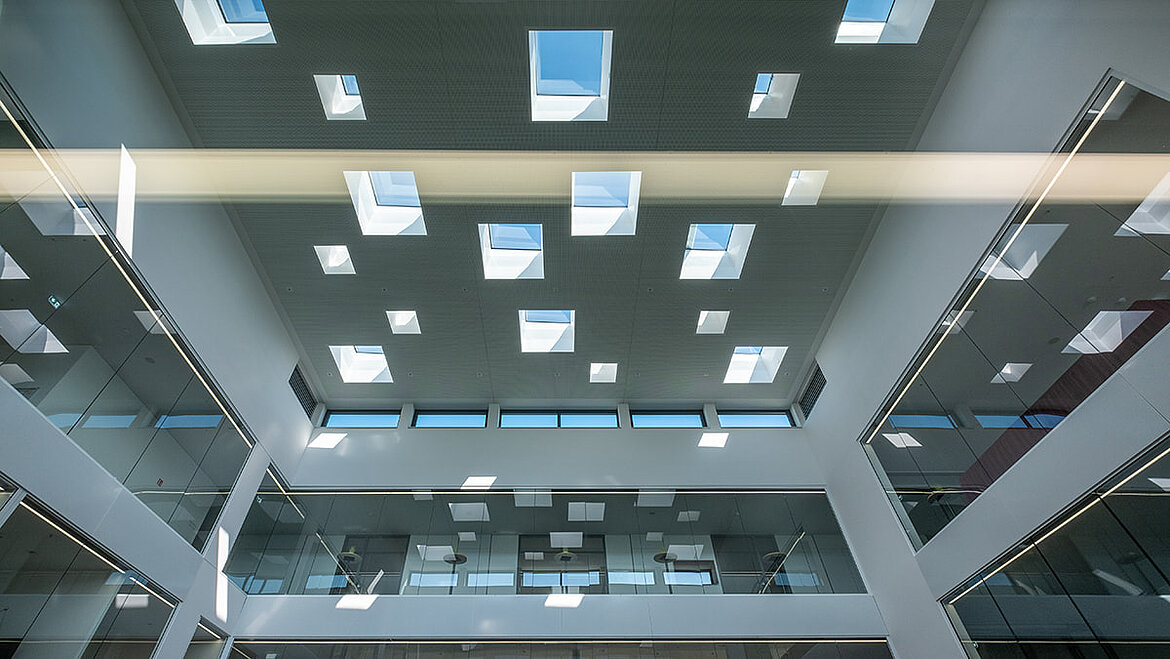
Ceiling with numerous flat roof windows in a modern building

Cleaning and maintenance ensure light quality

A clean light path is essential for the long-term quality of daylighting in the office. Even slight soiling – whether from environmental dust, pollen or deposits – can noticeably reduce the amount of light entering the space. When combined with soiled internal surfaces, this leads to significant losses. If both sides are heavily soiled, the loss of light can exceed 50 per cent. That is why workplace guidelines call for a design that ensures easy maintenance and cleaning of the components with light transmission – particularly where roof lights are difficult to access.

Workplace guidelines: How much light do we really need?

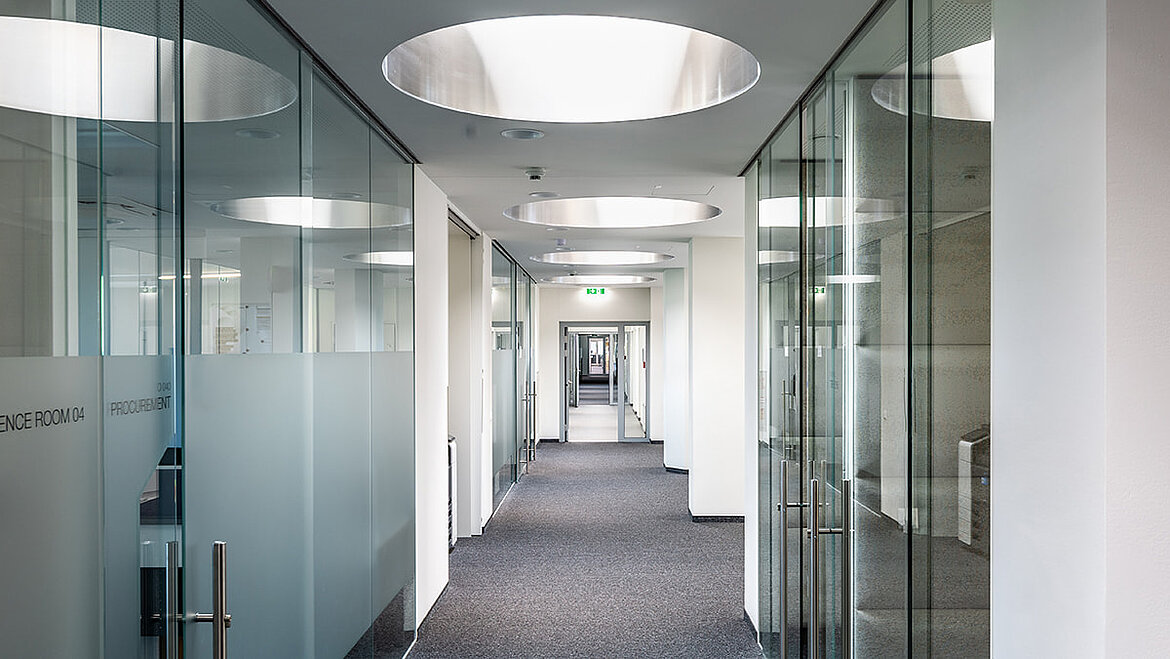
Modern office corridor with round flat roof windows for natural daylight

Lighting requirements vary considerably depending on the activity. Whilst corridors or break rooms can manage with around 100 to 150 lux, traditional office workstations require at least 500 lux to enable sustained concentration. However, in areas with a high potential for errors – such as laboratories or during precision work – far higher levels are required. Older employees also generally need more light, as visual acuity declines with age. Daylighting adapted to these needs increases workplace safety and reduces fatigue. This, in turn, benefits employees’ well-being and performance.

Daylight workplaces with added benefits: ventilation and safety

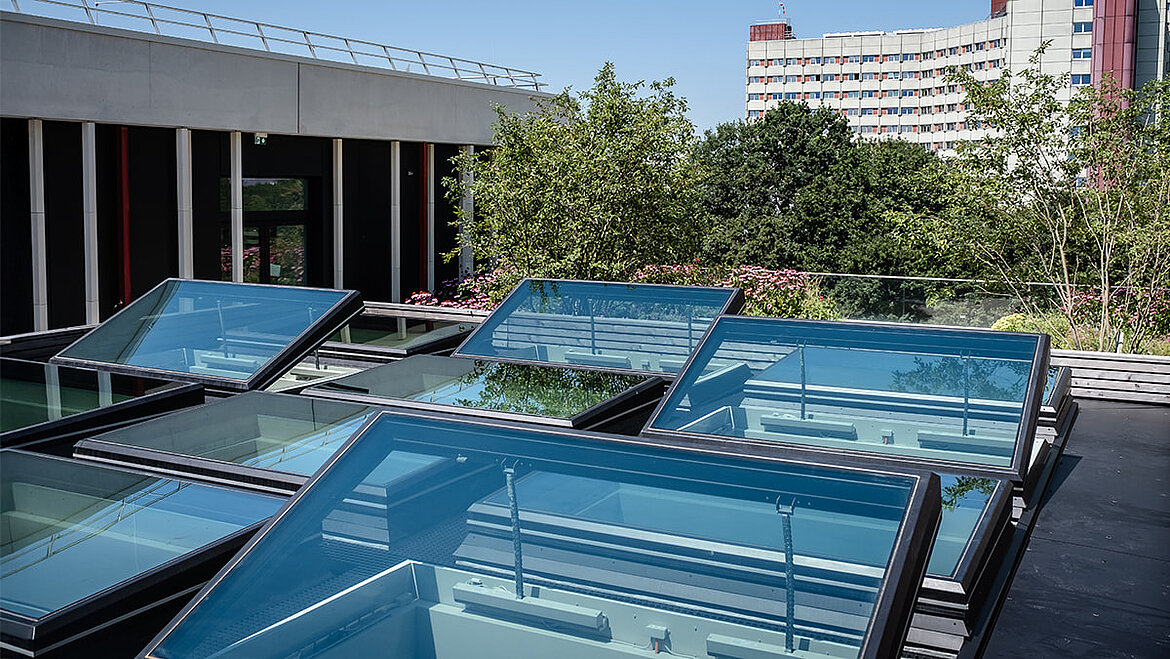
Multiple flat roof windows for maximum daylight

Modern skylights can do more than just provide light. Roof skylights are ideal for natural ventilation. Through what is known as thermal convection, stale air flows outwards without the use of energy, whilst fresh air flows in through supply vents – entirely without the need for a fan. In addition, many roof lights fulfil a safety-related function: they act as smoke and heat extraction systems in the event of a fire. This creates a smoke-free zone that facilitates self-rescue and rescue by others, and enables emergency services to intervene more quickly.

Daylighting is a must, not an option

Anyone planning offices or workspaces today must consider more than just artificial light sources. A well-designed workspace by a window with sufficient daylight combines legal requirements, health benefits and architectural quality. Whether through façade windows or roof lights – intelligent planning ensures uniform light distribution in the workplace, saves energy, enhances well-being and meets the requirements of the ArbStättV and DIN EN 12464-1. Daylight is therefore not only a legal requirement, but also a human necessity – and the light in which we work should be as natural as possible.