

Skylights on flat roofs – more daylight, ventilation and safety
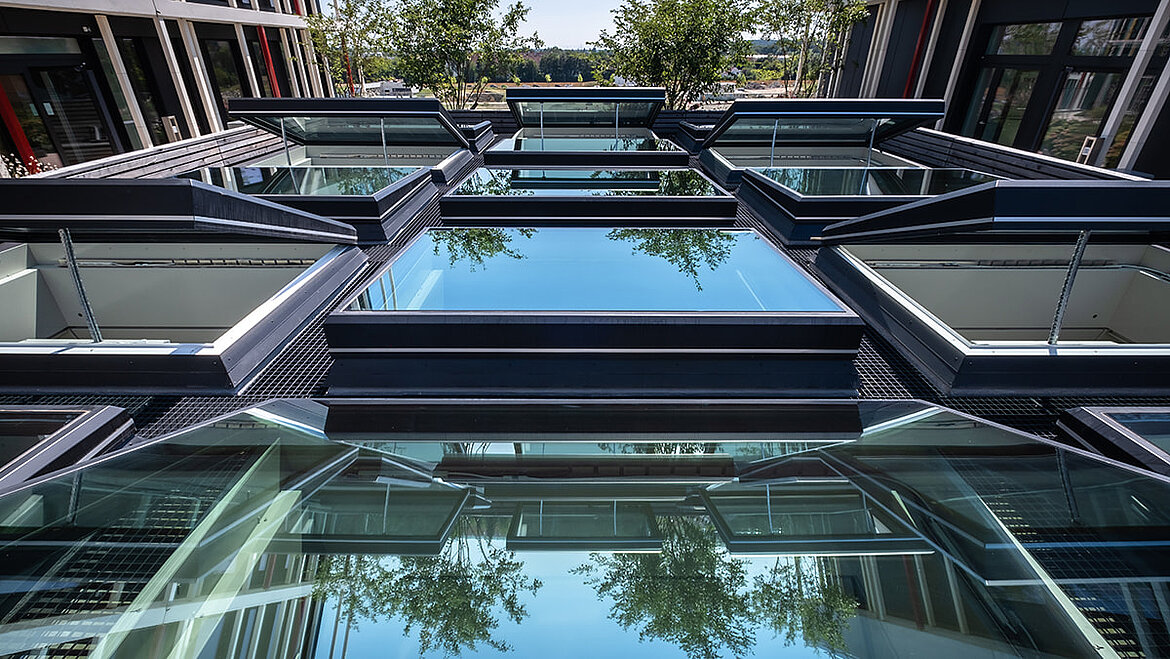
Skylights are both architectural highlights for residential and representative buildings and important sources of daylight and fire-safety components in industrial buildings. Their roof-level positioning allows interior spaces to be supplied with natural daylight for longer periods and with greater efficiency. This reduces dependence on artificial lighting, lowers energy costs and creates a more pleasant working and living environment. Integrated drives and ventilation sashes also contribute to improved indoor air quality and optimized air circulation.
This mechanism becomes particularly vital in the event of a fire. Intelligent building control systems allow skylights to open automatically, enabling smoke and toxic gases to escape upwards. This is especially important in spaces such as workshops or production halls.
Upstands for rooflights, skylights and flat roof access hatches
Skylights such as rooflights and flat roof access hatches are true all-rounders and are available in numerous variants. One component remains essential in all cases: the upstand. But what exactly is an upstand? In simple terms, it is the base frame of the skylight. Typically measuring between 15 and 70 centimetres in height, it provides a raised mounting surface for skylights. Depending on the skylight type, upstands are available in different shapes and designs—round, square or rectangular; sloped or vertical. They often feature a slight inclination to ensure proper water drainage and are thermally insulated. The upstand is therefore a key element of the entire skylight and plays an important role in installation, sealing and fire-smoke extraction. It forms the plinth of the skylight and is responsible for stability, insulation and smoke guidance in the event of a fire.
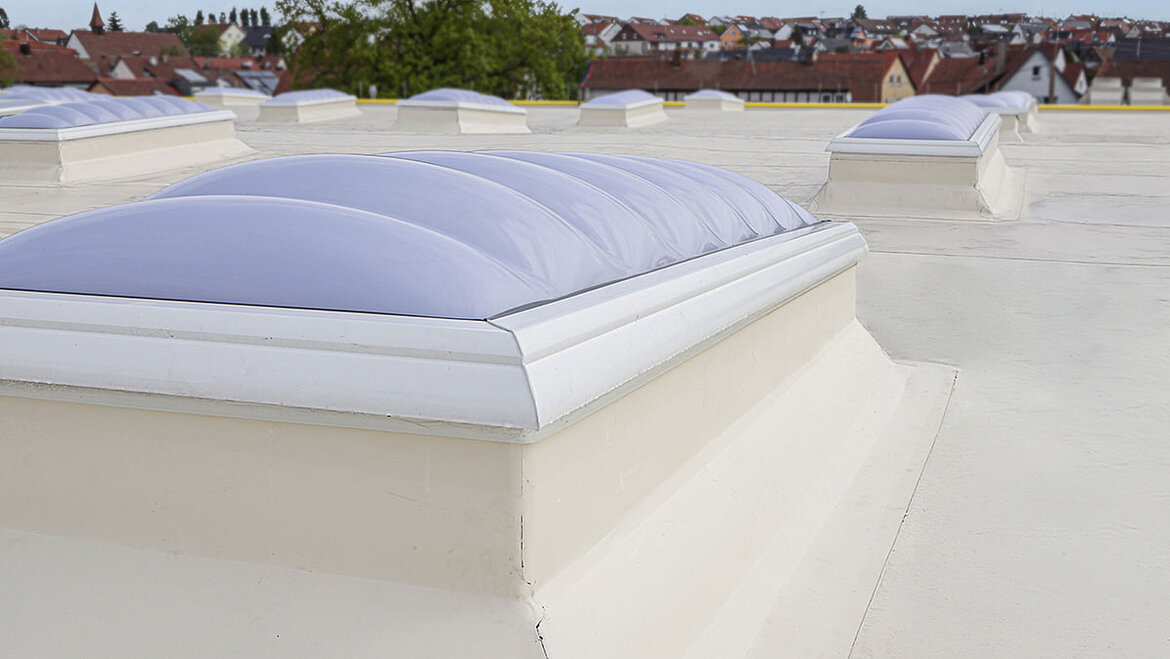
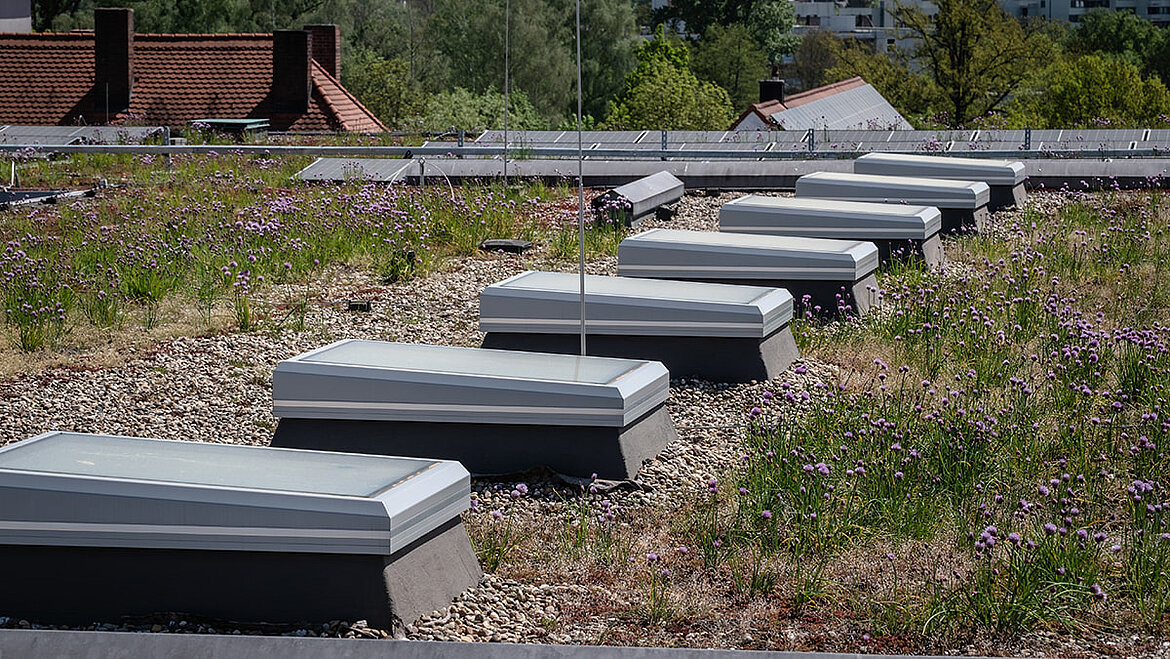
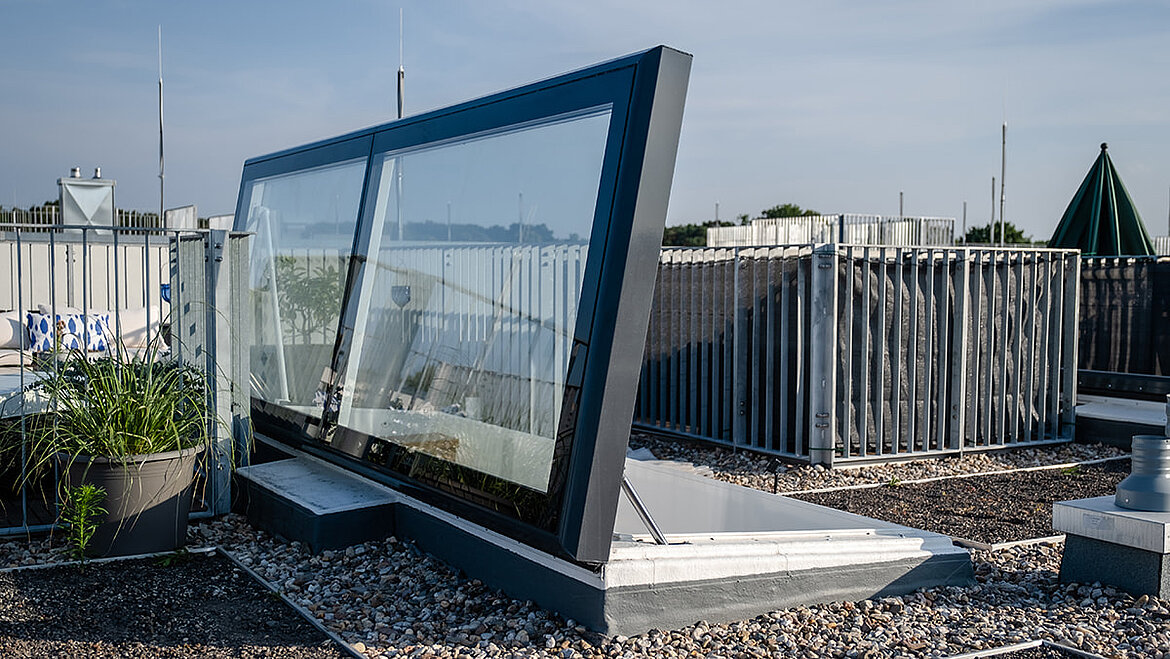
There are numerous ways to integrate upstands into the roof construction so that they can be securely installed on a wide variety of substrates. One option is the thermally insulated base flange, which incorporates additional insulation material into the upstand frame. These upstands are typically made of GRP (glass-fibre-reinforced plastic) and are custom-manufactured to match the thickness of the roof insulation, ensuring seamless integration. The integration of a PVC connection rail into the base flange ensures precise connection to the roofing membrane. The membrane is laminated continuously around the flange and carefully welded at the corners. This usually eliminates the need for labor-intensive upturning of PVC membranes and the connection to the upstand is completely sealed.
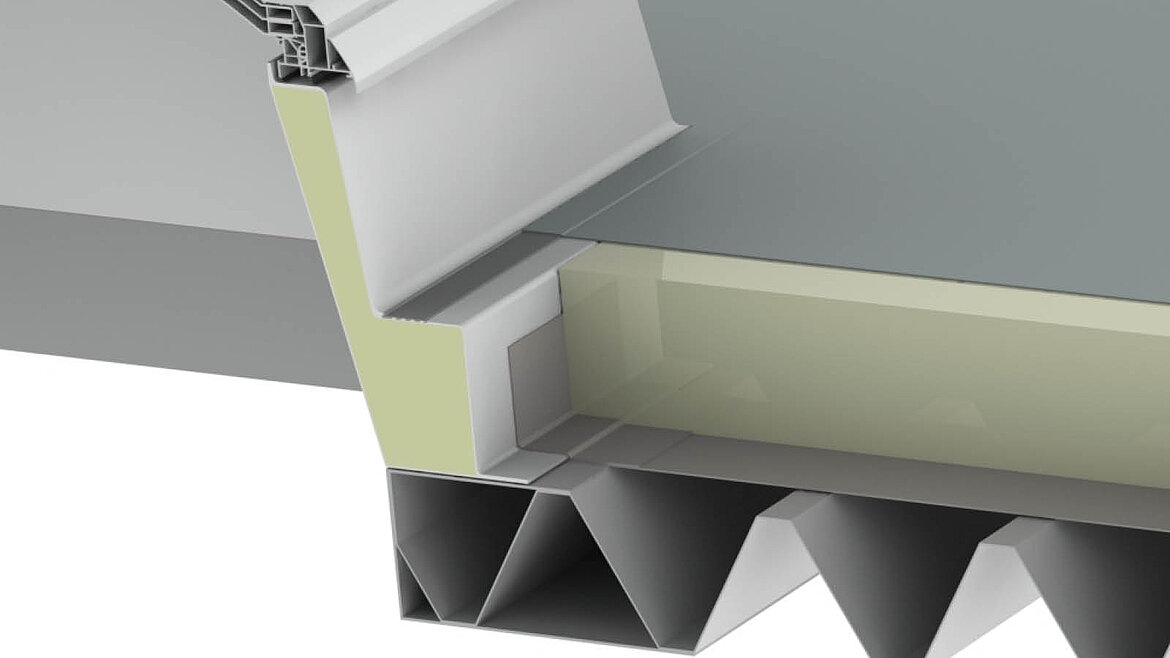
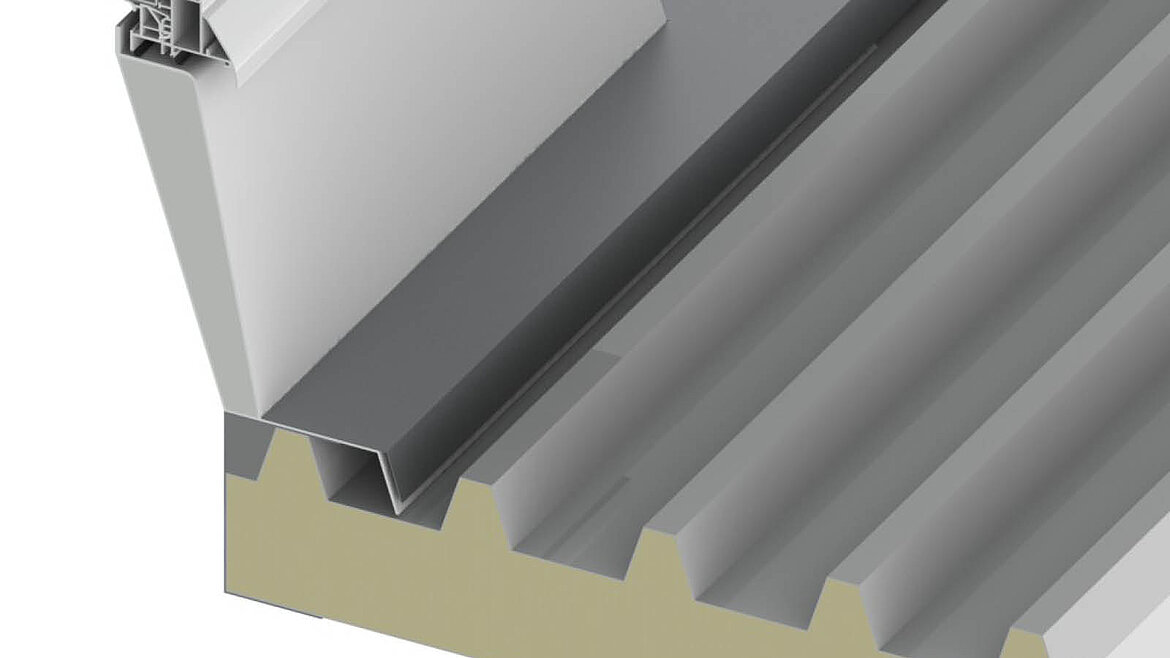
Another option is a two-sided folded base flange, which is particularly suitable for profiled roofs. In this design, the edge of the flange is bent and angled so that it can be individually adapted to existing profiles, providing additional stability and resistance. The upstand integrates optimally into the roof structure while offering reliable protection against weather influences. A four-sided folded version is also available to meet specific requirements for on-site upstands.
Material comparison for upstands
Which material is best suited for an upstand? Upstands are generally composed of several components made from different materials. The following comparison looks at GRP, steel sheet, aluminium and PVC. Glass-fibre-reinforced plastics are characterized by high strength and durability and can withstand significant mechanical loads. This is particularly important in regions with high wind and snow loads and for large, heavy skylights with multi-pane glazing. GRP is also largely insensitive to temperature during installation, making it especially suitable for use in environments with aggressive chemicals or high humidity.
Steel sheet is similarly robust, but if not properly coated it is susceptible to corrosion. Aluminium, on the other hand, is lightweight yet strong and durable and does not require additional coatings. Compared to steel, however, it offers lower structural strength.
PVC is somewhat less robust than the other materials and can deform more easily, but it is corrosion-resistant. GRP, aluminium and PVC are all lightweight materials that are easy to handle, whereas steel sheet is significantly heavier and therefore more difficult to install.
Due to their low thermal conductivity, GRP and PVC—when sufficiently insulated—are virtually free of thermal bridges, making additional thermal separation measures unnecessary. Steel and aluminium, however, conduct heat well and therefore require additional measures to prevent thermal bridging.
GRP upstands – what can they do?
Glass-fibre-reinforced plastic is often the best choice for upstands. But what exactly is behind this material? GRP is a composite material consisting of glass fibres embedded in a plastic matrix. The fibres are surrounded by the matrix and bonded through adhesive interactions.
As a result, GRP combines low weight with high strength and excellent resistance to weathering and corrosion. To ensure a consistently high-quality appearance, upstands are usually coated with a gelcoat.
The chemical bond between the gelcoat and the substrate prevents paint flaking. Although the material is fully pigmented, it can also be painted afterwards, allowing for any colour or surface finish from matte to high-gloss.
GRP is also easy and clean to process, making repairs and custom roof-connection solutions straightforward. In terms of safety, the material also meets DIN 18234 without additional measures.
This means that GRP upstands from LAMILUX fulfil key fire-protection requirements. They provide a suitable solution for skylights and, apart from a mandatory profile filler, do not require additional fire-protection measures. Installed directly on the load-bearing structure, they insulate the roof construction efficiently. In particular, the need for gravel fill to comply with standards or for special circumferential insulation or lining within the reveal is eliminated.
Upstand solutions for refurbishment projects
Upstands are not only crucial in the event of fire but also offer a range of solutions for refurbishment projects. Skylights—like all building components—can become leaky over time or be damaged by extreme weather or fire. Often, however, the existing skylight does not need or cannot be replaced.
With refurbishment frames from LAMILUX, such issues can be resolved quickly and easily. Thanks to the modular system, these special frames can be mounted manufacturer-independently onto existing upstands.
They provide a suitable adapter to create a new base for skylights using a stacking element. This increases the roof build-up height and creates space for thicker insulation layers, resulting in improved energy performance. As a result, refurbishment not only optimizes thermal insulation but also sustainably improves the energy balance of the entire building.


