

What Can You Do When a Loft Becomes Too Hot?
During the summer months, a top-floor living space can quickly become a heat trap. While temperatures on the ground floor may remain comfortable, rooms directly beneath the roof often exceed 30°C, making it difficult to keep indoor spaces cool. The main causes are direct solar radiation on the roof surface, limited thermal mass and large, often unshaded roof window areas.
As a result, effective summer thermal protection is becoming increasingly important in both new-built and refurbishment projects. The good news is that with the right combination of insulation, shading and ventilation, a loft can be kept comfortably cool even without air conditioning. This article explains which immediate measures are most effective in reducing heat build-up in loft spaces, what to consider when specifying roof windows for residential buildings, and why LAMILUX Skylights provide architects and building owners with one of the most effective long-term answers to the question: “How can I keep my loft cool?”
Why Does a Loft Get So Hot?
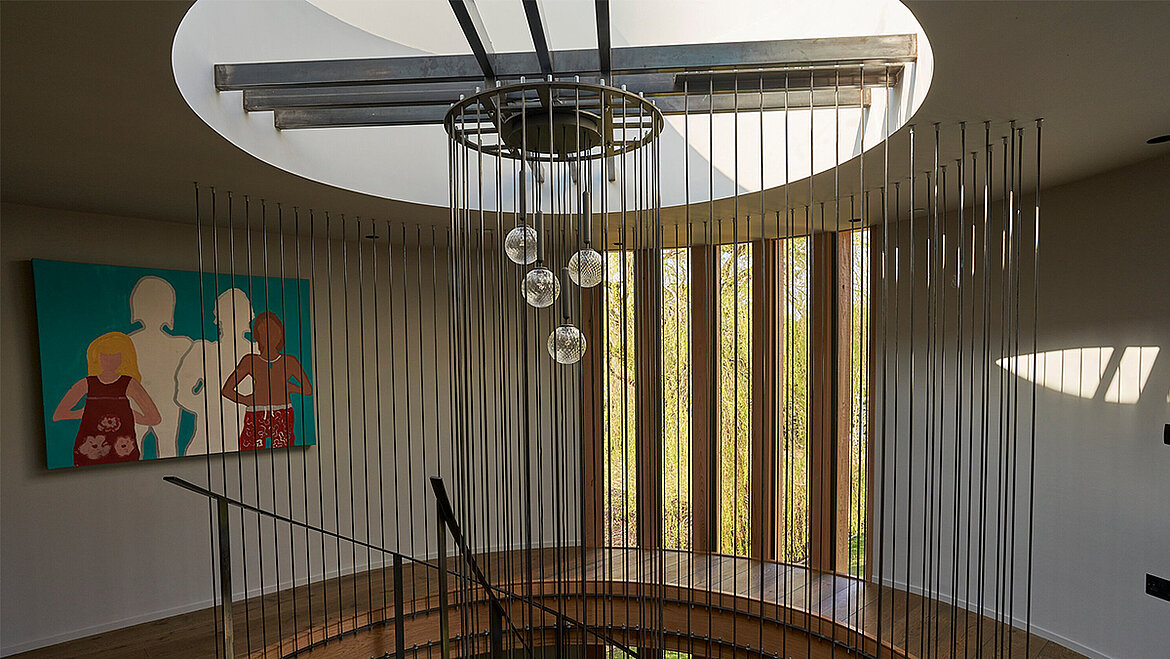
Excessive heat in a loft space is typically caused by the interaction of three key factors:
1. Direct Solar Radiation on the Roof Surface: During peak summer conditions, roof surfaces can reach temperatures of up to 80°C. This heat is transferred through the roof structure and radiates into the interior, continuously warming the rooms below.
2. Solar Heat Gain Through Roof Windows: Glazed areas can significantly contribute to heat build-up. Without effective solar shading, a south-facing rooflight or roof window can allow several hundred watts of solar energy per square metre to enter the room directly, increasing indoor temperatures considerably.
3. Limited Thermal Mass: Lightweight roof constructions consisting primarily of timber and insulation materials have only a limited capacity to store heat. As a result, indoor temperatures rise more quickly during the day and cool down more slowly at night compared to rooms located within more solid building structures.
Why Is My Loft Still Too Hot Despite Insulation?
Even modern insulation does not necessarily prevent a loft from overheating. The most common reasons include:
- Insufficient insulation thickness in existing buildings
- Thermal bridges at junctions and around old roof windows
- Missing or ineffective shading of glazed areas
- No possibility for night-time cooling through openable Windows
Good insulation is therefore the foundation, but a truly cool indoor climate is only achieved through the interaction of shading and ventilation.
Keeping a Loft Cool Without Air Conditioning: 5 Quick Tips
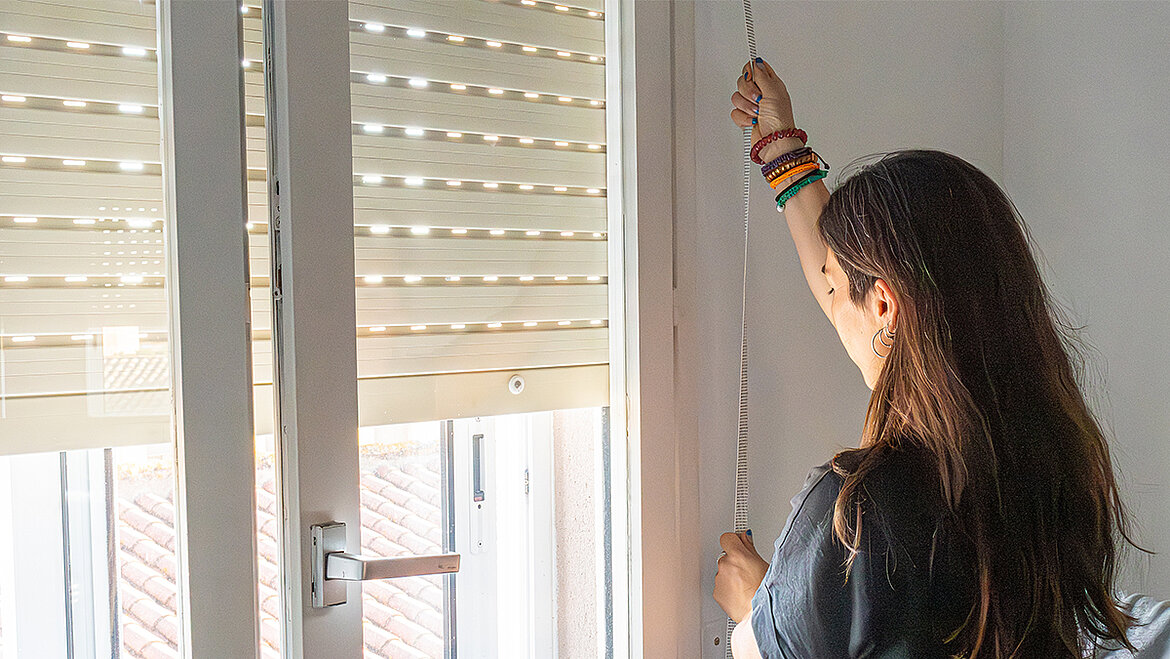
When a loft apartment heats up during the summer, quick and straightforward solutions are needed to remove heat from the room. The aim is to find measures that help keep a loft cool without air conditioning. The key is to act early so that the loft does not become excessively warm in the first place.
1. Ventilate Correctly: Open at Night, Closed During the Day
Open windows wide during the cooler night-time hours (approximately 10 p.m. to 8 a.m.) and create cross ventilation wherever possible. During the day, roof windows, blinds and pleated blinds should remain closed to keep the cooler air inside.
2. Darken Rooms Consistently
Close shading systems and solar protection on roof windows before they are exposed to direct sunlight – not only once the room has already heated up. Darkening roof windows with an external shading system is significantly more effective in reducing heat build-up.
3. Reduce Internal Heat Sources
Ovens, tumbling dryers and appliances left on standby generate additional heat. During hot periods, avoid using them where possible or move their use to the evening hours.
4. Use Evaporative Cooling
Damp cloths placed in front of a fan can provide noticeable cooling. Houseplants can also improve the indoor climate through transpiration. Find the evaporative cooling solution that works best for you.
5. Reflective Films as a Temporary Solution
Self-adhesive films applied to the inside of glazing can also reduce solar heat gain in the short term. They reflect sunlight before it enters through the roof window, helping to reduce the amount of heat that accumulates in the room.
Important: Immediate measures can help in acute situations, but they do not address the underlying cause. Relying permanently on fans, damp cloths or reflective films reduces comfort and efficiency over time – particularly as heatwaves become more frequent due to climate change and extreme weather events.
A genuinely cool loft apartment can only be achieved through structural measures such as insulation, shading and ventilation. These measures work together and cannot be replaced by behavioural changes alone.
The following sections explain how these measures can be effectively combined and the role that high-quality roof windows can play.
Insulating a Loft: The Foundation for Cool Indoor Spaces
High-quality thermal insulation is the foundation of a comfortable indoor climate in a loft. While its role in winter is clear – keeping heat inside the building – its function during summer is often underestimated. A well-designed insulation system helps prevent external heat from entering the building in the first place.
What Does Good Roof Insulation Actually Achieve in Summer?
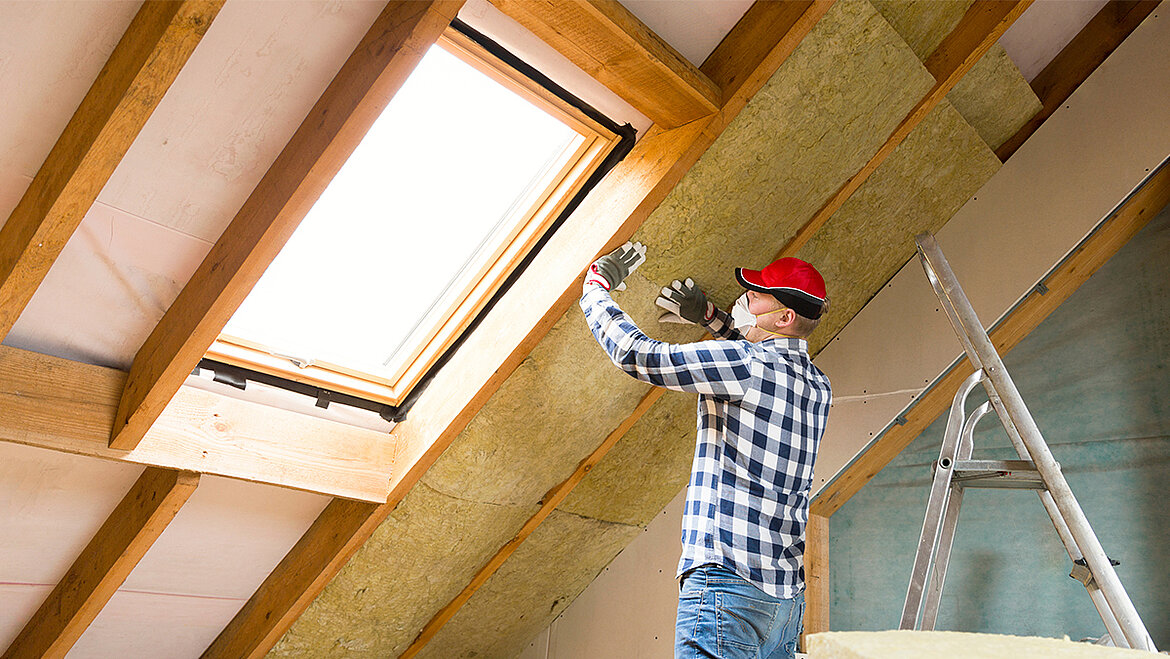
An insulation layer reduces heat flow through the building envelope. In summer, this means that solar heat building up on the roof surface is transferred to the interior only in a delayed and reduced form, helping to prevent the loft from becoming too warm. Two key performance indicators describe this effect:
- U-value (thermal transmittance): describes how much heat is lost through a building element – the lower the value, the better.
- Phase shift: indicates how many hours heat takes to pass through the insulation and reach the interior. For effective summer thermal protection in loft spaces, a time lag of at least 10–12 hours is recommended. This ensures that the heat accumulated during the day only reaches the interior at night, when ventilation is typically taking place.
How Do I Insulate My Roof Properly for Summer Thermal Protection?
For effective summer thermal protection, not only the insulation thickness but also the material properties and construction are crucial:
- High density and heat storage capacity: Heavier insulation materials (e.g. wood fibre or cellulose) buffer heat more effectively than lightweight materials and provide a longer phase shift.
- Sufficient insulation thickness: In modern residential construction, insulation thicknesses of 20 cm or more are generally considered appropriate; for passive houses, the figure is significantly higher.
- Gap-free installation: Thermal bridges at junctions, penetrations and windows can render even the best insulation ineffective.
- Airtight building envelope: Air leakage allows warm outdoor air to enter and cool indoor air to escape.
- Consideration of the roof type: Flat roofs and pitched roofs have different structural requirements, but the objective is the same: a continuously insulated construction free from thermal bridges.
Roof Windows Are Part of the Insulation Layer
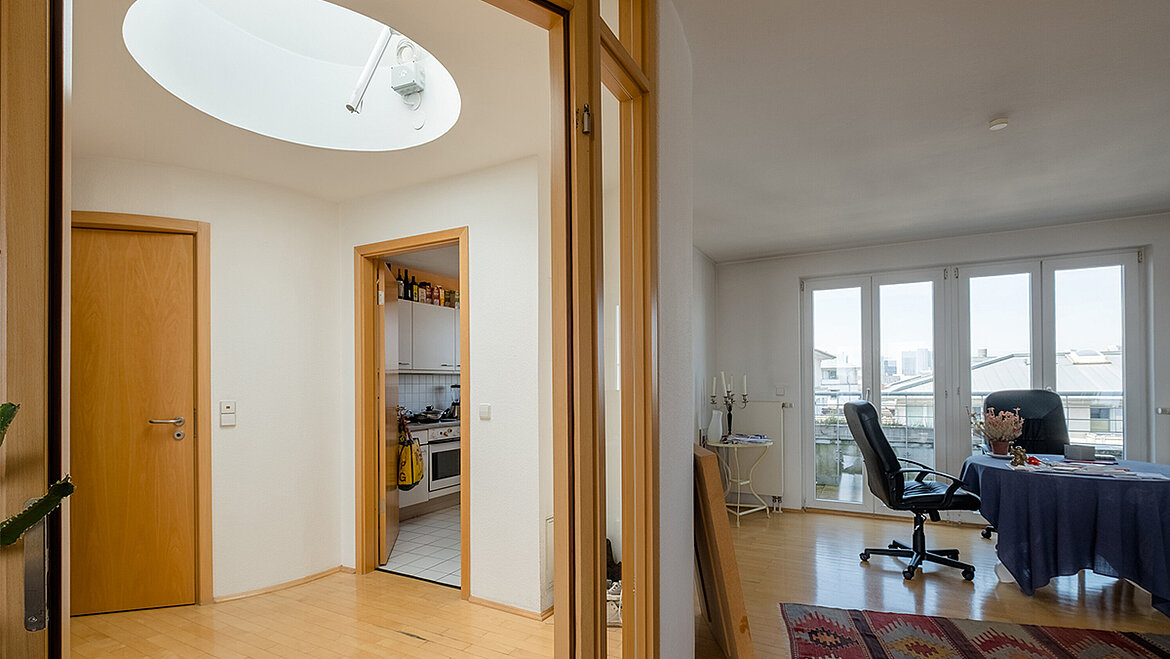
What is often overlooked is that the rooflight is also part of the thermal envelope. A poorly insulated or leaky rooflight can render even the best roof insulation ineffective. The following factors are therefore crucial:
- U-value of the complete unit (not just the glazing)
- Thermally insulated upstand or frame with a high-quality insulation core
- Thermal bridge-free connection details to the roof construction
- Proper integration with the waterproofing and vapour control layer
Particularly on flat roofs, the transition between the roof covering and the skylight is a critical detail.
LAMILUX Skylights address this with a seamless GRP upstand featuring an integrated rigid PU foam core, which is connected to the roof construction without thermal bridges. As a result, they achieve U-values up to passive house standards and are not a weak point, but an integral part of an energy-efficient roof.
Solar Shading for Roof Windows: Blinds and Pleated Blinds Against Heat
If only one measure can be implemented, it should be this: Effective solar shading on roof windows prevents solar radiation from entering the building in the first place. As a result, shading is the most effective way to keep a loft apartment cool.
External vs Internal Solar Shading
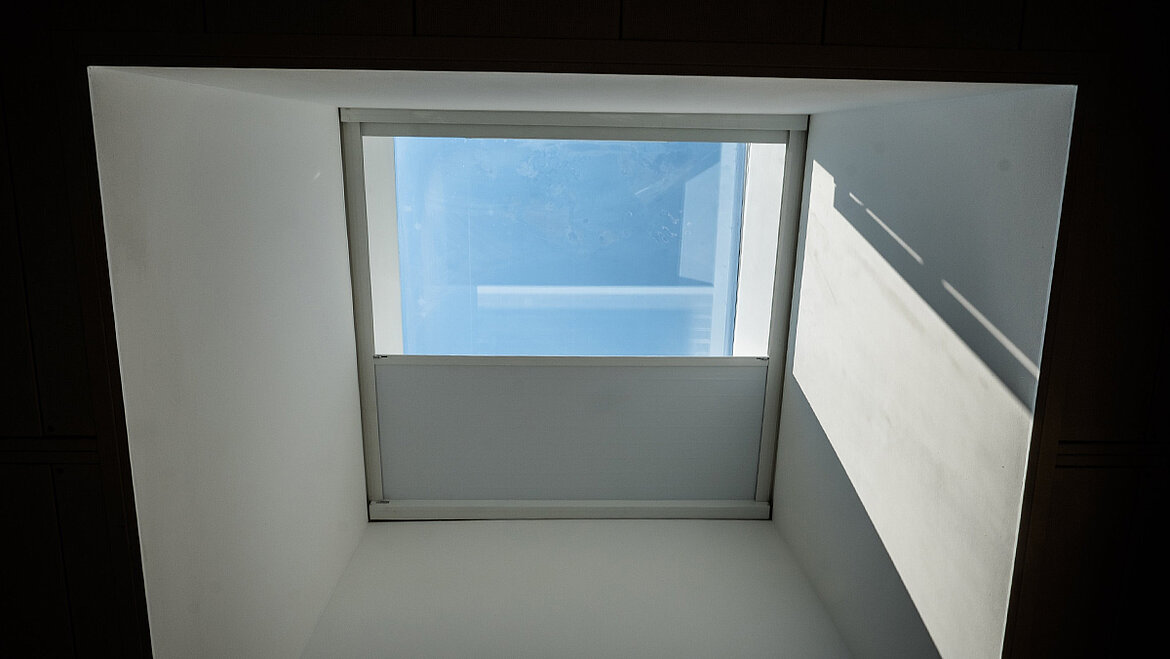
The physics are clear:
- External solar shading reflects up to 75% of solar energy before it reaches the glazing.
- Internal solar shading (such as pleated blinds or internal blinds) reduces heat gain by only around 25%, because the solar radiation has already passed through the glazing and is then converted into heat inside the room.
For effective loft cooling, external solar shading should therefore be the priority. Roof windows with internal shading solutions still serve a useful purpose for glare reduction and privacy.
Roof Window Blinds, Pleated Blinds or Fixed Shading – Comparing the Options
| Option | Heat Protection | Glare Protection | Retrofittable | Suitable for |
| External blind for roof windows | ★★★★★ | ★★★★ | Yes | Reducing heat build-up in loft spaces |
| Roof window blind / pleated blind (internal) | ★★ | ★★★★★ | Yes | Light control and glare protection |
| Solar control film | ★★ | ★ | Yes | Temporary solution |
| Fixed shading | ★★★★ | ★★★ | Limited | Architectural daylighting solutions |
Reducing heat build-up in loft spaces
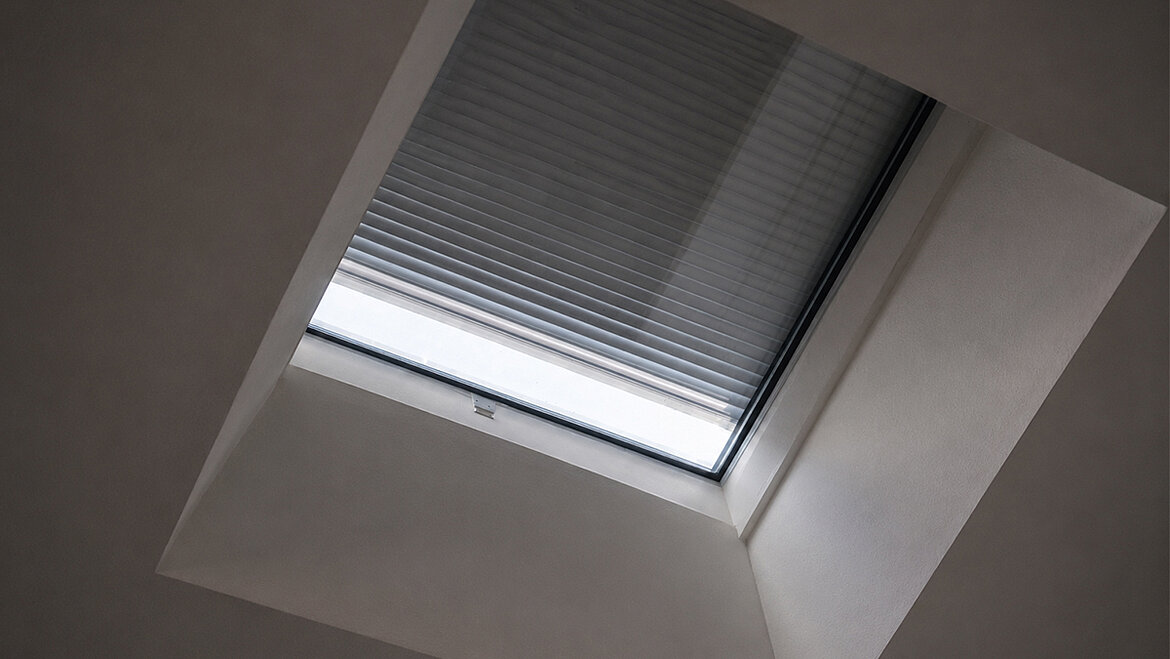
With LAMILUX Skylights, solar shading is not an afterthought but an integral part of the planning process:
- External blinds as the most effective form of heat protection for residential buildings
- Internal pleated blinds and roller blinds for glare protection and light control
- Fixed shading with a deciduous tree effect for natural daylight filtering, just like a canopy of leaves
- Integrated photovoltaic modules combining shading and energy generation
Not sure which skylight and shading solution are best suited to your project? Our LAMILUX technical consultants are available on site to support you throughout every stage of the planning process, right through to the installed roof window.
Natural Ventilation: Cooling Without Air Conditioning
Openable rooflights are the most effective tool for natural night-time cooling. Warm air rises and escapes through the roof window, while fresh, cool air flows in through lower-level windows. This thermal updraft works without any energy consumption.
Three Ventilation Strategies for Loft Spaces
1. Night-time cooling: Keep roof windows open at night to make use of the cooler outdoor air.
2. Cross ventilation: Open windows on opposite sides of the building simultaneously to achieve maximum air exchange.
3. Purge ventilation: Use short, intensive ventilation periods instead of leaving windows permanently tilted open.
Natural Ventilation with LAMILUX Skylights
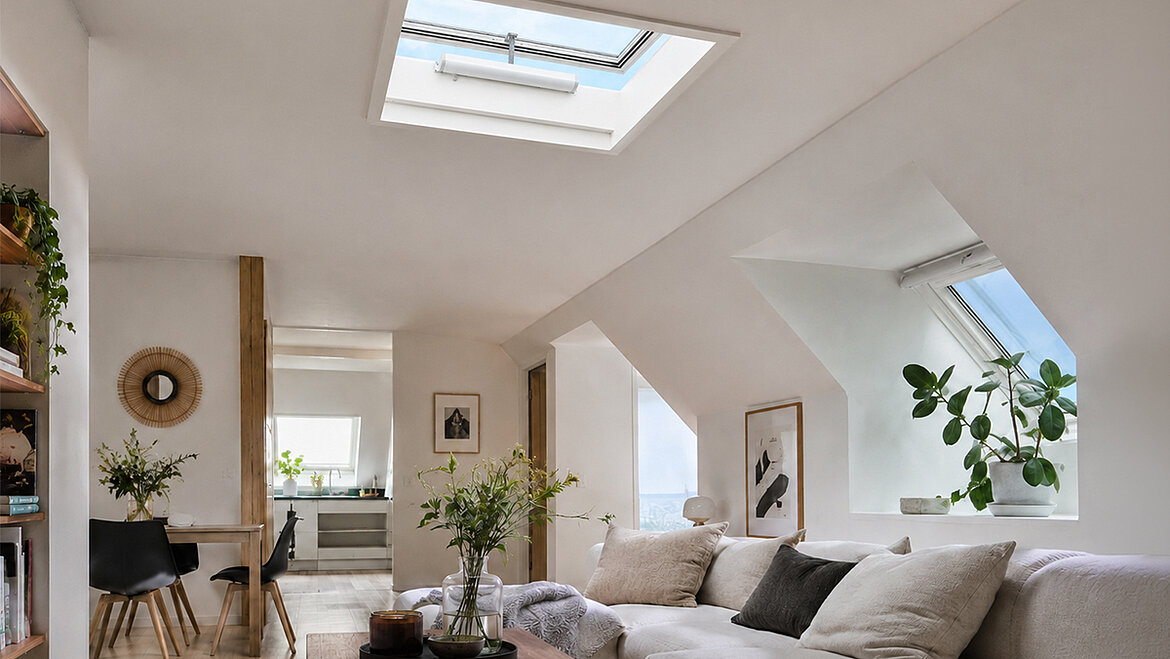
To ensure that night-time ventilation does not become a security risk, LAMILUX Skylights can be opened electrically and controlled automatically:
- Chain-lift or spindle-lift openers for the reliable opening of large glazed areas
- Wind and rain sensors automatically close the window when weather conditions change
- Integration into building automation systems is possible
- Integrated trickle ventilators within the upstand provide additional ventilation capacity
This transforms the rooflight into an active climate-control element that helps cool the loft space without requiring any intervention from the occupant.
The Right Roof Window Makes All the Difference in Summer
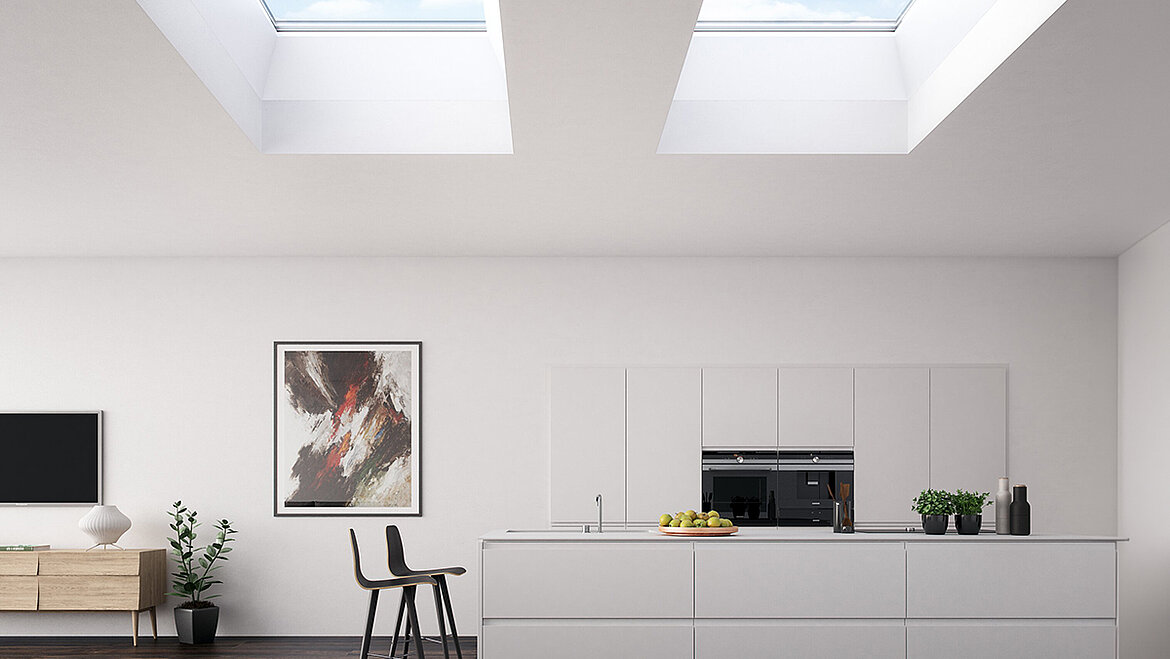
For architects and building owners, one key question arises when planning a new-build or refurbishment project in the residential sector: Which rooflight combines daylight, thermal protection, shading and ventilation in a single system?
What matters most when selecting roof windows for residential buildings:
- Triple or quadruple insulating glazing with a low g-value for minimal solar heat gain, up to passive house standard
- Thermally insulated upstand, seamless and free from thermal bridges
- Integrated ventilation technology with electric actuators and weather sensors
- Tested shading solutions for both external and internal applications
- High resistance to driving rain and wind loads, even for large glazed areas
- Excellent airtightness for reduced heat transfer
- Customisable configurations to meet architectural requirements
LAMILUX Skylights: The System Solution for Residential Buildings
LAMILUX Glass Skylights F100 and FE combine all the requirements of modern loft apartments in a single product:
- Highly thermally insulated GRP upstand with a rigid PU foam core and U-values up to passive house standard
- Pre-assembled and quick to install – one component, one interface
- External, internal or fixed shading – freely selectable to suit the project requirements
- Electric opening for comfort ventilation and night-time cooling
- Individually configurable in terms of size, shape, colour and glazing
- Residential reference projects worldwide – from single-family homes to multi-family residential Buildings
This transforms the rooflight from a potential weak point into an active building component that helps cool the loft space, provides natural daylight and improves indoor air quality.
Furnishing a Loft Apartment: Tips for a Cool Indoor Climate
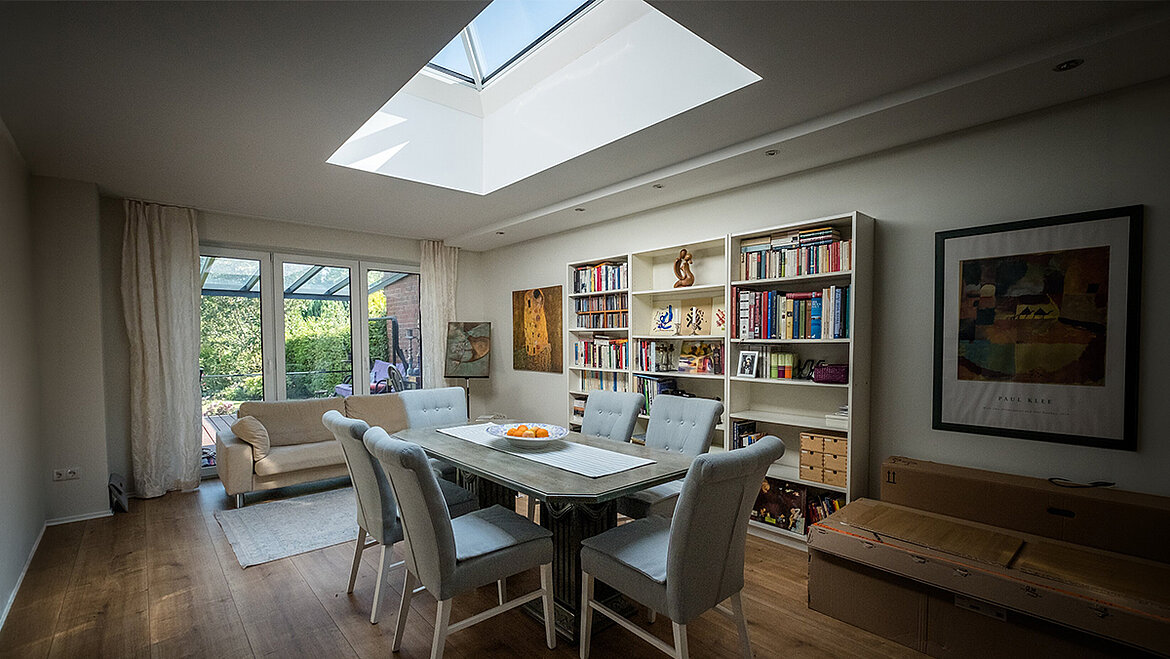
The interior design of a loft apartment also influences how warm the space feels:
- Light colours on walls and ceilings reflect heat and light
- Lightweight, breathable fabrics instead of heavy curtains
- Position furniture away from roof windows to avoid heat build-up
- Wood and natural materials help create a balanced indoor climate
- Plan bedrooms on the north or east side wherever possible
- Houseplants improve humidity levels and overall indoor comfort
Even at the floor plan design stage, it is worth positioning thermally sensitive rooms strategically and sizing roof window areas accordingly.
Keeping a Loft Cool Is a Matter of Planning
Anyone looking to keep a loft cool in the long term should combine three elements from the very beginning of the building design process: insulation, shading and ventilation. Together, these measures help prevent hot and stuffy rooms beneath the roof.
LAMILUX Skylights combine all three elements in a single system: highly thermally insulated, individually shaded and automatically ventilated. This transforms the loft into the brightest and, at the same time, the most comfortable room in the house.
Frequently Asked Questions About Cooling a Loft
By combining night-time ventilation, consistent solar shading on roof windows and good insulation. External shading is one of the most effective measures.
In many cases, effective solar shading on roof windows is missing or ventilation is insufficient. Thermal bridges around older windows can also significantly reduce performance.
External solar shading can reduce heat gain by up to 75%, while internal shading reduces it by around 25%. This makes shading one of the most effective individual measures against overheating in loft spaces.
An external roof window blind provides significantly better protection against heat than an internal pleated blind. The latter is primarily intended for glare control and privacy.
Yes. LAMILUX Skylights can also be retrofitted with external blinds, internal pleated blinds or fixed shading systems.


