

Roof Penetrations and Openings– Weak Points on Flat Roofs?
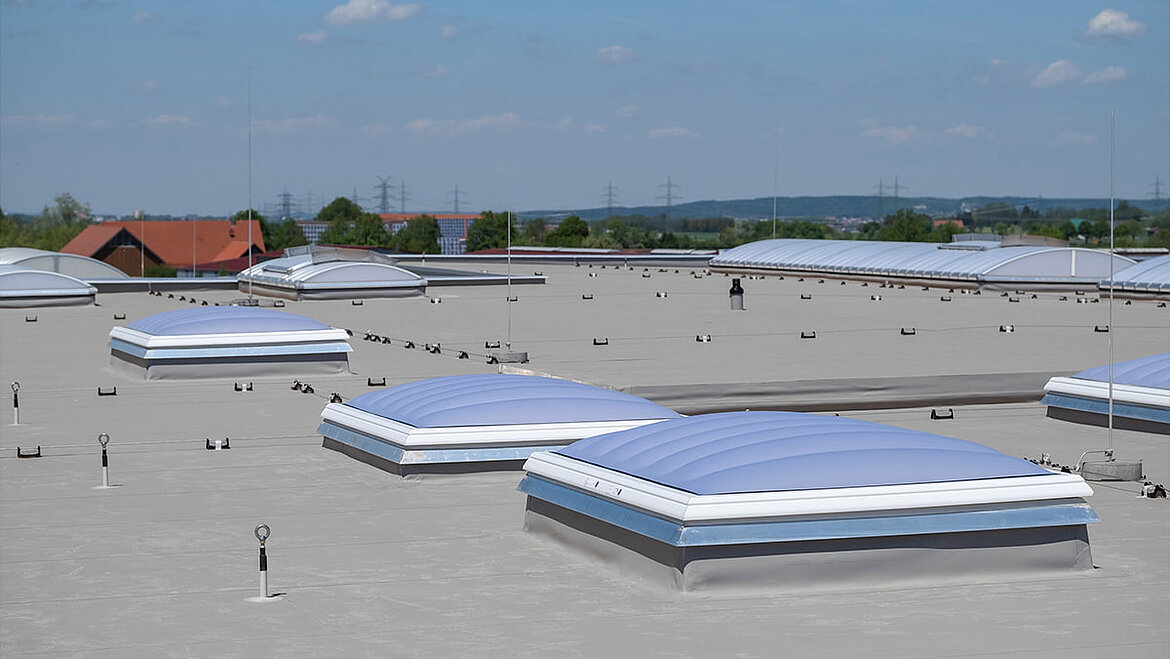
Every roof penetration requires the utmost care and expertise – anyone who has refurbished or newly constructed a flat roof will know this. Whether rooflight, ventilation pipe, drainage outlet, cable duct or photovoltaic system: as soon as the roof membrane is penetrated, craftsmanship and precision are essential. At these points, it is decided whether the roof remains watertight or whether water, frost and UV radiation gradually find their way in. This is precisely why correct sealing of roof penetrations on flat roofs is so important. Different materials and systems require professional coordination to create a reliable, watertight overall solution. That is why we show which sealing methods make sense, what needs to be considered when waterproofing roof penetrations and how LAMILUX supports you with perfectly designed upstand solutions.
What Is Meant by a Roof Penetration on a Flat Roof?
Roof penetrations or openings are all components that pass through the waterproofing layer – from ventilation pipes to rooflights. They are essential because they give the roof important functions, but at the same time they interrupt the closed waterproofing membrane.
These penetrations usually lead from inside the building through the water-bearing layer, insulation and waterproofing into the open air. They must therefore be professionally sealed to prevent damage to building components and the structure itself.
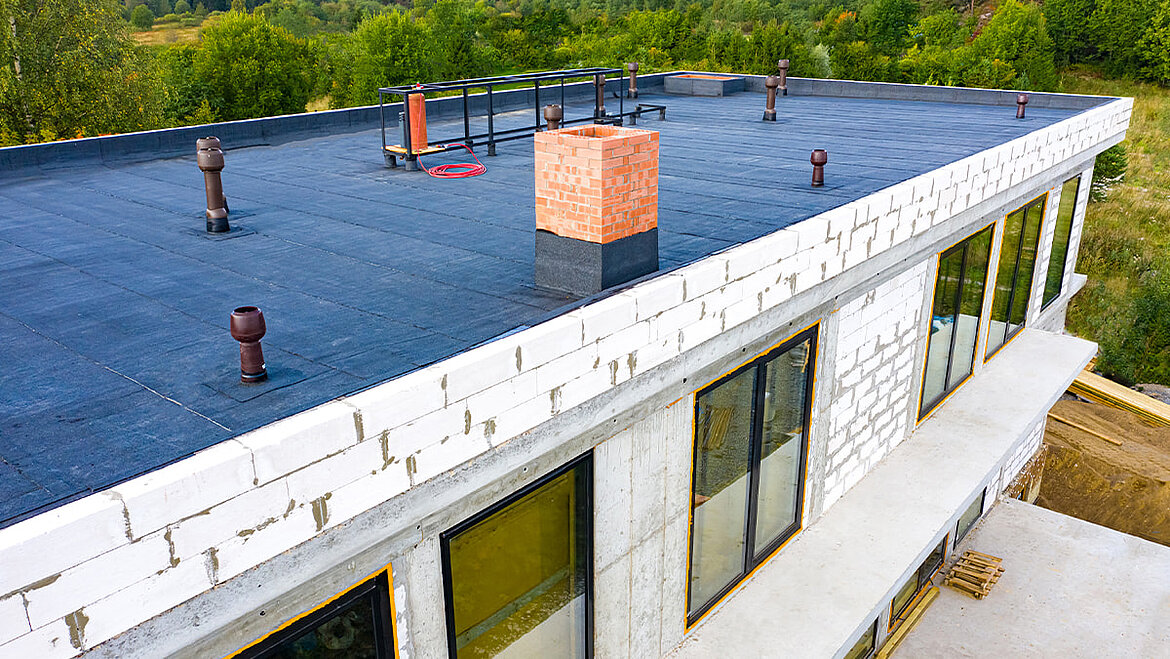
Typical examples include:
- Skylights such as rooflights and flat roof windows
- Cable ducts and service penetrations
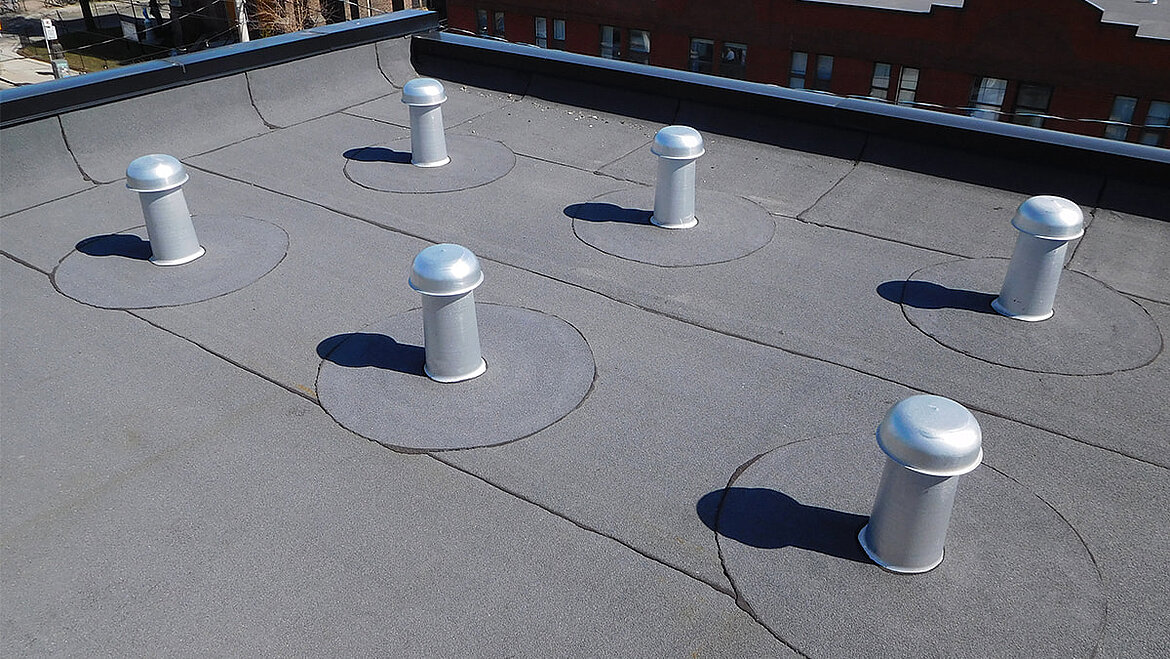
- Ventilation and exhaust air pipes
- Roof drains or rainwater outlets
- Antennas, satellite dishes and photovoltaic systems
Without a proper connection to the waterproofing layer, such penetrations always represent a weak point. Even minor leaks can, over time, lead to soaked insulation, mould or structural damage – and thus to costly refurbishment. Investing in high-quality solutions from the outset often saves not only time, but also significant costs in the long run.
Sealing Methods for Roof Penetrations – Suitable Materials
Roof penetrations are among the most demanding details on flat roofs, as they are exposed to extreme temperature fluctuations and weather conditions throughout the year. This causes movement and expansion of components, which places stress on waterproofing transitions.
For this reason, sealing must not only be watertight, but also permanently elastic, weather-resistant and stress-free – even after many years. The following materials are commonly used:
Bitumen Membranes
Bitumen membranes are the classic waterproofing solution in flat roof construction. They are robust, installed in multiple layers and provide highly reliable protection against moisture when applied correctly.
Advantages:
- High resistance to weathering, UV radiation and mechanical loads
- Long-lasting, multi-layer construction possible
- Proven system, well established in practice
Challenge:
Roof penetrations with bitumen membranes are particularly demanding. Small and geometrically complex components require elaborate detailing with connection zones and special transition elements. In addition, the high temperatures involved in welding bitumen membranes can become problematic if penetration components are not heat-resistant.
Synthetic Membranes such as PVC, TPO and EPDM
Synthetic membranes have become indispensable in modern flat roof construction. They are lightweight, elastic and usually installed in a single layer, significantly reducing installation time. Their advantages are particularly evident on large roof areas and complex details.
Advantages:
- Low weight and fast installation
- Thermally welded seams for permanently watertight transitions
- High elasticity, even with temperature fluctuations
- Fewer layers and reduced build-up height
Challenge:
Not every plastic is compatible with every component. PVC, TPO and EPDM membranes react differently at a chemical level. An unsuitable combination can lead to plasticiser migration or embrittlement.
Practical tip:
Choose installation-friendly components. For example, LAMILUX offers PVC connection rails and clamping profiles for its skylights, allowing synthetic membranes to be connected securely and with material compatibility to the upstands. This ensures durable, watertight transitions – even under thermal movement – keeping the system flexible and reliable over the long term.
Liquid Waterproofing
Where detailing becomes particularly complex – for example with curved shapes, irregular geometries or hard-to-access areas – liquid waterproofing is often the best choice.
It is applied in liquid form, cures elastically and creates a seamless waterproofing layer.
Advantages:
- Adapts to any geometry – without cutting or seams
- Adheres to many substrates such as concrete, metal or plastic
- Ideal for refurbishment, repairs and complex details
- Short curing times and fast application
Challenge:
Surface preparation is crucial. Liquid waterproofing adheres best to clean, dry surfaces. Depending on site conditions, the substrate may need additional preparation or abrasion to ensure optimum adhesion.
Sealing Upstands and Rooflights – Made Easy
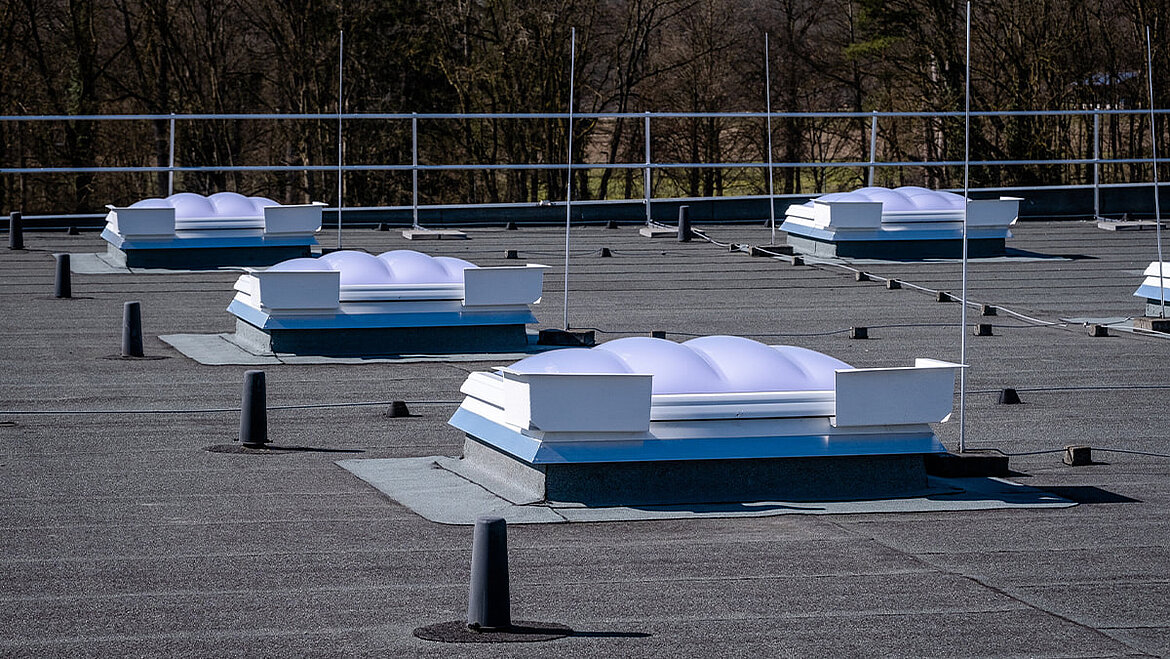
Skylights, flat roof windows and roof access hatches are among the most common – and at the same time most sensitive – roof penetrations on flat roofs. They bring daylight, ventilation and comfort into buildings, but only remain fully functional in the long term if they are professionally sealed and integrated into the roof membrane.
Why Waterproofing Is Particularly Critical at This Point
An upstand forms the interface between the roof waterproofing and the skylight. This is where different materials, layers and movements meet: the roof membrane, the upstand and the rooflight itself. Temperature changes, material expansion and standing water act directly on this junction. Poor workmanship at this point leads precisely to the issues every roofer aims to avoid – moisture in the insulation, blistering of the waterproofing or frost damage at the joint.
For this reason, the connection at the upstand must not only be watertight, but also permanently elastic and tailored to the specific materials involved. Off-the-shelf solutions are insufficient here – what is needed are systems that are precisely coordinated with one another.
What to Consider When Sealing Upstands
1. Check material compatibility
Not every waterproofing membrane is compatible with every upstand. Especially with PVC or bitumen membranes, it is essential to prevent plasticiser migration or embrittlement.
2. Correct waterproofing height
The waterproofing should be turned up at least 15 cm above the water-bearing level all around to prevent surface water ingress. If the membrane is turned up too high, however, ponding may occur or excessive tension may build up at the connection – particularly with thermal expansion of the upstand.
3. Clean transitions
The connection must be fully bonded and form-fitting – without folds, voids or uneven pressure. Clamping profiles or connection rails ensure that the sealing surface remains secure, even when the roof structure is subject to movement.
4. Hard roofing requirements
Skylights often also fulfil fire protection requirements. For this reason, both the rooflight components and their waterproofing must comply with the requirements for hard roofing in accordance with Broof(t1).
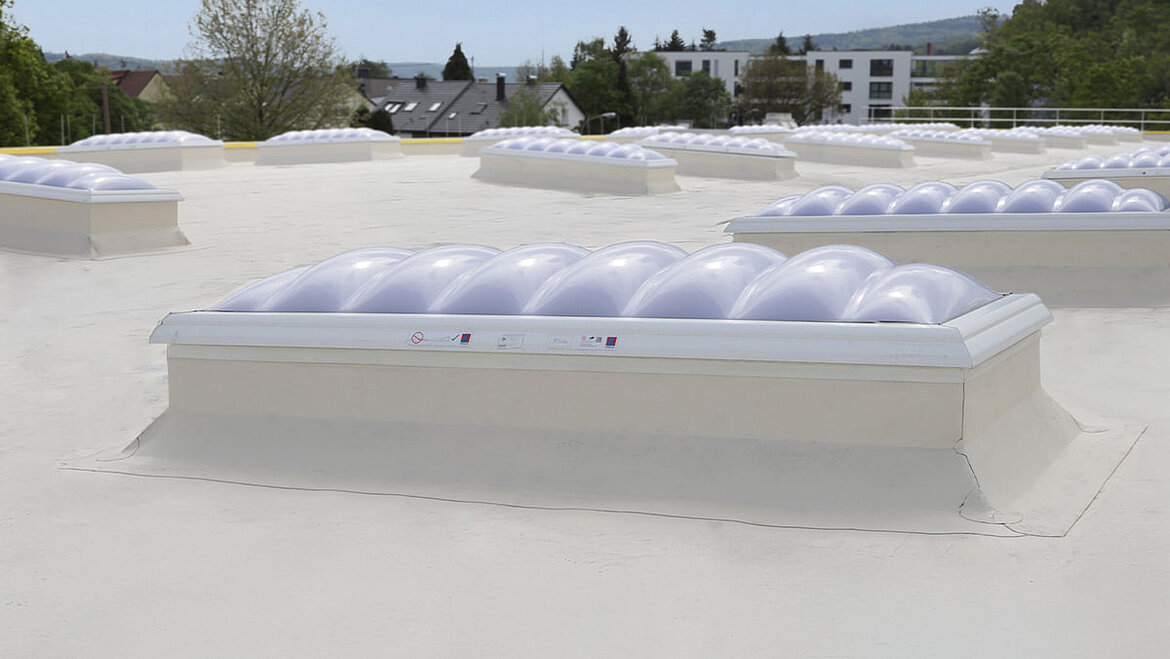
Straightforward Waterproofing Thanks to LAMILUX Upstands
LAMILUX develops its skylights not as individual products, but as carefully designed complete systems for flat roofs. The upstands are therefore designed to integrate seamlessly into all common waterproofing systems – whether bitumen, synthetic membranes or liquid waterproofing.
Key advantages at a glance:
Surface suitable for liquid waterproofing
Allows direct, seamless waterproofing without additional surface treatment.
PVC connection rails and clamping profiles
Provide secure, mechanically load-bearing transitions to synthetic membranes, keeping the connection permanently stress-free and watertight.
Durability and stability
LAMILUX upstands are typically manufactured from GRP (glass fibre reinforced plastic). Whether exposed to high temperatures or hail impact, they withstand weather and loads despite their low weight.
High installation friendliness
Well-designed details such as clearly defined connection zones, customised base flanges for different substrates and integrated thermal insulation make LAMILUX upstands true all-rounders and significantly simplify on-site installation.
Tested quality
LAMILUX upstands are tested in accordance with applicable standards and guidelines, providing proven long-term watertightness – even under thermal stress.
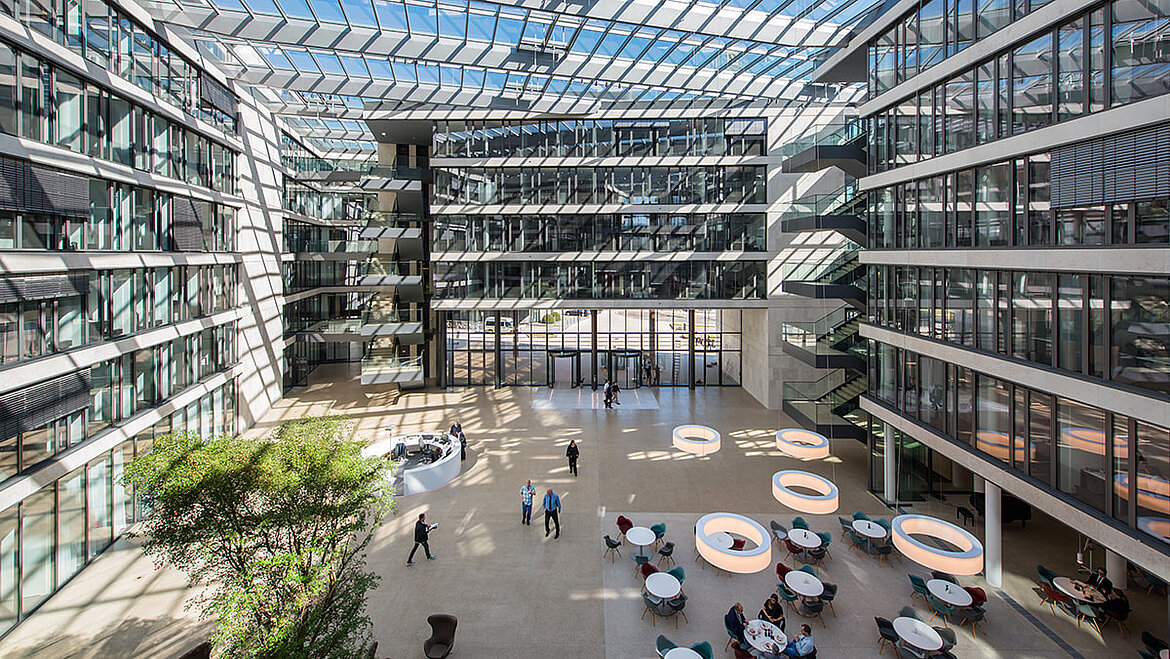
Our skylights
Whether skylights, glass roofs or continuous rooflights – LAMILUX offers a wide range of systems for your roof. With genuine Made-in-Germany quality, they provide long-lasting solutions for flat roofs, combined with aesthetic design.


