

Light deficiency: when too little daylight makes us ill
Light deficiency has a direct impact on our health – especially on our mental wellbeing. Daylight helps us feel cheerful, alert and full of energy. It improves sleep quality, reduces stress and anxiety, and supports our physical health. A lack of daylight, on the other hand, weakens the immune system and, over time, can lead to psychological conditions such as depression caused by light deficiency.
Psychologist and psychotherapist Viktoria Bachmann explains why this is the case in an interview.

Daylight deficiency symptoms: why light regulates our day–night rhythm
What exactly happens in our body when the sun shines?
In fact, quite a lot happens, including the regulation of the circadian rhythm, i.e. the sleep–wake cycle, which is controlled by light. Alongside our “internal clock”, light acts as an external time cue. The process works as follows: light signals are perceived by the retina of the eye and transmitted to the suprachiasmatic nucleus in the brain. According to current research, this brain structure is the main regulator of our biological clock. Exposure to natural daylight helps to stabilise the circadian rhythm, leading to better sleep patterns and overall wellbeing – not only mentally, but also physically. We know that disrupted sleep can contribute to the development of conditions such as diabetes, dementia or obesity. Daylight suppresses the production of melatonin, a hormone that is released in darkness and prepares the body for sleep.
More energy through the sun: how light deficiency promotes depression and lack of motivation
But that’s not all, is it?
No, because sunlight also stimulates the release of serotonin in the brain, a neurotransmitter that promotes feelings of wellbeing and happiness. Higher serotonin levels improve mood, increase energy levels and help to reduce depression and anxiety.

In addition, daylight encourages the production of endorphins – substances produced by the body itself that act as neurotransmitters. They have a pain-relieving and mood-enhancing effect and are commonly referred to as “happiness hormones”. The release of endorphins is closely linked to positive activities such as exercise, laughter and love. Here, light probably plays more of a mediating role. In good weather and good light conditions, our mood improves, we are more active and feel better overall.
Light deficiency and vitamin D: how important daylight is for our health
Daylight is also associated with vitamin D, which is essential for human life.
Exactly, because daylight enables vitamin D synthesis in our bodies. When the sun’s UV-B rays hit our skin, 7-dehydrocholesterol, a precursor of vitamin D, is converted into vitamin D₃ (cholecalciferol). This is then transformed in the liver and kidneys into the active form of vitamin D (calcitriol). Vitamin D is crucial for calcium absorption in the intestines and plays an important role in bone health and the immune system. In addition, vitamin D is involved in further metabolic processes, protein formation and the regulation of a wide range of genes. Up to 90% of vitamin D is produced by the body itself, while only around 10–20% is obtained through diet. However, sufficient time spent outdoors is essential for this process.
What role does vitamin D play in mental health?
Vitamin D influences the production and function of neurotransmitters such as serotonin and dopamine, which are largely responsible for regulating mood. Vitamin D is important for maintaining cognitive function as we age and therefore for preserving independence and quality of life over the long term. It is also involved in stress regulation. Vitamin D has anti-inflammatory properties and strengthens the immune system, which can indirectly influence mental wellbeing, as chronic inflammation and infections are suspected to play a role in the development of mental disorders. In addition, vitamin D also affects the production of the sleep hormone melatonin, which in turn has a positive effect on our sleep–wake cycle. In general, it can be said that a stable melatonin–cortisol rhythm reduces stress and improves overall stress management.

Light deficiency in winter: when dark days affect the soul
Are there differences in the effect of daylight depending on the season or geographical location?
Yes, there are. During the winter months, days are shorter and the intensity of sunlight is lower, which can lead to seasonal affective disorders, commonly referred to as winter depression. In summer, the situation is exactly the opposite, with serotonin and vitamin D levels rising again. There are also geographical differences, as higher latitudes experience greater seasonal fluctuations in day length.
I also find the following particularly fascinating: a study shows that even stock market listings can be influenced by photoperiods – that is, the dependence of physiological responses on the relative length of day and night. Seasonal moods significantly affect both short- and long-term IPO performance. An analysis of the first trading days of IPOs (Initial Public Offerings) shows that shares issued during short, decreasing photoperiods (i.e. days with depressive daylight conditions) achieve lower short-term returns than shares issued during long, increasing photoperiods (i.e. days associated with positive mood). The differences in initial returns amount to around 5–10%. Differences can also be observed over the longer term.
Depression caused by light deficiency: what helps with seasonal affective disorders?
You mentioned seasonally related affective disorders. How can they be alleviated? Can they also be prevented directly?
As a general rule, spending time outdoors in nature is recommended for the treatment of depressive disorders. It is assumed that at least 30 minutes a day are necessary.
By the way: in cases of mild to moderate depression, positive activation through physical activity in the fresh air is just as effective as medication alone – but without the side effects. If seasonal affective disorders and depressive moods are already present, light therapy is often used as a treatment. This involves exposure to bright light that contains neither ultraviolet radiation nor infrared light. Exposure to bright light levels of 2,500 to 10,000 lux can alleviate seasonal symptoms such as low mood and fatigue. Those affected are typically exposed to the light for around 30 minutes per day. Studies show that exposure during the early hours of the day is more effective, presumably because it corresponds more closely to the natural circadian rhythm.

Natural vs. artificial: why daylight outshines lamps
How does the effect of natural daylight differ from that of artificial light when it comes to mental health?
Natural daylight is dynamic, and its “colour temperature” changes over the course of the day, as mentioned earlier: at around nine in the morning it is approximately 4,500 kelvin (K), rising to over 6,500 K from around eleven o’clock onwards. In the afternoon, the colour temperature decreases again. Typical lighting in open-plan offices and factory halls, by contrast, reaches around 2,700 K or 4,000 K (fluorescent lighting). Neither the colour temperatures nor the intensity of natural sunlight are achieved. Energy-saving lamps in particular are often perceived as not bright enough. In this respect, the body is more likely to be set into a state of rest, which can affect both mood and productivity.

Anyone who is exposed to artificial light for long periods is, logically, also spending less time outdoors. This becomes particularly noticeable during seasons with shorter days. People go to work in the dark, spend the entire day under artificial lighting and return home in the dark. This could almost be described as a kind of psychological hibernation. It is also extremely difficult to motivate oneself to be active after work. In summer, when days are longer, exposure to natural daylight increases again.
Light deficiency in everyday life: when too little daylight makes us ill
You mentioned open-plan offices and factory halls as workplaces. What impact does the architecture of working or living spaces have on the general mood and productivity of employees or occupants, particularly with regard to the use of daylight?

There is a phenomenon known as Sick Building Syndrome. This term refers to what is often described as “building-related illness” and encompasses non-specific complaints or symptoms that occur after prolonged stays in a building. Triggering factors include poor air quality due to insufficient ventilation, problems with humidity, as well as a lack of or inadequate supply of daylight. The symptoms are usually subjective and improve once the building is left. Sick Building Syndrome must be distinguished from Building Related Illness, in which allergenic, microbial or chemical exposures can be objectively identified as the cause of building-related diseases.
Insufficient exposure to daylight can therefore clearly lead to impaired mental wellbeing and, in some cases, to the development of mental disorders.
In addition, studies show that the amount of daylight influences people’s thermal perception, resulting in a cross-modal effect. Lower daylight illuminance leads to a thermal environment that is perceived as less comfortable and less acceptable under cold conditions, while being perceived as more comfortable under warm conditions. This effect demonstrates that daylight also has an influence on thermal comfort.
Architecture against light deficiency: how buildings strengthen our health
Which architectural elements in buildings do you think can help maximise the positive impact of daylight on mental wellbeing?
Here, I can say very clearly: maximise the entry of light and encourage views to the outside. Plan rooflights and light shafts that ensure even light distribution. Maintain light permeability between rooms to make interiors brighter and more welcoming. Further design elements include light, friendly colours, reflective but non-glare surfaces, and flexible floor plans that guide and distribute light throughout the building.

Another important aspect is adapting artificial lighting to daylight conditions. Creating a connection to nature is also key – this is where the biophilia hypothesis comes into play, referring to the human need to connect both with other living beings such as plants and animals and with landscapes. In a European survey conducted in 2023, alongside sleep quality, contact with nature and green spaces was most frequently cited as the main factor influencing mental health.
The impact of light deficiency in hospitals: recovering with natural daylight
These elements are particularly essential in healthcare facilities.
Absolutely. Studies show that patients recover better and more quickly in hospitals that incorporate such elements than in traditional, purely functional buildings. Ulrich et al. (2008) and Huisman et al. (2012) researched hospital design and its impact on patient recovery. Taking daylight and appropriate lighting into account was shown to have a positive effect on patients’ sleep quality. In addition, a reduction in pain levels was observed. Good lighting had an antidepressant effect, which was reflected in shorter hospital stays. Morning light in particular proved to be especially beneficial. Furthermore, appropriate lighting reduced medication errors among staff. When patients were given the ability to control aspects such as bed position, lighting and indoor climate themselves, this increased their sense of control, which in turn had a positive effect on anxiety and stress levels.
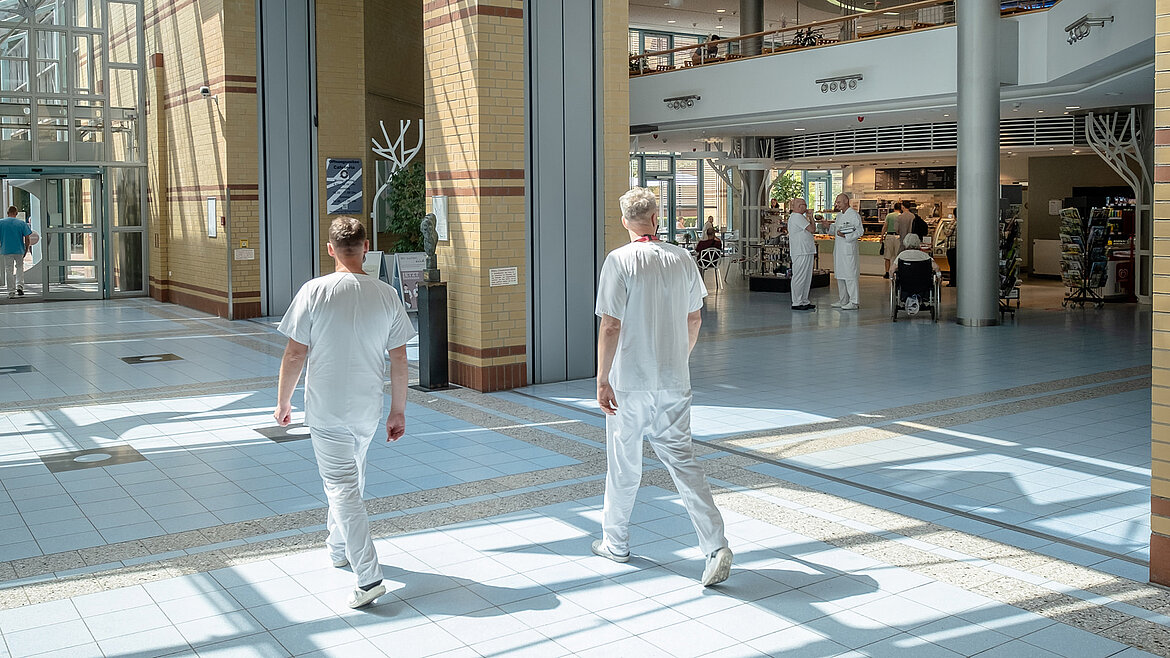
Healing architecture
Daylight promotes recovery and supports our health. Expert Tanja C. Vollmer explains what lies behind the concept of healing architecture and how we can harness daylight for both body and mind.
Daylight as part of a healthy lifestyle
What would you like to see, as a psychologist, with regard to the use of natural daylight in buildings in the future?
I would like to see building design – and the design of working and living spaces in particular – oriented more strongly towards health rather than being purely functional. After all, people spend a great deal of time indoors. Daylight and greenery should play a much greater role in design in order to enhance wellbeing and, as a result, work productivity. There are many attempts to improve wellbeing through artificial lighting. As already explained, however, from a biological perspective this is simply not sufficient. Adjustments to corporate culture in the sense of occupational health management are also necessary. I believe there should be greater encouragement for employees to spend their breaks outdoors wherever possible. Seating areas should be provided so that meals can be taken outside in all weather conditions if desired, allowing people to “top up” on daylight. Active breaks spent in nature would also be highly beneficial.


