

Sustainability as a key priority in modern construction
Buildings are among the world’s largest energy consumers. In the EU, the building sector accounts for around 40 per cent of energy consumption and approximately 36 per cent of CO₂ emissions. With the European Green Deal, the EU Energy Performance of Buildings Directive (EPBD) and the German Building Energy Act (GEG), sustainable construction is no longer a voluntary choice but a regulatory obligation.
Every planning decision today must be measured against its impact on energy balance, carbon footprint and quality of use. Certifications such as DGNB, LEED and BREEAM are increasingly becoming the market standard and provide evidence to investors, users and authorities.
Amidst this development, one factor is still underestimated in practice: natural daylight. Properly planned and implemented with the right skylights, it improves energy performance, certification eligibility, user comfort and cost-effectiveness throughout a building’s entire life cycle.
This article demonstrates:
- how skylights contribute to sustainability,
- which products are suitable for which requirements
- and what planners should look out for when selecting and integrating them.
How skylights contribute to sustainable construction
Reducing artificial lighting and improving energy efficiency
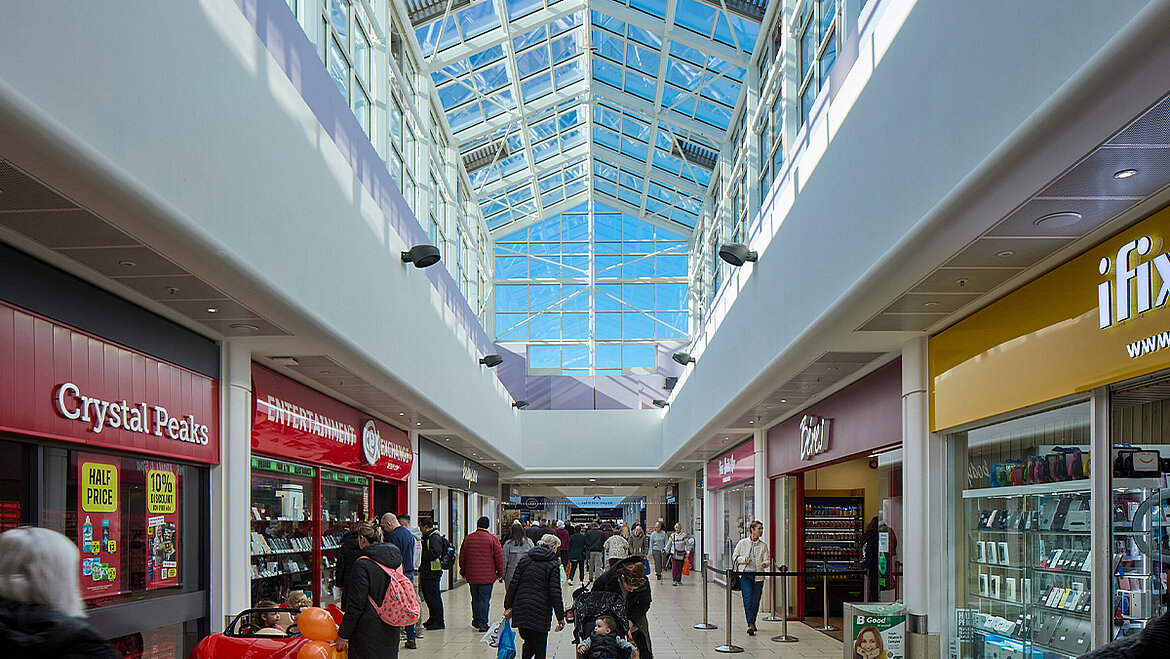
Artificial lighting accounts for up to 40 per cent of electricity consumption in commercial and industrial buildings. Skylights reduce this proportion permanently and without ongoing operating costs.
The key planning parameter is Daylight Autonomy (DA): it indicates how long a room remains sufficiently lit without artificial light. A high DA reduces energy requirements, improves the energy performance certificate and supports GEG certification – particularly when combined with daylight-dependent lighting control.
Thermal building performance
Skylights also affect a building’s thermal balance. In winter, passive solar gains can reduce heating requirements, whilst in summer, uncontrolled heat gain must be prevented.
Key factors here are the glazing’s g-value, external sun protection and openable daylight elements. This allows solar gain to be controlled, daylight to be utilised and cooling loads to be reduced through natural night-time ventilation.
Contribution to building certifications
Well-planned skylights are a direct source of points in the common certification schemes. The following overview shows where daylight is taken into account:
Certification system | Relevant criterion | Requirement |
DGNB | SOC 1.1 – Visual comfort | Daylighting, glare and sun protection |
DGNB | ENV 1.1 – Life cycle assessment | Primary energy demand, CO₂ equivalents |
LEED v4 | EQ Credit 8 – Daylight | Simulation or measurement of daylight provision |
BREEAM | Hea 01 – Daylighting | Minimum daylight factor per room use |
WELL Building Standard | Light Concept | Circadian effectiveness, flicker-free, glare control |
Those who integrate daylight into the planning from the outset gain points in all these systems that would be difficult or more expensive to achieve with other measures.
Quality of use and human-centric lighting
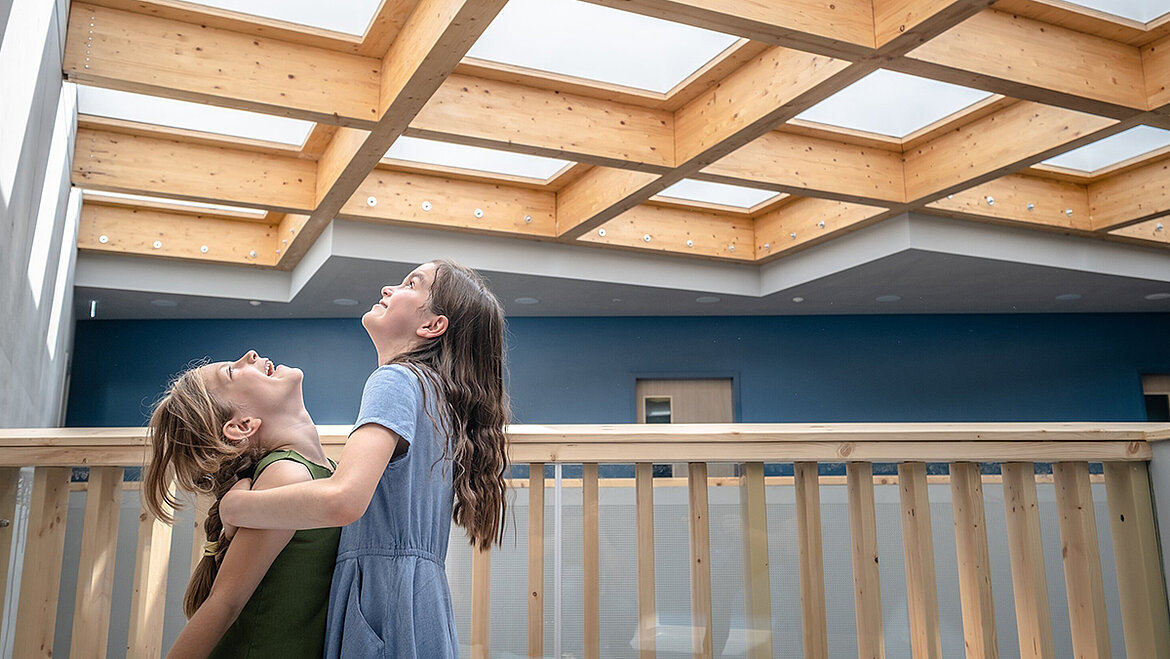
Daylight affects not only energy performance indicators, but also people. Natural light supports the circadian rhythm, promotes concentration and well-being, and can reduce absenteeism.
In schools, offices, clinics and production facilities, daylight thus becomes an economic factor. The WELL Building Standard addresses these health benefits and reinforces their importance in project development.
Life cycle assessment (LCA/LCC)
Sustainable planning also takes into account the total costs over the life cycle. High-quality Skylights pay for themselves through lower energy and maintenance costs, as well as durable components. In the Life Cycle Cost Analysis (LCC), they can be evaluated using concrete figures – a strong argument for building owners and project developers.
Gray energy and material ecology
Sustainability begins even before installation: the gray energy of building products is becoming increasingly important for a building’s overall environmental footprint.
Environmental Product Declarations (EPDs) make these values transparent and comparable. They provide important evidence for certifications such as DGNB, LEED or BREEAM. LAMILUX provides EPDs for this purpose, thereby supporting planners in their life cycle assessments.
Would you like to know how skylights influence the sustainability performance of your specific project?
LAMILUX skylights – roof lights for every requirement
LAMILUX offers a complete range of skylights – from slim glass skylights to large-scale glass roofs. All products share high heat insulation values, high-quality and durable materials, efficient installation, and suitability for both new builds and refurbishments. Several systems are also Passivhaus certified – the most demanding quality mark for energy efficiency in the field of skylights.
Continuous Rooflight
The LAMILUX Continuous Rooflight is the ideal solution for large-scale, continuous lighting of extensive floor plans – and is specifically designed to meet the requirements of industrial and production halls as well as sports facilities. Flexible in length, width and design, it can be precisely adapted to any roof geometry and usage requirement.
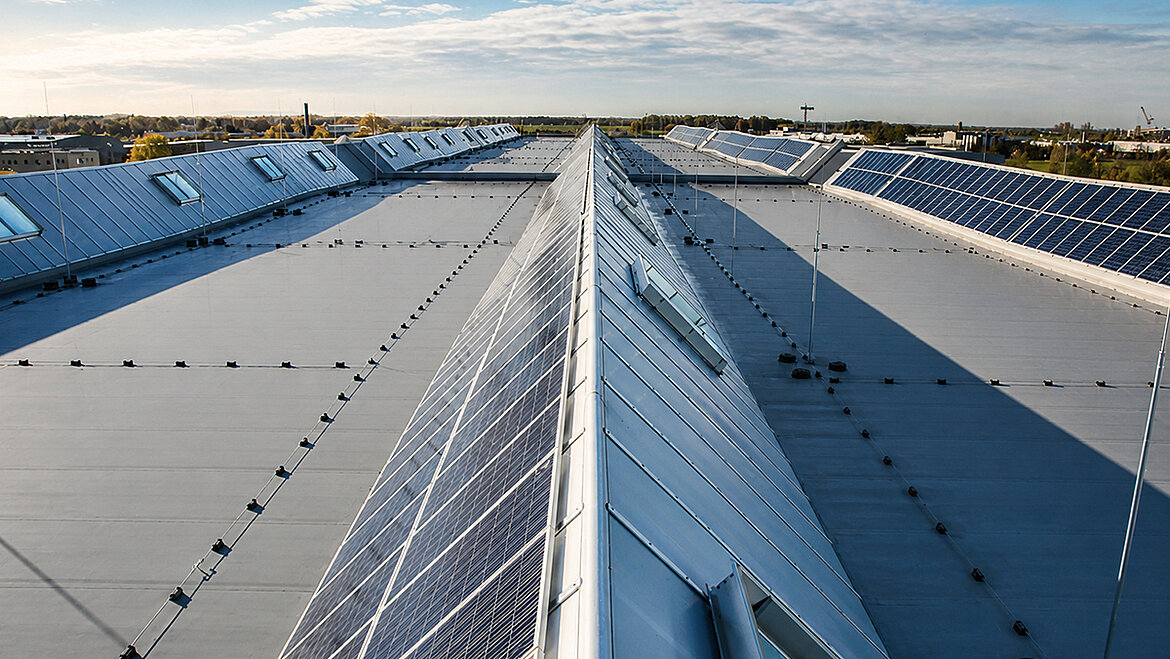
The systems integrate SHEV functionality and natural ventilation into a single element without the need for additional roof openings. The shed version is particularly efficient: it enables the combination of north-facing daylight with photovoltaic energy generation on the south side. This allows for daylight and renewable electricity production on the same roof surface. The LAMILUX Continuous Rooflight is the world’s first Continuous Rooflight with Passivhaus certification, setting the benchmark for energy efficiency in this product category.
Rooflight Dome
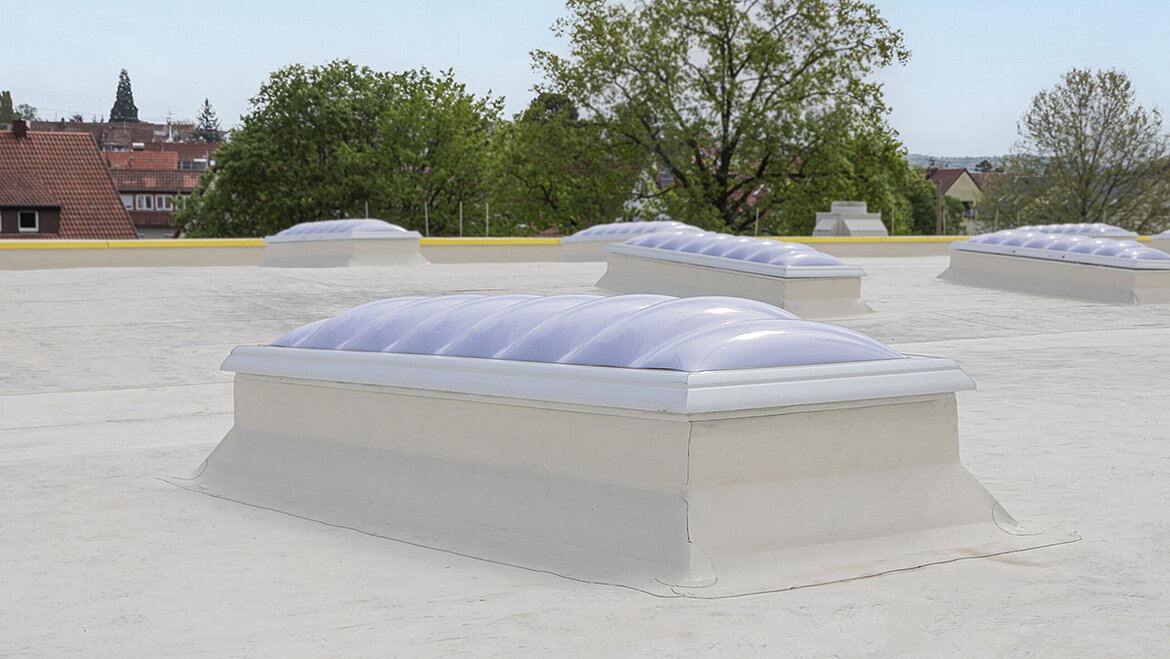
The LAMILUX Rooflight Dome F100 W is the tried-and-tested solution for localised lighting on flat roofs in industrial, commercial and public buildings. Its defining feature is the innovative waveform of the light-transmitting surface:
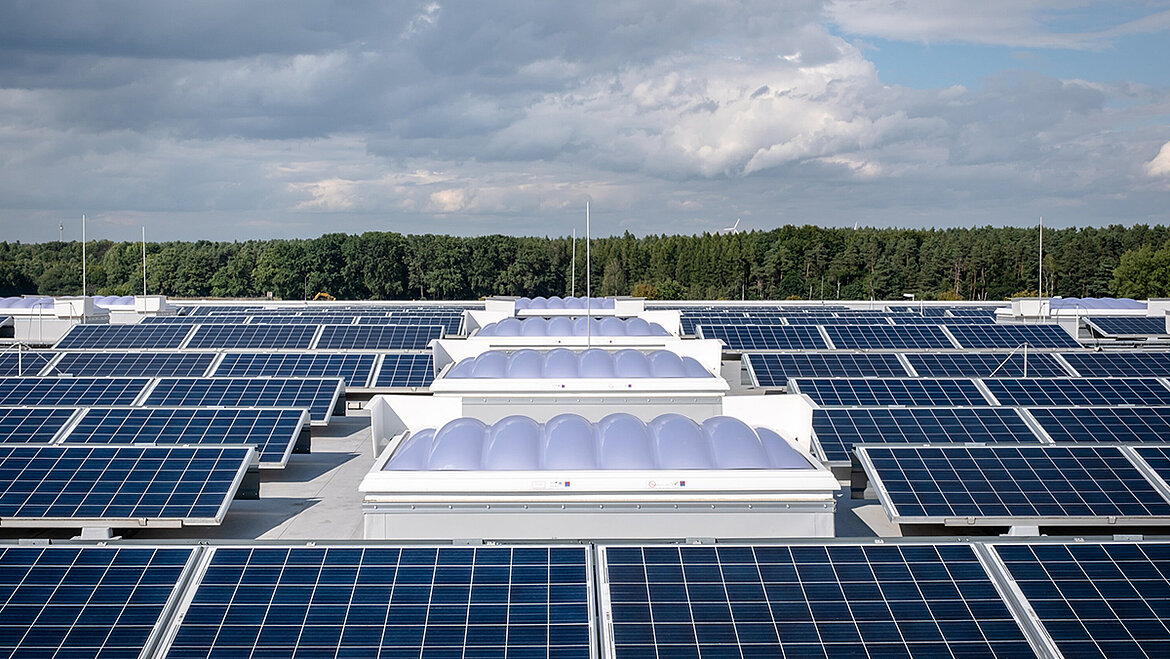
this ensures maximum protection against weather conditions such as hail, wind and snow, whilst surpassing conventional dome shapes in terms of mechanical strength.
The thermally insulated upstand is an integral part of the system and prevents thermal bridges at the transition to the roof structure – a decisive factor for overall energy performance. The rooflight dome is particularly suitable for renovation projects: it can be replaced and installed with minimal intervention in the existing structure, without having to open up the roof waterproofing over a large area.
Glass Skylight
The LAMILUX Glass Skylight FE and F100 are the counterpart to the Rooflight for residential and prestigious buildings. They are designed for applications where design quality, variety of shapes and the highest energy performance are equally important. Whether round, square, rectangular or in special formats:
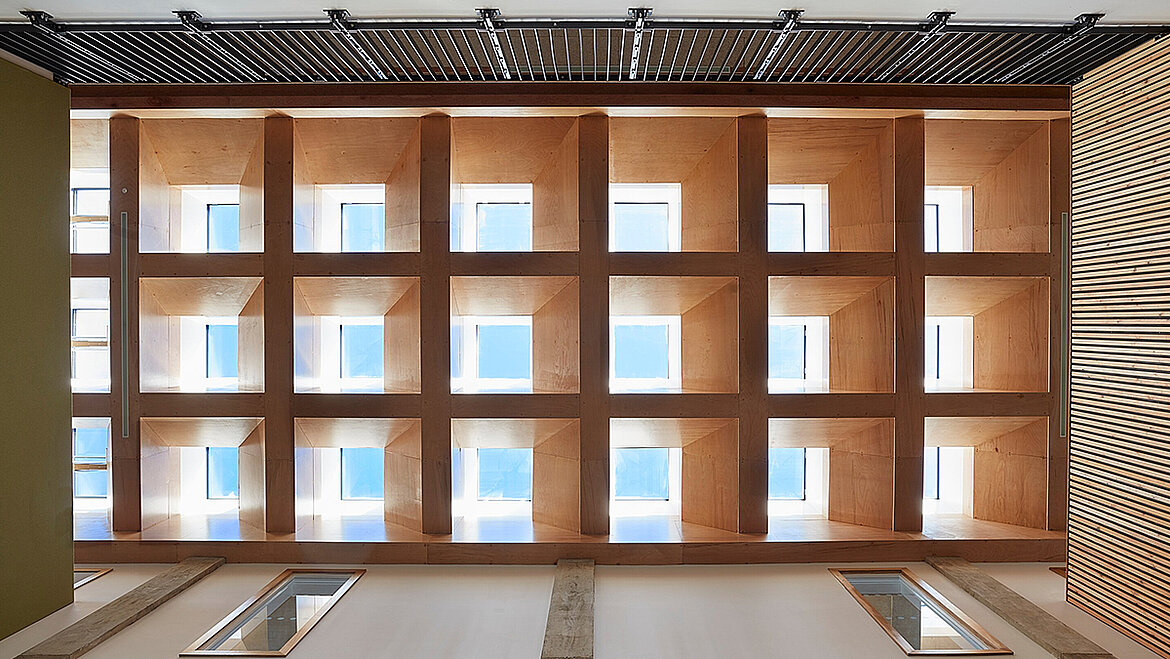
LAMILUX offers a wide range of shapes, sizes and configuration options that can be adapted to almost any architectural requirement.
A range of shading solutions is available, allowing for precise control of light and heat gain. The thermal insulation meets Passivhaus standards, meaning that the Glass Skylights can also be used in ambitious energy-efficient designs, KfW Efficiency House projects and new Passivhaus builds.
Glass Roof
The LAMILUX Glass Roof PR60 offers complete design freedom: virtually any shape, inclination and geometry is possible – from simple pent roof glazing and oval glazing to glass pyramids. This design freedom makes it not only the first choice for new builds with high architectural standards, but also the ideal system for challenging refurbishments where the daylight element must adapt to an existing supporting structure, rather than the other way round.
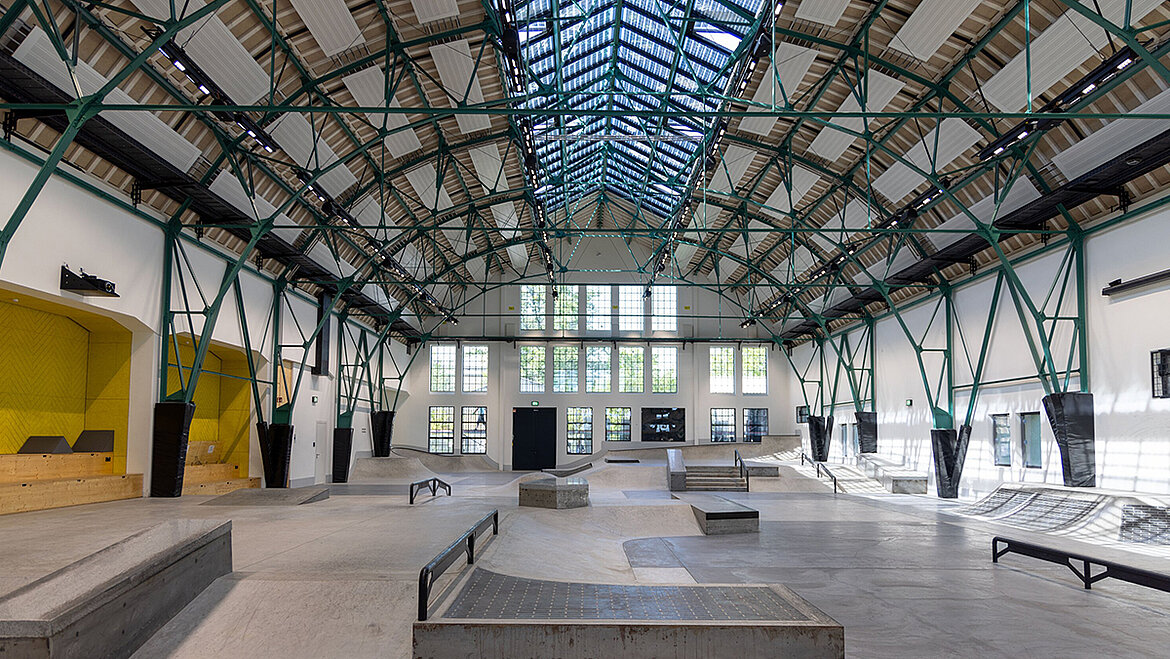
The glazing can be individually configured: integrated photovoltaics combine light transmission with electricity generation, printed finishes reduce heat gain whilst providing pleasantly filtered light, and light-directing elements lead daylight specifically into the depth of the room. Energy efficiency meets the Passivhaus standard, thereby enabling a high-quality thermal building envelope even with large-scale Glass Roofs.
With the Modular Glass Skylight MS78, LAMILUX has also created a variant that combines large-scale roof glazing with modular construction. This significantly streamlines production and installation processes, which account for the majority of emissions in the construction sector.
Passivhaus certification as a quality benchmark for skylights
The Passivhaus certificate from the Passivhaus Institute in Darmstadt is the most stringent independent quality certification for the energy performance of building products. For skylights, this specifically means: verified U-values below 0.80 W/(m²K) for the total element, a thermal bridge-free or low-thermal-bridge design, and tested airtightness.
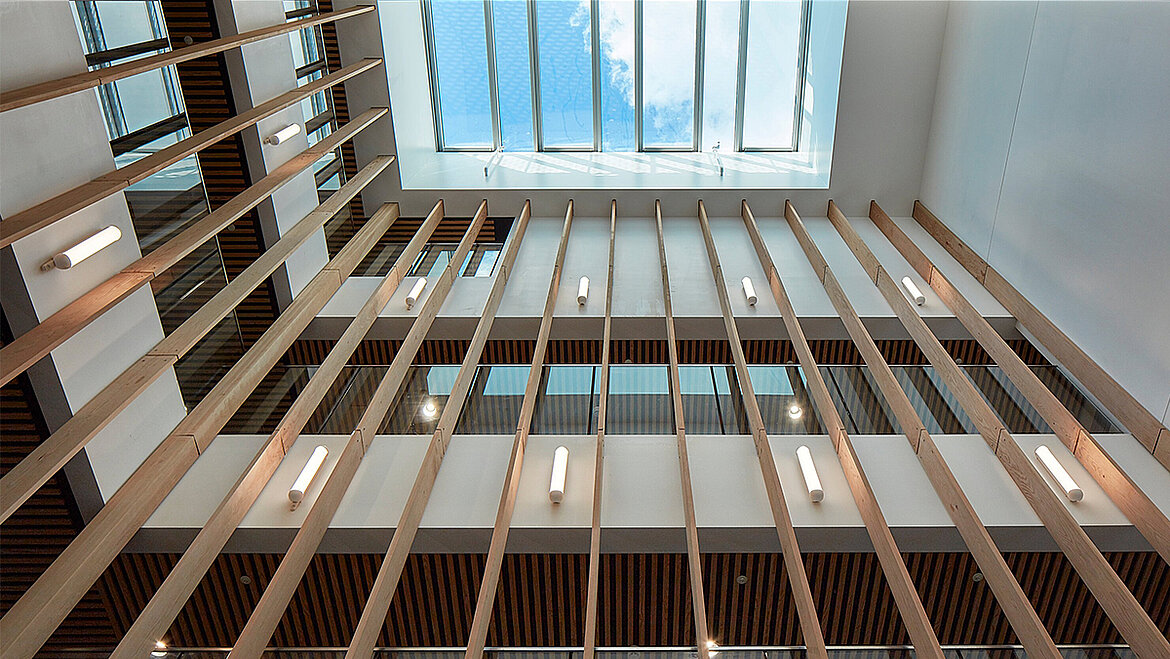
For architects, this has immediate practical implications: Passivhaus-certified products can be incorporated directly into calculations using the Passivhaus Planning Package (PHPP) without requiring time-consuming individual verifications. They also meet the requirements of numerous KfW Efficiency House standards and make a significant contribution to DGNB and LEED certifications.
LAMILUX is one of the few manufacturers to offer Passivhaus-certified Skylights across several product categories – from Glass Roofs and Glass Skylights to Continuous Rooflights.
Characteristics of sustainable Skylights: What matters technically
Not every roof light contributes equally to a building’s sustainability. A few precise technical parameters and the way a system is integrated into the building are decisive.
Thermal insulation: U-value
The U-value is the key parameter for the thermal insulation quality of a skylight. A distinction must be made between:
- Ug value: Heat transfer through the glazing alone (determined in accordance with DIN EN 673)
- Uw value: Heat transfer of the total element, including frame and connections (determined in accordance with DIN EN ISO 10077)
For energy calculations in accordance with GEG, the Uw value of the entire skylight – including the frame and connection – is taken into account, not just the glass value. Different requirements apply depending on the building’s use. The connection Psi value (ψ value) is also important: it describes how much additional heat is lost via the connection between the skylight and the roof. If this value is too high, thermal bridges are created, which can significantly reduce even the element’s good insulation values.
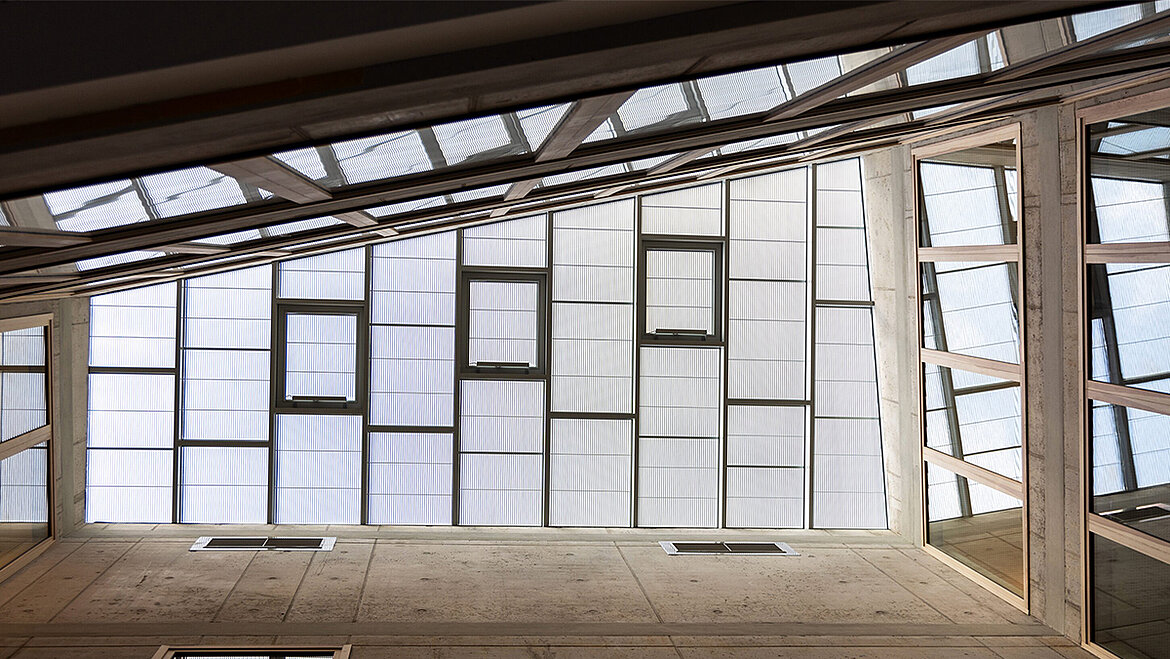
Solar control: g-value
The g-value describes how much solar energy enters the building through the glazing. A high g-value provides passive heat gains in winter but can lead to overheating in summer. A low g-value offers better protection against heat but also reduces winter heat gains.
Glazing with a moderate g-value, combined with external, sensor-controlled sun protection, is therefore ideal. This allows summer heat gain to be limited whilst making targeted use of winter solar gains.
Light transmission: TL value
The TL value (light transmission) indicates how much of the visible daylight is actually transmitted through the glazing – regardless of the total energy transmittance. This is also determined in accordance with DIN EN 410.
The ratio of the TL value to the g-value is referred to as the selectivity factor: a high selectivity factor means that a lot of light is transmitted, but little heat – the ideal for summer heat protection without loss of light. For daylight autonomy and thus the achievable reduction in artificial lighting, the aim should be to achieve the highest possible TL value.
Environmental Product Declarations (EPDs)
An Environmental Product Declaration (EPD) is a verified environmental declaration for construction products. It provides transparency regarding the environmental impacts a product causes throughout its entire life cycle – from manufacture to disposal.
For certifications such as DGNB, LEED and BREEAM, EPDs serve as reliable evidence in life cycle assessment. Without an EPD, generic values often have to be used, which can worsen the overall balance. Manufacturers such as LAMILUX provide corresponding EPDs that can be incorporated directly into design calculations.
Durability, low maintenance and reparability
Sustainability is evident not only in the manufacturing process, but above all during the usage phase. High-quality skylights score highly in terms of:
- Material durability: Glass remains capable of high light transmission over the long term and ages more slowly than many Plastics.
- Ease of cleaning: Smooth surfaces, coatings and suitable roof geometry reduce soiling and maintenance requirements.
- Repairability: Replaceable individual components save costs, materials and minimise interference with the roof waterproofing.
- Ease of retrofitting: Systems for existing openings enable energy efficiency improvements with minimal disruption – even during ongoing operations.
Integration into building management systems
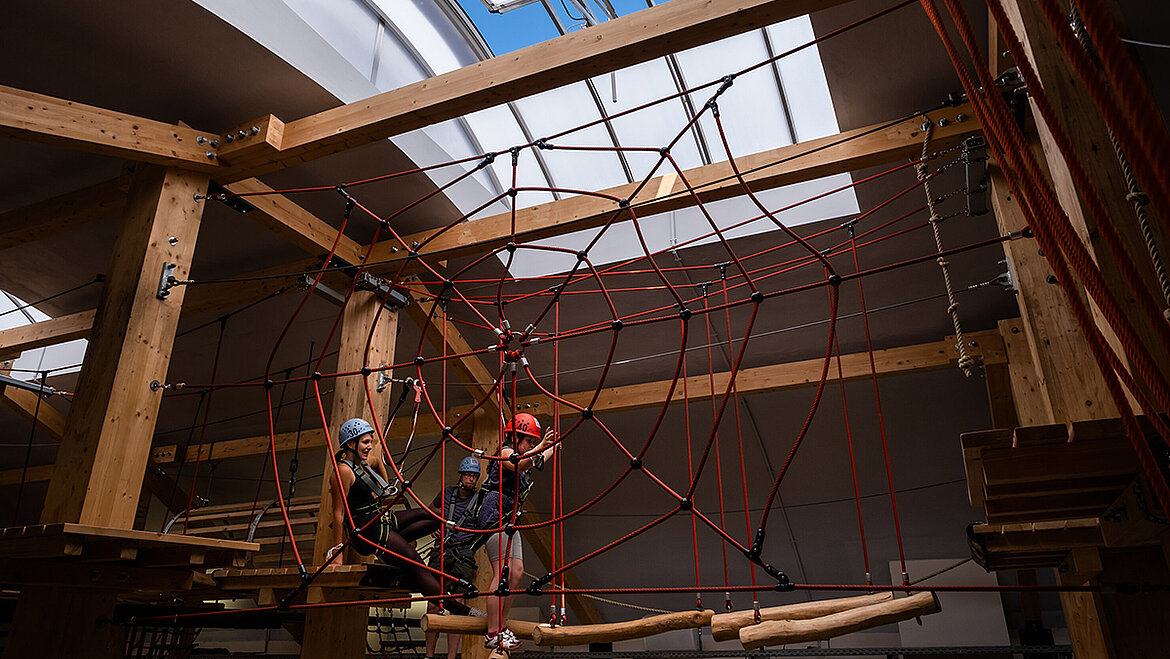
A daylighting system only realises its full sustainability potential through intelligent integration into building services. In this way, it transforms from a passive component into an active part of the building’s performance.
- Shading: Sensor-controlled external sun protection reduces heat gain in summer whilst maintaining daylight utilisation.
- Natural ventilation: Openable elements allow for night-time ventilation and can reduce cooling energy requirements.
- SHEV function: Daylight, ventilation and smoke and heat extraction can be combined in a single component.
Let experts assist you with the planning of all these aspects!
Sustainable planning and avoiding mistakes
Skylights only deliver their maximum contribution to sustainability if they are planned from the outset as an integral part of the building – not as a retrofitted addition. The following tips will help you avoid the most common mistakes.
Early integration into building simulation
Daylight planning should begin early – ideally in service phase 2, or at the latest in service phase 3. Only then can orientation, roof geometry and construction still be specifically optimised. Tools such as RELUX, DIALUX and Honeybee/Grasshopper are available for simulations. Climate-based daylight modelling is also becoming increasingly important for certifications such as LEED and DGNB.
Making the most of orientation and roof geometry
The orientation of the sky has a decisive influence on light quality and thermal gain:
- South: High solar gains, high risk of overheating → external sun protection is necessary
- North: Even, diffuse, glare-free light → ideal for production, studios, classrooms; no risk of overheating
- East/West: Direct morning or evening sunlight → glare protection and g-value control are important
- Flat roofs: Skylights, Continuous Rooflights and Rooflight Domes provide zenithal light – the most uniform and energy-efficient form of lighting
Dimensioning the glazing area correctly
Too little glazing leads to insufficient daylight autonomy and thus to a high proportion of artificial lighting. Too much glazing increases heat loss in winter and the risk of overheating in summer.
The following are rough guidelines for the ratio of glazing area to usable floor area:
Use | Recommended Daylight Factor (DF) | Typical proportion of glazing |
Office | ≥ 2 % | 5–10% of floor area |
School / Education | ≥ 3 % | 8–12% of floor space |
Production / Warehousing | 1,5–3 % | 5–8% of floor space |
Healthcare buildings | ≥ 2,5 % | depending on room use |
These values must be checked on a project-specific basis and validated by simulation – they do not replace individual daylight planning.
Do not underestimate connection details and thermal bridges
The most common and most serious planning error: a high-quality daylighting element with a poorly executed connection to the roof structure. The Psi value (ψ value) at the junction between the element and the roof structure can completely negate the U-value benefits of a Passivhaus element in mathematical terms.
Recommendation: Use certified system solutions whose connection details have been tested and documented. LAMILUX provides tested installation details for its systems, which can be incorporated directly into thermal bridge-free planning.
Plan for sun protection from the outset
Sun protection is not an optional accessory, but an integral part of the design. External sun protection is up to 75 per cent more effective than internal sun protection – because it intercepts solar radiation before it enters the room.
In the GEG, the summer scenario (Section 14(4)) must be explicitly verified: the combination of the glazing’s g-value and sun protection measures must comply with the permissible solar heat gain coefficient. Anyone who integrates sun protection only at a later stage risks failing the GEG verification and incurring more expensive retrofitting costs.
Common mistakes at a glance
- Daylight planning started too late – optimisations in orientation and geometry are hardly possible from design phase 4 onwards
- U-value optimised, g-value neglected – leads to overheating and increased cooling energy requirements
- No EPD verification planned – in DGNB/LEED projects, this leads to loss of points or time-consuming follow-up research
- SHEV requirements and daylighting elements not coordinated – leads to duplicate openings on the roof and unnecessary use of resources
- Maintenance and cleaning access not planned – increases follow-up costs and reduces long-term performance
- Renovation projects: Impact on the roof underestimated – specify certified systems with proven suitability for existing structures from the outset
Would you like to avoid these mistakes from the outset? Our specialist planners will support you from the concept phase through to detailed design.
Sustainable building with skylights from LAMILUX
Daylight is an effective sustainability lever in the construction industry: it reduces energy requirements for lighting and air conditioning, improves the thermal balance, supports certifications such as DGNB, LEED and BREEAM, and enhances the quality of use.
The key lies in the right combination of suitable products, clear technical specifications, early planning and intelligent building control.
LAMILUX offers a wide range of products for this purpose – from Continuous Rooflights and Rooflights to Glass Skylights, Glass Roofs and Flat Roof Access Hatches. With durable materials, EPD certificates and certified system solutions, LAMILUX supports sustainable planning in both new builds and renovations, right up to Passivhaus standard.
Are you planning a project where skylights are intended to contribute to the sustainability balance? We’re here to help right from the start.
Questions and answers about skylights and sustainability
The U-value depends on the target energy standard. The GEG requires Uw-values between 1.5 and 2.0 W/(m²K) for skylights and Continuous Rooflights, depending on the building category. KfW Efficiency House standards range from 1.0 to 1.4 W/(m²K), depending on the level. For the Passivhaus standard, the requirement is: Uw ≤ 0.80 W/(m²K) for the total element. The decisive factor is always the value of the total element – not just the glass value.
The g-value (total solar energy transmittance) describes how much solar energy enters the building through the glazing. A high g-value means greater passive solar gains, but carries a risk of overheating in summer. The best strategy is glazing with a moderate g-value combined with external, controllable sun protection.
For LEED v4 (EQ Credit 8 – Daylight), it must be demonstrated that defined minimum illuminance levels (300–500 lux) are achieved in a specified percentage of the usable floor area for a certain number of hours per year – either through simulation (CBDM) or measurement. For DGNB (SOC 1.1), visual comfort is assessed on the basis of daylight factors and glare control. Both systems require sound daylight planning from the early design phase onwards.
An EPD (Environmental Product Declaration) is an environmental declaration verified in accordance with ISO 14025 and EN 15804, which documents the carbon footprint and other environmental impacts of a construction product. EPDs are often mandatory for DGNB, LEED and BREEAM certifications in order to provide product-specific evidence of life cycle assessment parameters. LAMILUX provides EPDs for its products.


