

What are skylights?
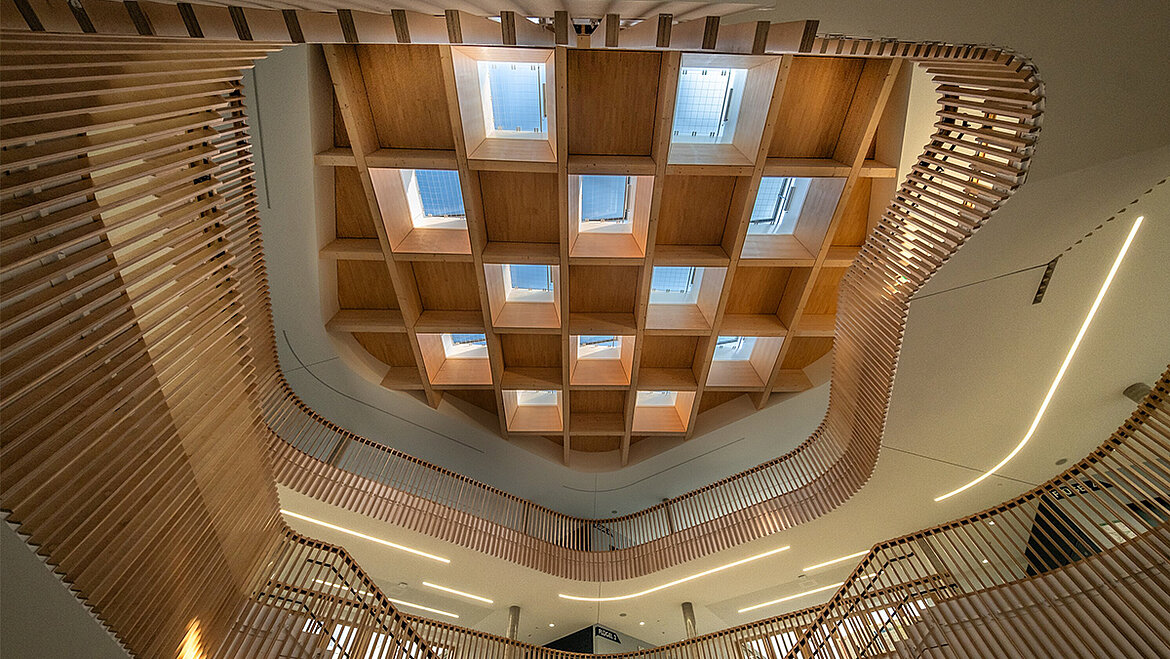
Skylights are translucent openings in the roof or upper wall area that guide daylight from above into the interior. They mainly include skylight domes, flat roof windows and continuous skylights. Unlike facade windows or conventional roof windows, a skylight enables even, low-glare illumination in deep floor plans, halls and internal spaces.
Skylight windows can therefore be used almost anywhere, whether in residential buildings, office and administration buildings, schools, museums, production halls or logistics facilities. The key is to coordinate daylight planning, roof construction, energy efficiency, solar shading and safety requirements at an early stage.
Benefits of skylights for construction and operation
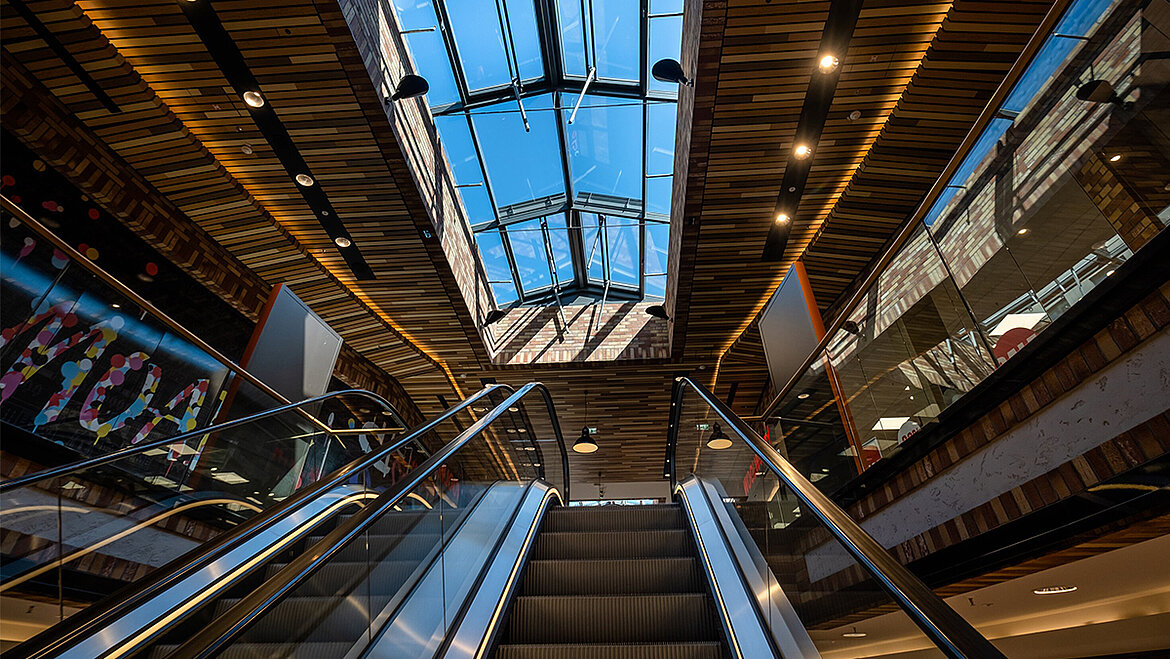
Well-planned skylights pay off on several levels:
- More daylight: Depending on the design, skylights can supply interiors with up to three times more daylight than comparable facade openings.
- Less artificial lighting: More daylight reduces the need for artificial lighting. In combination with daylight-dependent lighting control, noticeable energy savings of 20 to 60% can be achieved during operation.
- Greater design freedom: Skylights bring daylight to areas where facade windows are not possible or are insufficient, such as deep floor plans, halls or buildings with adjoining structures. They make it much easier to achieve guideline values or daylight requirements, such as more than 300 lux across 50% of the usable floor area.
- Higher user comfort: Daylight supports orientation, quality of stay and wellbeing. Especially in workplaces, schools and communal areas, even, glare-free lighting is an important added value.
- Multiple benefits: Modern skylights can provide not only daylight but also ventilation, SHEV, solar shading, blackout, fall-through protection or PV integration, combining several requirements in one system.
Which types of skylights are available?
The right type of skylight depends on the building type, roof structure, daylight requirement and technical specifications. For architects, the key question is which function the skylight needs to fulfil:
- bring targeted light into individual room zones
- illuminate large areas evenly
- act as a design feature
- integrate additional functions, such as ventilation, SHEV, solar shading or roof access
Flat roof windows: targeted skylight windows for precise daylight control
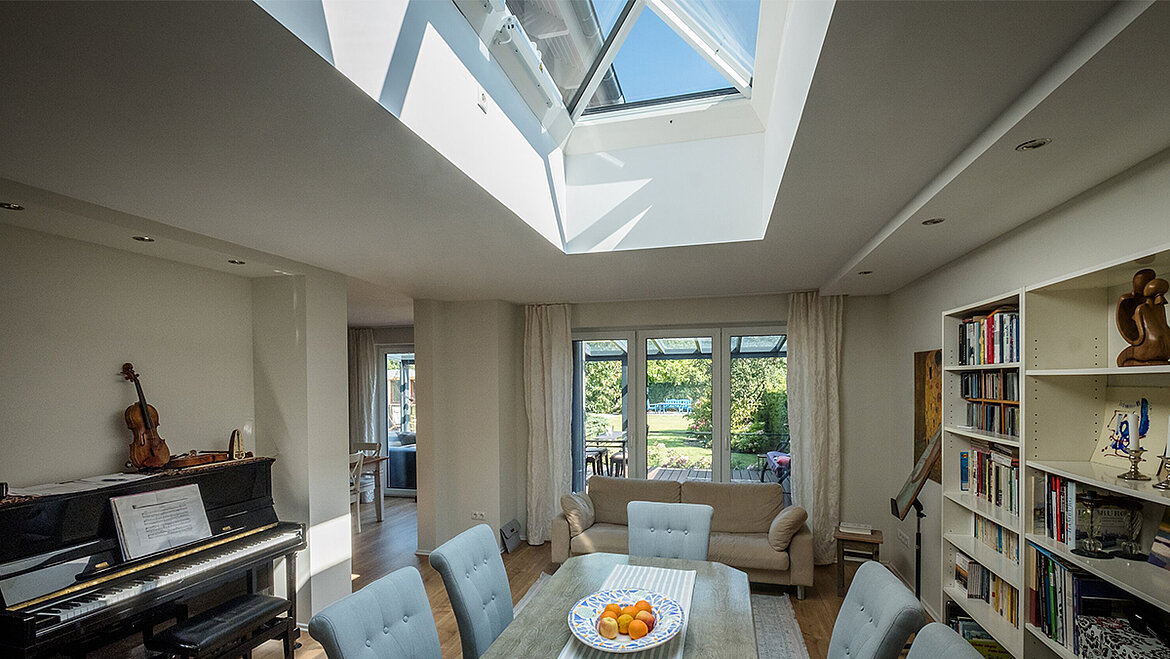
Flat roof windows are particularly suitable when daylight needs to be directed into individual room zones, such as stairwells, corridors, bathrooms, communal areas or internal rooms. They look elegant in the roof surface and are therefore the ideal solution for residential buildings, offices, schools or public buildings with high design standards. High-quality solutions with low U-values also give rooms greater energy efficiency and thermal insulation.
In addition to precise daylight guidance, skylight windows also offer low installation effort in both new builds and refurbishments, as they are
integrated directly into the roof build-up via upstands. Depending on the version, they can be designed as fixed or openable units, with solar shading or with a SHEV function.
Rooflight dome: an economical skylight for more daylight in industry
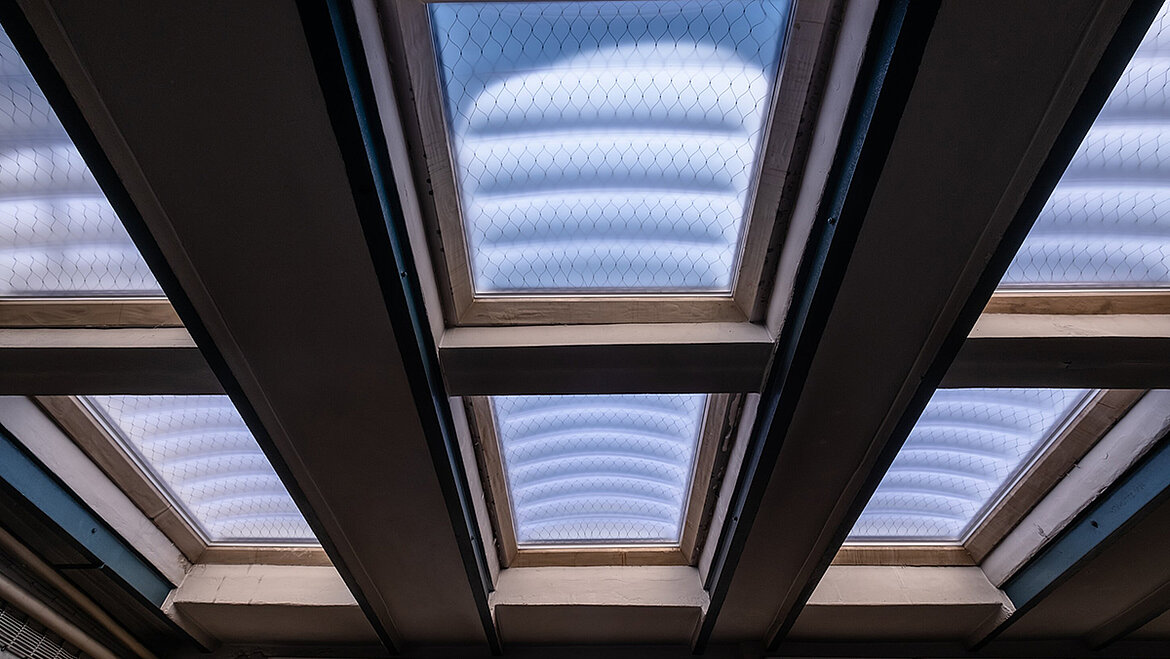
The rooflight dome is the classic solution for bringing daylight through a flat roof. It is particularly suitable for commercial buildings, industrial halls, storage areas, ancillary rooms and refurbishment projects where a robust and economical daylight solution is required.
Its major advantage is resistance to extreme weather. LAMILUX stands out here with a unique wave-shaped design that permanently withstands hail, snow loads, wind and rain. Skylight domes can also be combined effectively with ventilation or SHEV functions and are often a sensible option when performance takes priority over design.
Continuous rooflight: even daylight for halls and large flat roofs
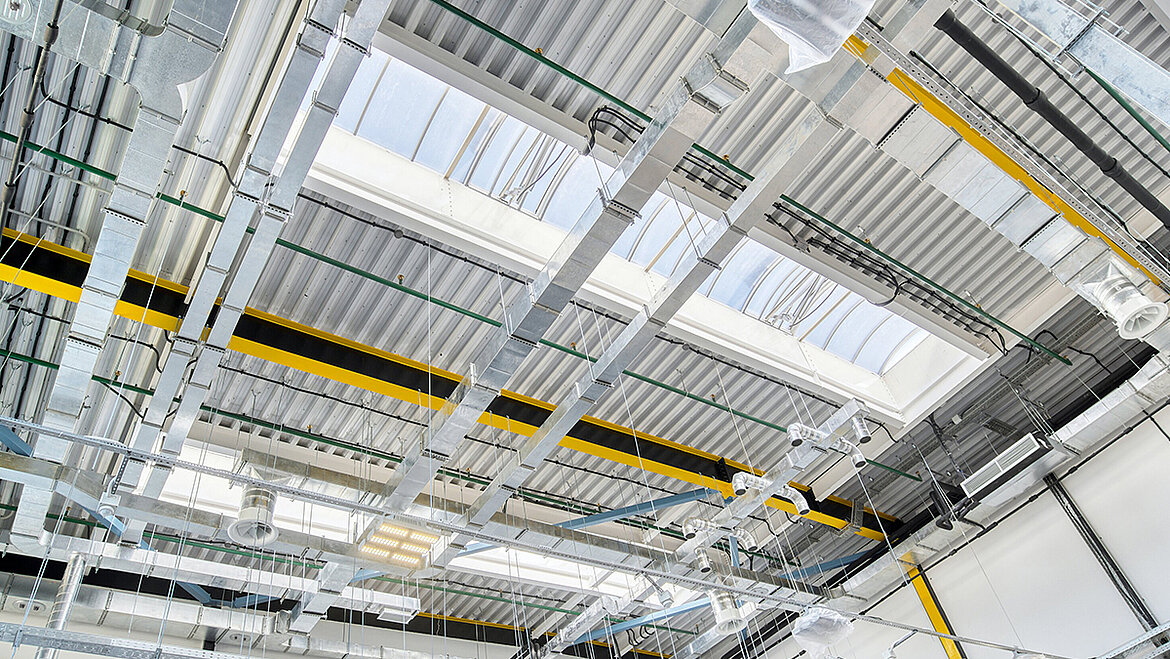
Continuous rooflights are ideal when daylight is to be distributed not selectively, but across longer roof areas. Typical applications include production halls, logistics centres, sports halls, workshops and large commercial buildings.
The benefit lies in uniform base lighting: a continuous rooflight reduces dark zones, improves orientation in the room and can significantly lower the need for artificial lighting. Individual solutions for ventilation and smoke extraction can also be integrated here.
Glass roof: a prestigious skylight for atria, foyers and demanding architecture
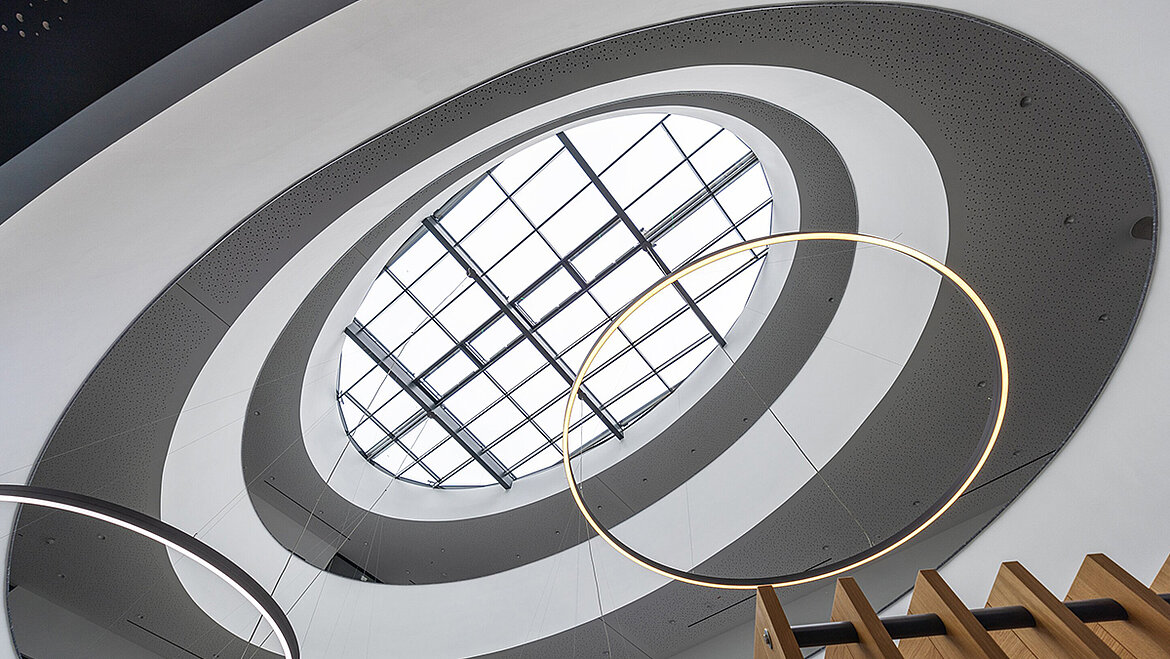
Glass roofs are used wherever daylight is part of the architectural concept, for example in atria, entrance halls, foyers, shopping centres, administration buildings or public buildings. They create bright, open spaces and turn the skylight into a visible design feature.
The advantage therefore lies in their maximum architectural impact, as high-quality glass roofs enable individual geometries. Whether a unique shape, special glazing with photovoltaics or a modular construction, today there are virtually no limits to skylights. For this reason, structural design, thermal insulation, solar shading, drainage and connection details need to be planned early, which is why working with experienced skylight providers such as LAMILUX is always recommended.
Flat roof hatch: skylight and roof access in one system
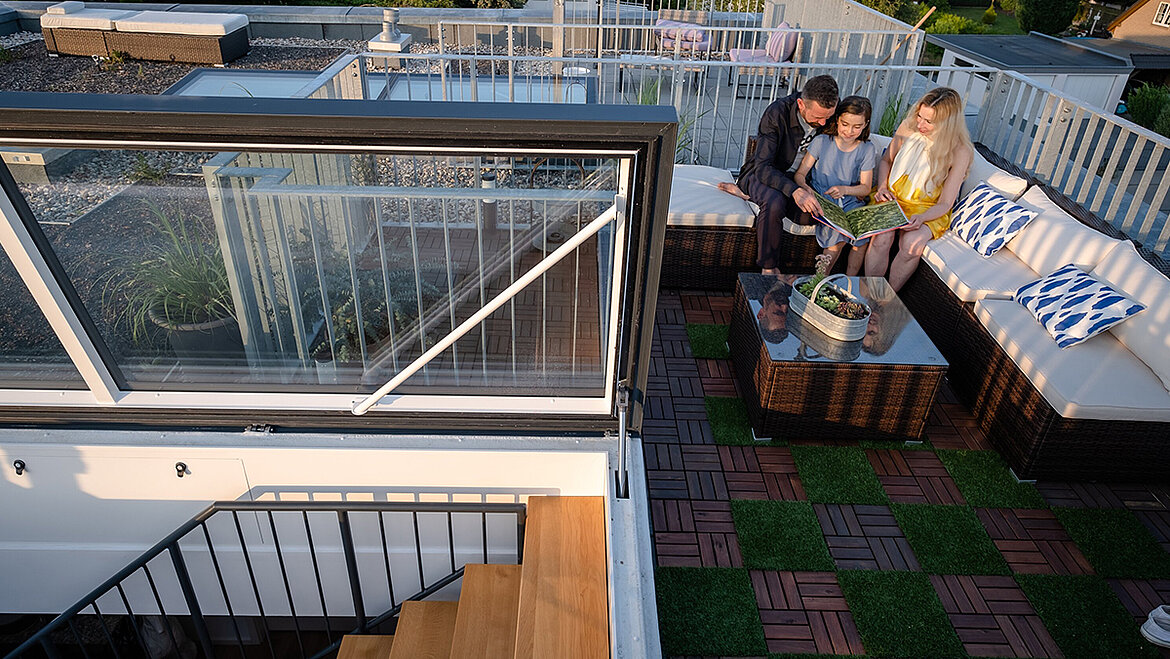
A flat roof access hatch combines daylight intake with safe access to the roof area. It is therefore particularly suitable for residential buildings with a roof terrace, maintenance routes, technical roof areas or buildings where roof access needs to be integrated to a high design standard.
The benefit: the component fulfils two functions at once: skylight and access hatch. This allows internal stairwells or circulation zones to be naturally lit while also providing comfortable access to the roof.
Skylight types compared
Skylight type | Typical application | Main benefit |
| Flat roof window | Residential buildings, schools, offices, internal rooms | Precise daylight control and high-quality design |
| Rooflight dome | Commercial buildings, industry, halls, logistics | Economical, robust and easy to retrofit |
| Continuous rooflight | Halls, logistics, production, sports facilities | Even illumination of large areas |
| Glass roof | Atria, foyers, public buildings, prestigious architecture | High architectural impact and maximum transparency |
| Flat roof access hatch | Roof terrace, maintenance, technical roof access | Daylight and roof access in one component |
Bespoke skylights from LAMILUX
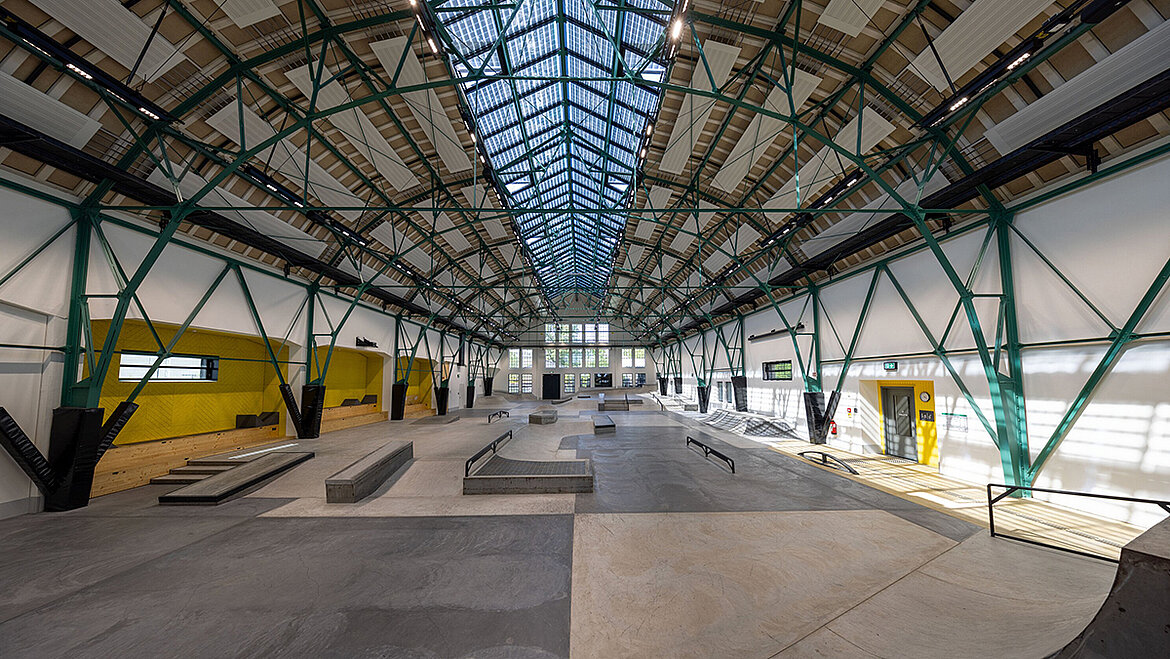
Especially in refurbishments, existing buildings or architecturally demanding new builds, standard solutions often do not fit the existing roof opening. Bespoke skylights offer a decisive advantage here: they can be tailored down to the millimetre to any size, roof geometry and design requirement.
LAMILUX offers individual skylight solutions that combine daylight, design and technical functions in one system. These include project-specific dimensions and shapes as well as special glazing, with integrated photovoltaics, printing or light-directing systems, solar shading, Passivhaus standard, SHEV functions or individual colour schemes.
The result is skylights that integrate cleanly into new-build and refurbishment projects while also meeting energy, safety and design requirements in a targeted way. For architects, BIM data, tender texts and technical advice also make detailed planning easier.
Skylights on flat roofs: special features and requirements
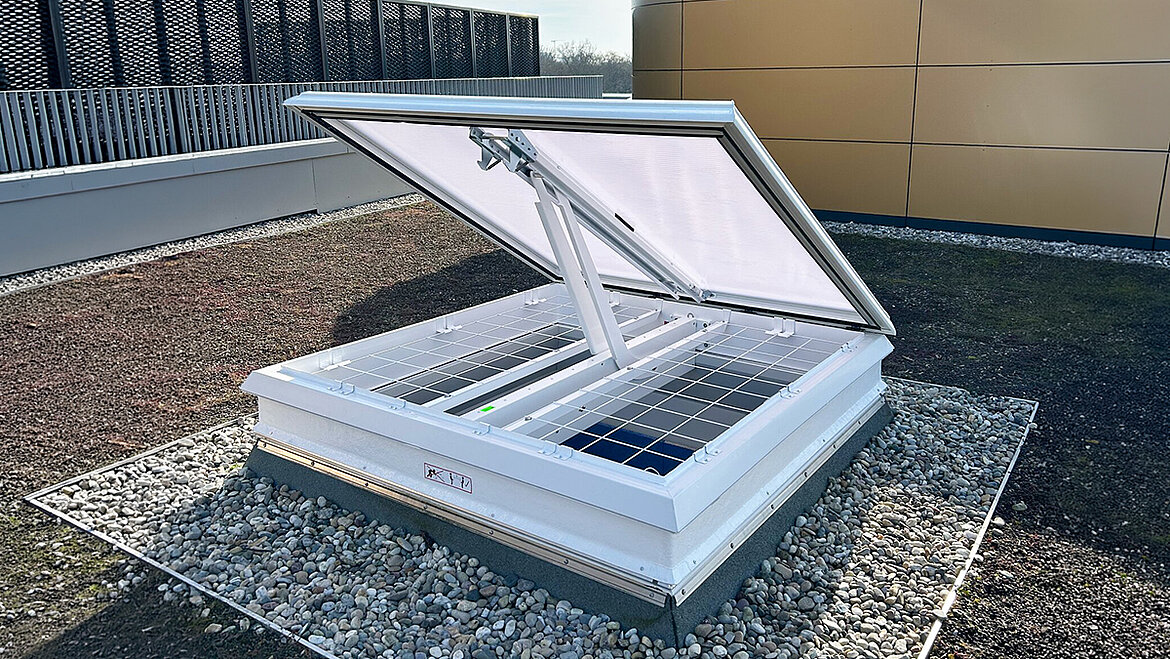
The flat roof places specific demands on skylights. Understanding these helps ensure reliable planning and prevents problems later on.
- Structural design: Snow load and wind load requirements in accordance with DIN EN 1991 must be considered as early as the product selection stage. Skylights for flat roofs are designed and tested accordingly.
- Drainage and connection details: The transition between skylight and roof waterproofing is one of the most critical points. Faulty connections are one of the most common causes of damage on flat roofs. Manufacturers such as LAMILUX supply standard-compliant connection details as part of the system solution, significantly reducing planning effort and execution risks.
- Thermal insulation: The U-value of the skylight has a direct influence on the building’s energy balance. Multi-layer glazing and thermally insulated upstands help prevent condensation and meet the requirements of the German Building Energy Act (GEG).
- Ventilation, SHEV and safety: Flat roof skylights can integrate natural ventilation, smoke and heat exhaust ventilation or fall-through protection. These functions should be coordinated early with the fire safety concept, use and maintenance requirements.
Skylight with SHEV and solar shading: plan functions early
Modern skylights do much more than simply supply daylight. As skylights with SHEV, they support smoke and heat exhaust ventilation in the event of fire and, depending on the building type, can be an important part of the fire safety concept. Openable elements can also be used for natural ventilation.
Solar shading for skylights should also be considered early. Depending on use, orientation and glazing, external or internal solar shading systems help reduce glare and summer overheating. In combination with suitable glazing, blackout or automatic control, the result is a skylight system that intelligently combines daylight, comfort, energy efficiency and safety.
Plan skylights safely with LAMILUX
Skylights bring daylight, design freedom and technical functions to flat roofs, provided that the system, roof connection, glazing and equipment are coordinated with the project at an early stage. LAMILUX supports architects with bespoke skylights, tested systems, BIM data, tender texts and technical advice.
If you are planning a skylight for a new build, refurbishment or special construction, you can develop the right solution together with LAMILUX, from the initial design through to detailed implementation. Get in touch and receive project-specific advice.


