Hygienic Wall and Ceiling Cladding in the New Construction of a Production Facility
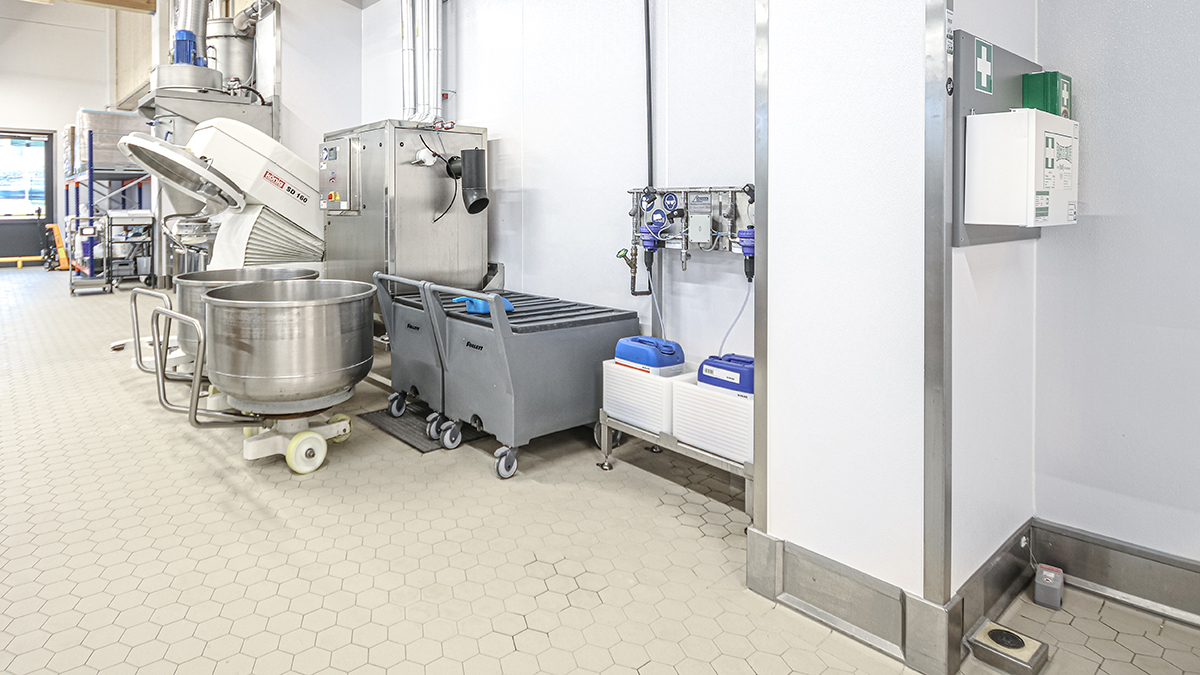
In 2025, a completely new production facility for the traditional bakery HAUBIS was realized in the Mostviertel region of Lower Austria. The objective was to equip production, preparation, and packaging areas with hygienic wall and ceiling cladding that meets the highest standards in terms of cleanability, foreign object prevention, functional working environment, and audit compliance.
A 2.3 mm thick embossed HSF was used - a structured GRP product with a heat-sealable film. The material was specially developed by LAMILUX for hygienically sensitive production areas and features a closed, low-porosity surface, high mechanical strength, and excellent resistance to moisture and cleaning chemicals.
The availability of the panels in large formats - used at HAUBIS in lengths of up to 2.50 meters - is highlighted positively by the Head of Production Engineering, Mr. Resch: “The installation is low in joints, which reduces potential weak points in the wall structure.”
In HAUBIS’s production and packaging zones, safe cleaning, minimization of contamination risks, and robust surfaces are key priorities. According to Mr. Resch, traditional solutions such as tiles or stainless steel proved to be only partially suitable:
“Tiles increase the risk of contamination due to joints and possible chipping. Stainless steel can develop streaking under intensive chemical cleaning or become susceptible to corrosion over time. In addition, maintenance effort and design flexibility are limited.”
What was required, therefore, was a splinter-free, durable material with a homogeneous surface that can be cleaned efficiently while withstanding mechanical stress. Additional requirements also arose from regular IFS and customer audits, some of which are conducted without prior notice and demand high standards in production processes, documentation, and structural conditions.
The IFS Food Standard is an internationally recognized audit standard for food manufacturers. It evaluates, among other things, production processes, quality management, and documentation. Certification is carried out by accredited auditing bodies and is often a prerequisite for cooperation with retail companies.
The installation of the wall cladding at HAUBIS was carried out during the new construction without affecting ongoing operations. During conversions or renovations in active production environments, affected areas are sealed off with dust protection walls to reliably prevent foreign object contamination. Installation schedules are closely coordinated with the operator.
In daily operations, the cleanability of the surface proves particularly beneficial. “A positive aspect is the ability to clean with controlled pressure and standard chemical cleaning agents,” emphasizes Mr. Resch. “Unlike stainless steel, no streaks remain; this noticeably simplifies cleaning in everyday operations.”
The new environment is also perceived positively: “The homogeneous surface and brighter room atmosphere are clear advantages,” says Mr. Resch.
“Employees perceive the production area as modern, clean, and high-quality.”
In areas subject to higher mechanical stress, customized impact protection solutions were additionally integrated to prevent damage from internal transport and ensure long-term functionality.
With the new construction at the Mostviertel site, a modern production environment has been created that meets the highest hygiene standards while offering a durable, low-maintenance solution.
We would like to thank HAUBIS and all project partners for their cooperative collaboration and trust in our materials. We look forward to successfully implementing future projects together.