A place of great significance
The Reichenbachstraße Synagogue is one of the few surviving Jewish sacred buildings from the pre-war period in Germany. Opened in 1931, severely devastated during the pogrom night in 1938 and only restored in simplified form after the war, it now stands for the careful reclamation of a place of Jewish life. The renovation shows that building within existing structures can be far more than technical renewal: it can preserve history and strengthen cultural identity.
8 glass roofs 95 years of history 67 m² of daylight entry
Architecture with a clear stance
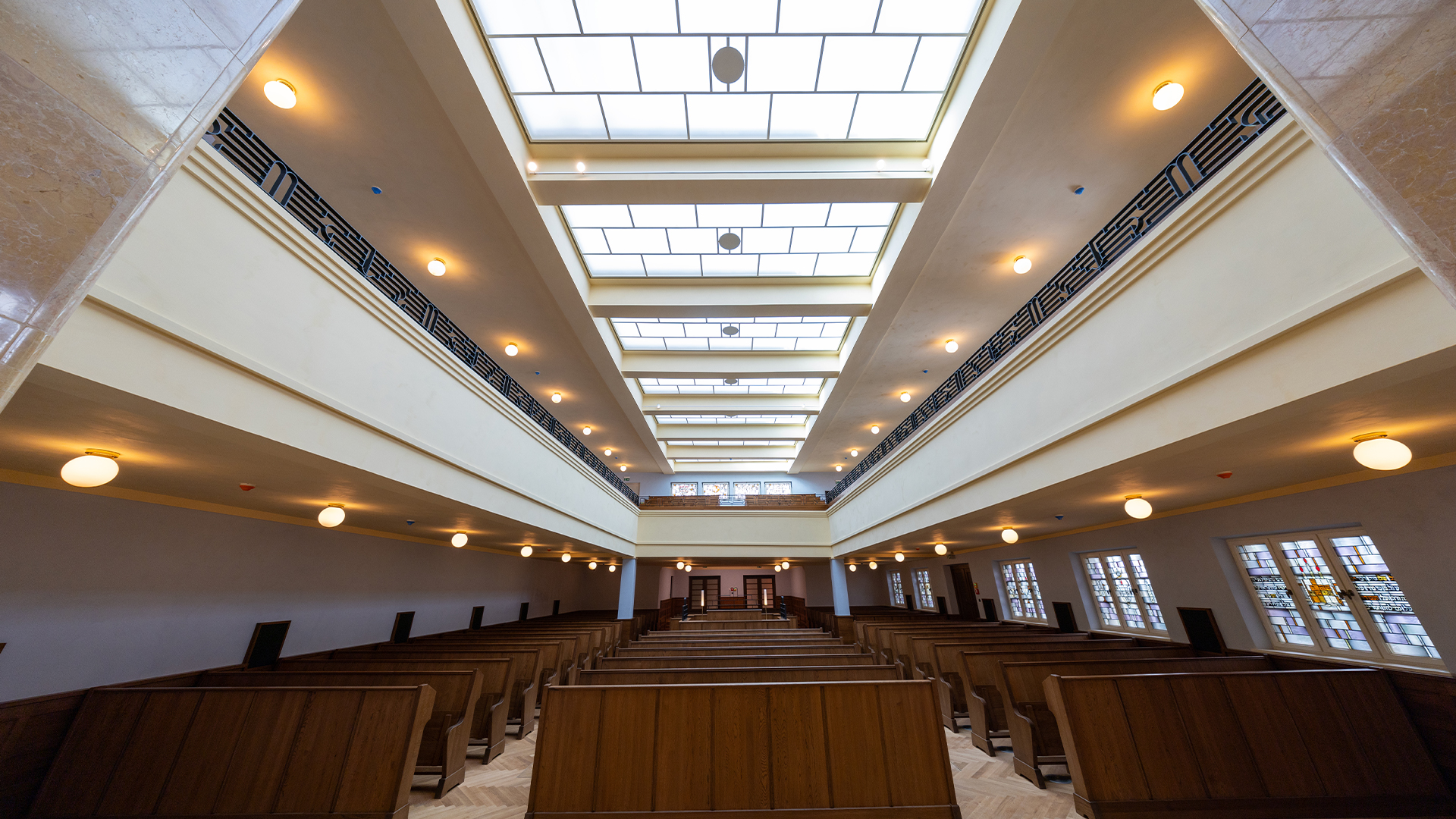
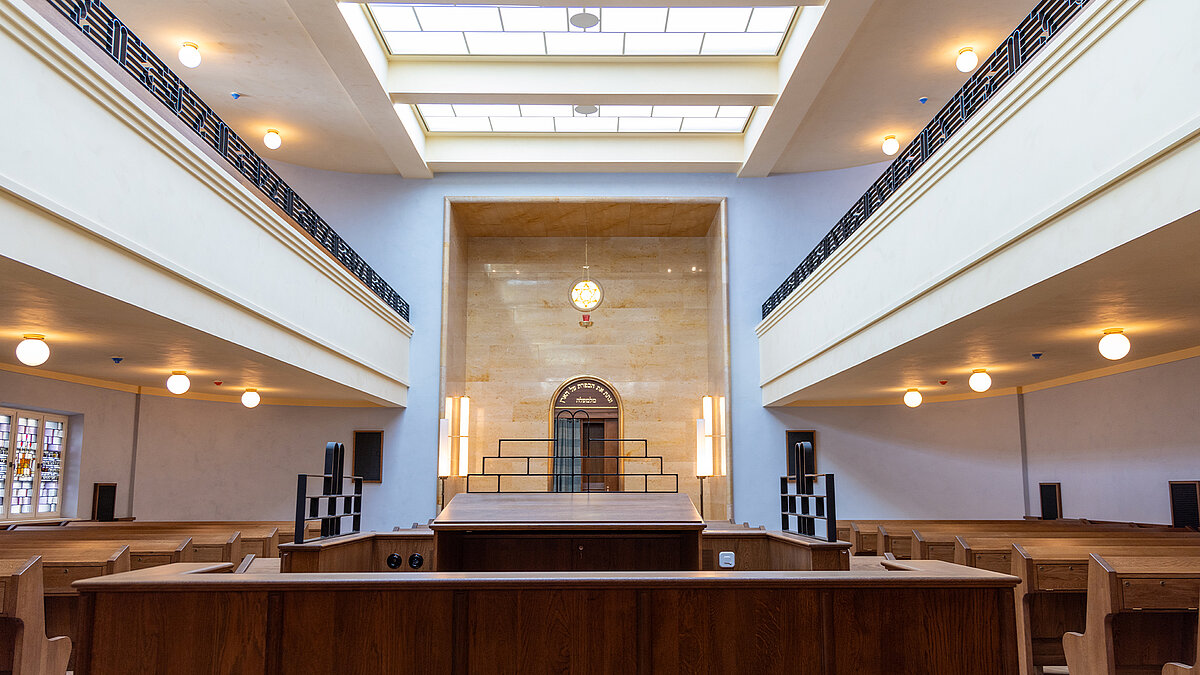
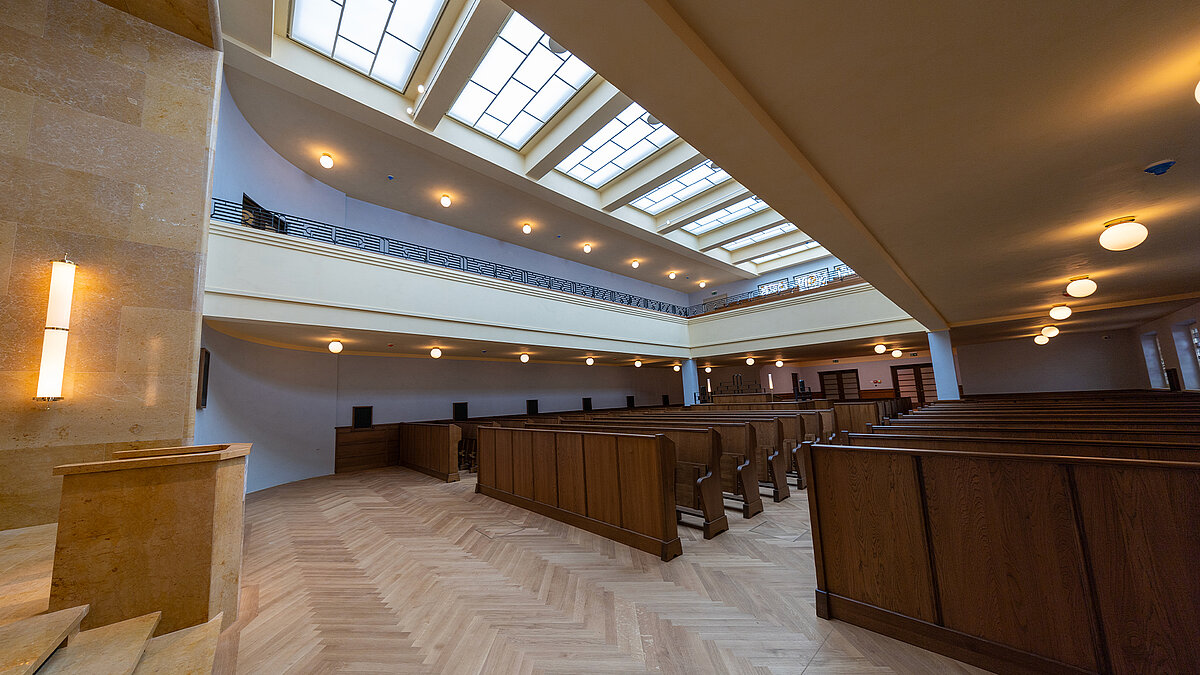
The synagogue was designed by Gustav Meyerstein as a modern, clearly structured sacred building closely aligned with the ideas of New Objectivity. Instead of opulent staging, the space relies on proportion, structure and restraint. Especially on the confined inner-city site, this creates a surprisingly generous and dignified spatial effect, which unfolds above all in the interior.
Light shapes the spatial effect
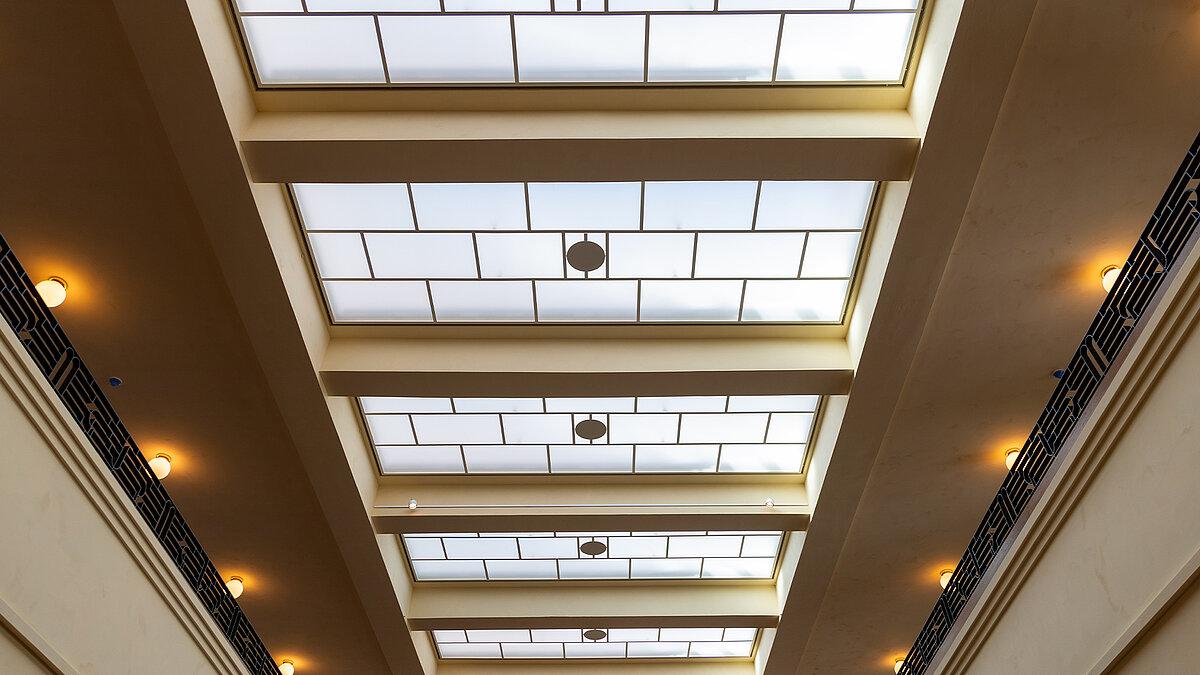
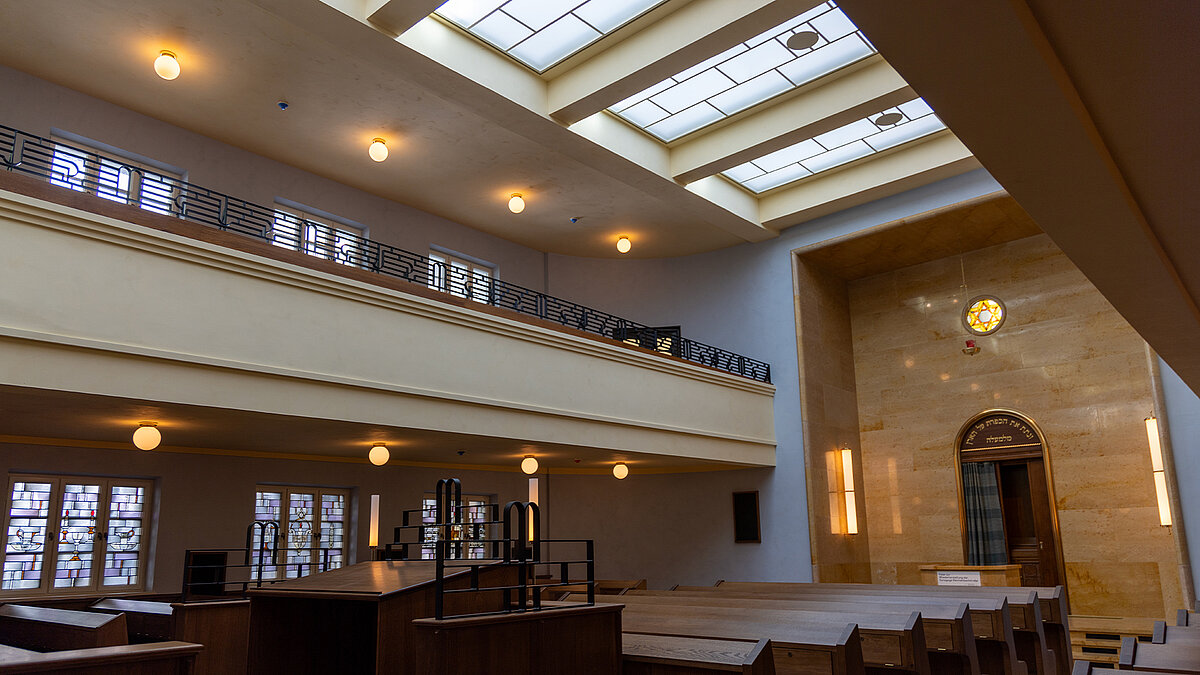
Daylight plays a particularly important role here. It not only provides brightness, but also has a decisive influence on the atmosphere of the interior. Decorative windows give the room its character, while the large-format skylights open the view upwards and make the ceiling perceptible as an important part of the architecture. This creates a calm, contemplative atmosphere that gives the sacred space depth and presence.
A tailor-made skylight for the existing building
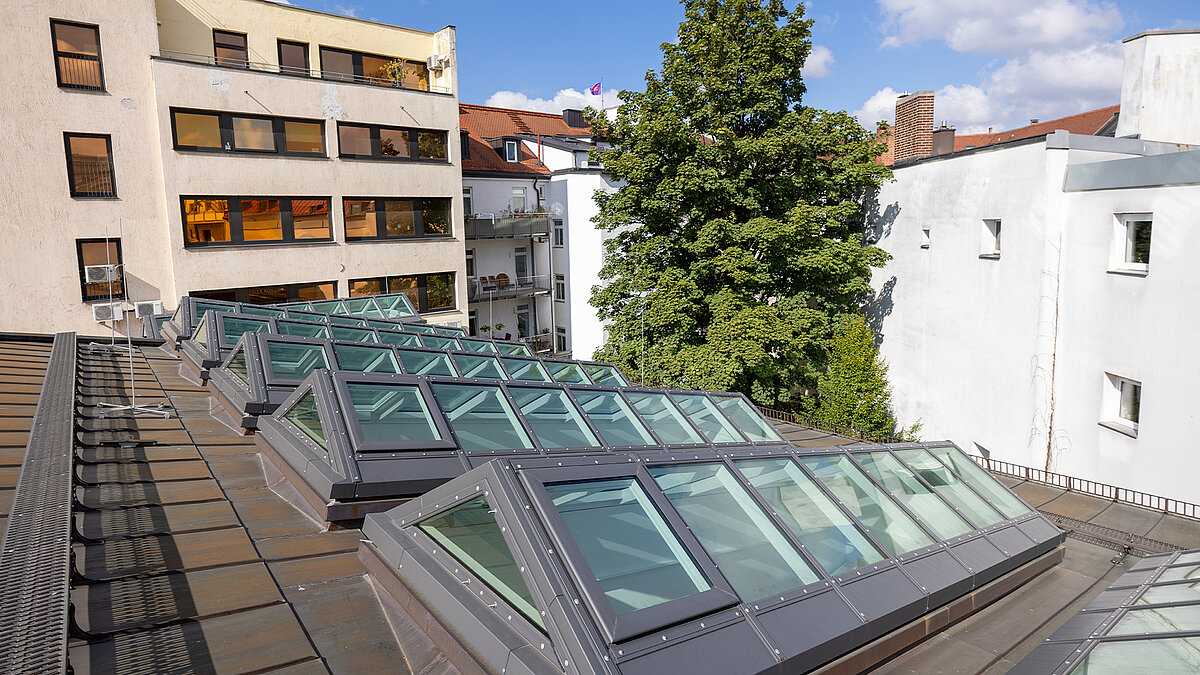
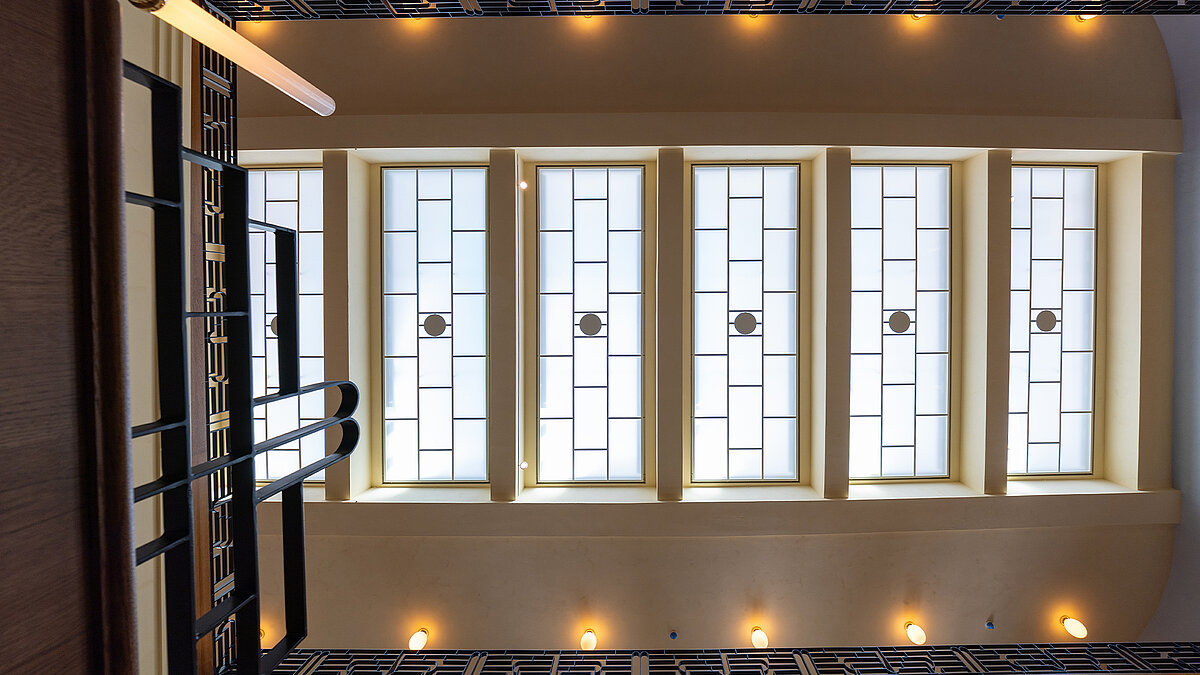
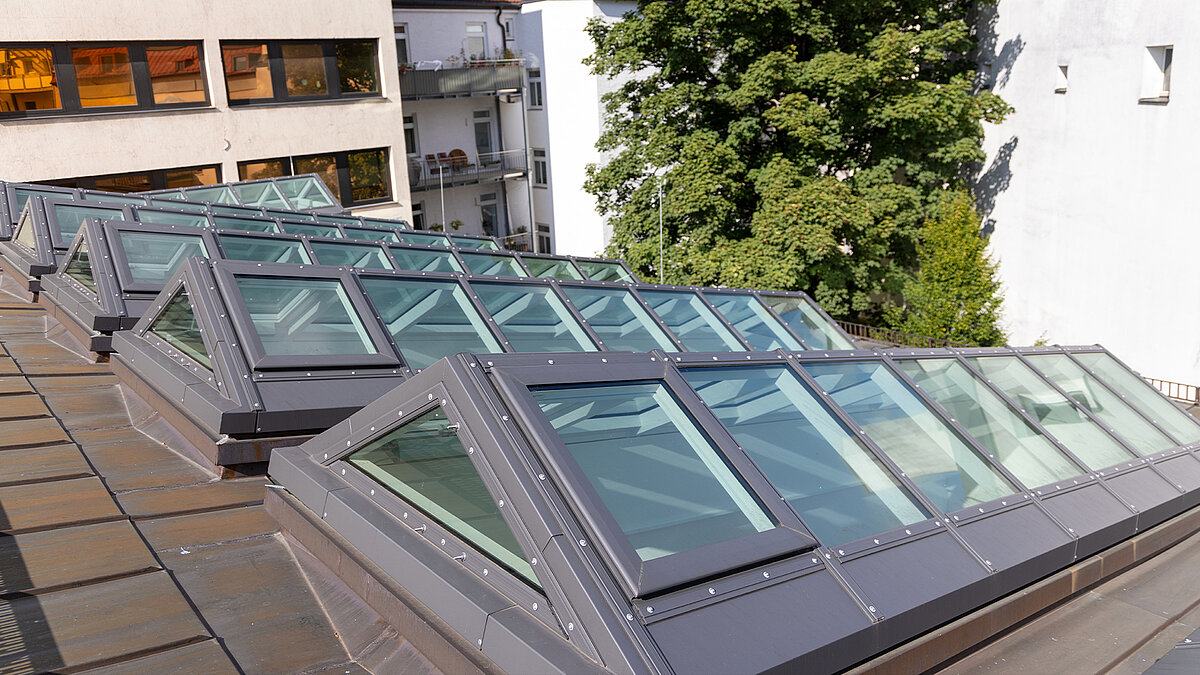
This is where LAMILUX comes in: eight Glass Roofs PR60 in a pitched roof design make the skylights in the ceiling of the synagogue shine once again, supporting the room’s original daylight concept. Especially when renovating historic buildings, it is crucial that new solutions are integrated precisely into the existing structure and preserve the architectural effect.
LAMILUX combines daylight and renovation
With the Glass Roof PR60, LAMILUX was able to realise a solution that can be adapted to the existing building fabric with millimetre precision. The system therefore combines targeted daylight guidance with the requirements of modern renovation, for example in terms of energy efficiency and sound insulation. The result is a solution that impresses not only technically, but also helps to preserve the architecture, history and significance of this special place.
Share this post