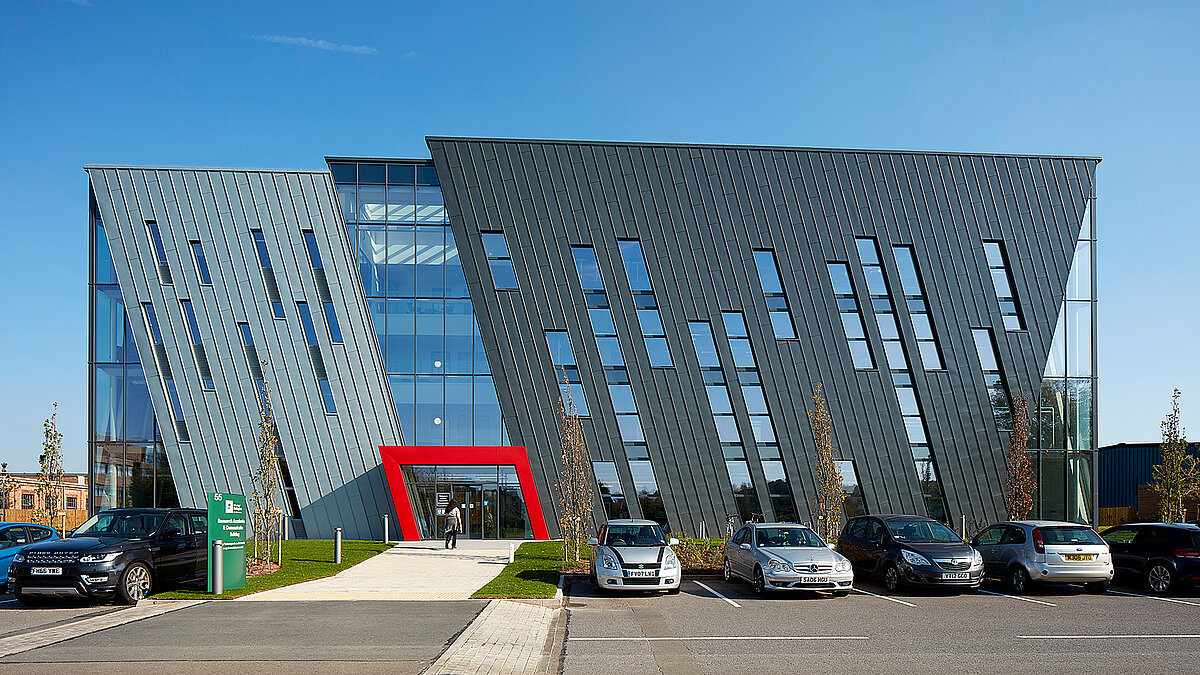
Space for innovation and energy efficiency
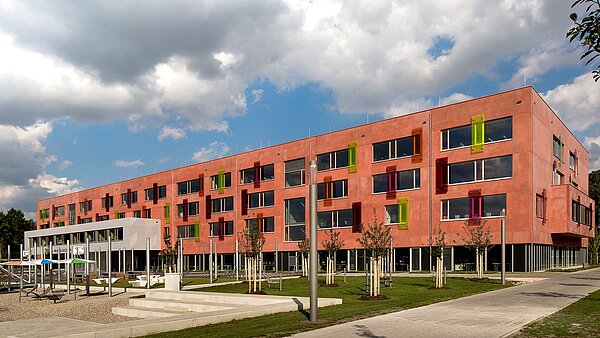
Built to the Passivhaus standard, the research centre combines modern architecture with a consistently energy-efficient approach. New technologies in the energy sector are developed and tested here – under conditions that meet the highest sustainability requirements.
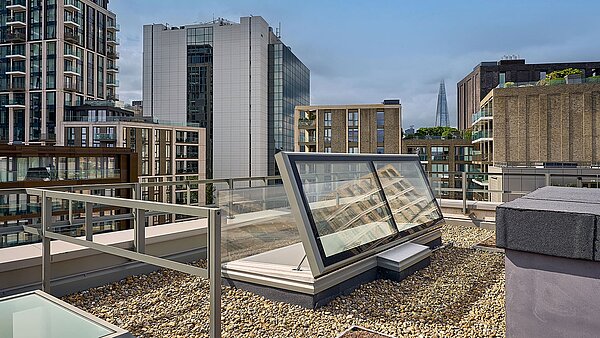
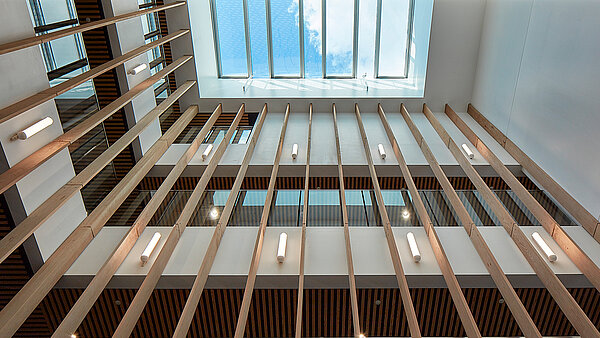
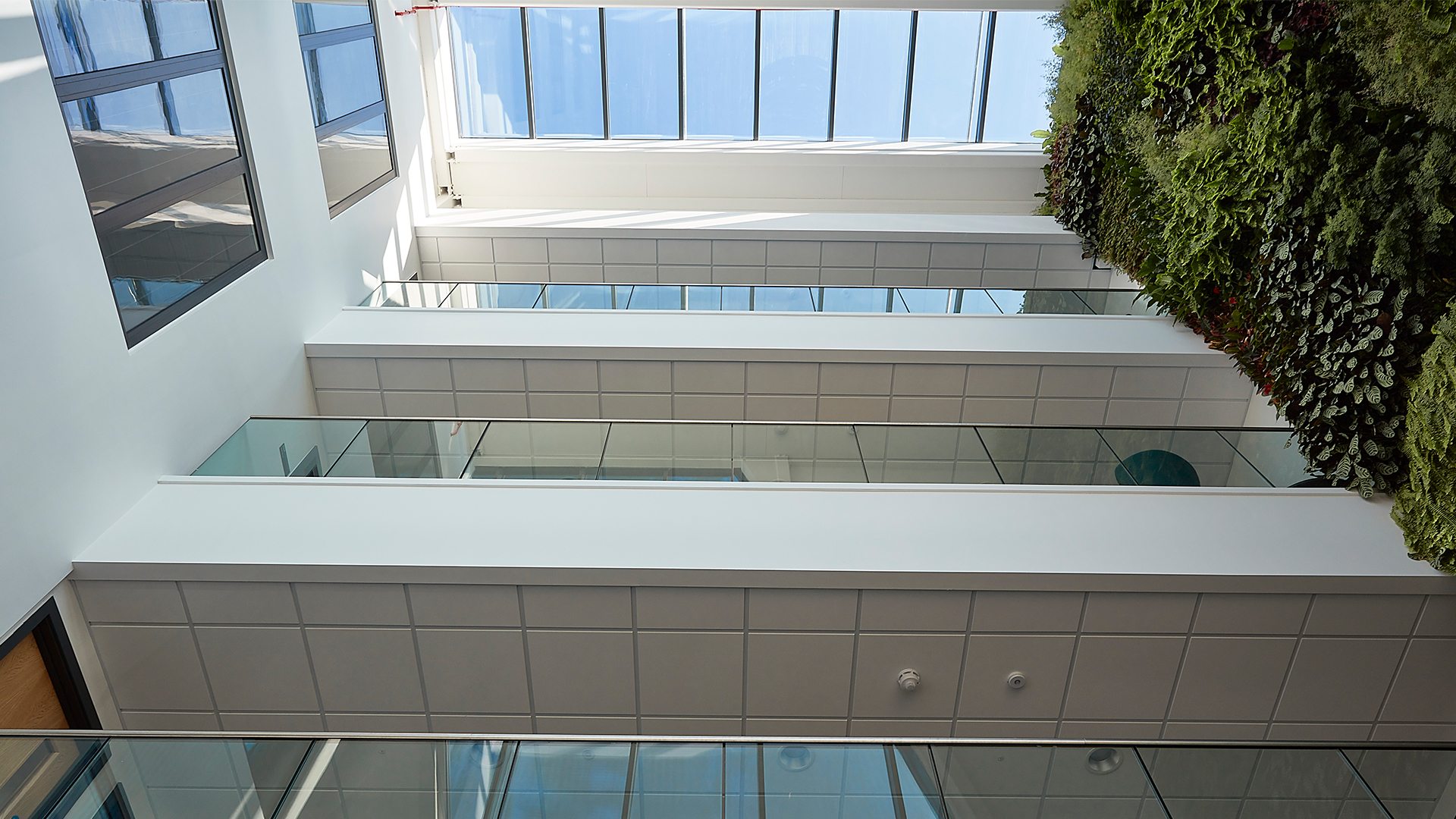
The LAMILUX Glass Roof PR60 Passivhaus brings natural light into the central areas and supports the building’s overall sustainable concept.
16 m2 glass surface48% total energy transmittance2.500 m2 total area
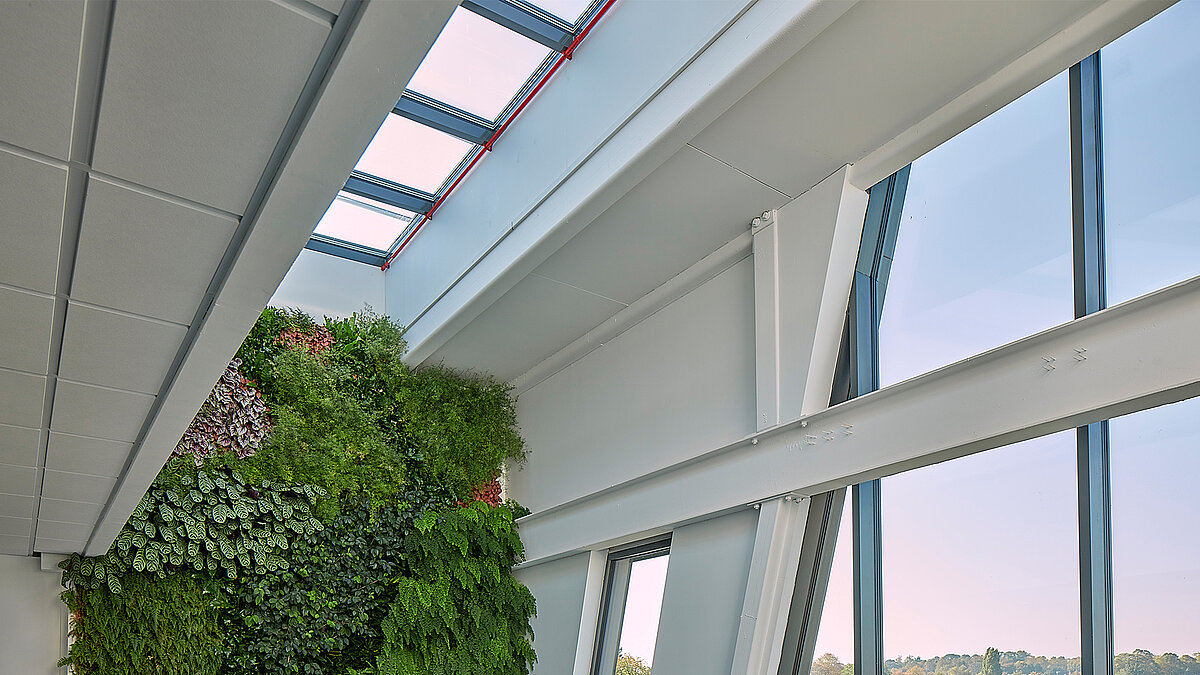
Daylight as part of the energy concept
A key component of the energy concept is the glass roof, which measures 2 × 8 metres. The roof glazing consists of eight glass panels of equal size and ensures uniform, glare-free lighting of the central areas. Thanks to excellent thermal insulation and very low U-values, heat loss through the roof is minimised and the building’s energy consumption is sustainably reduced.
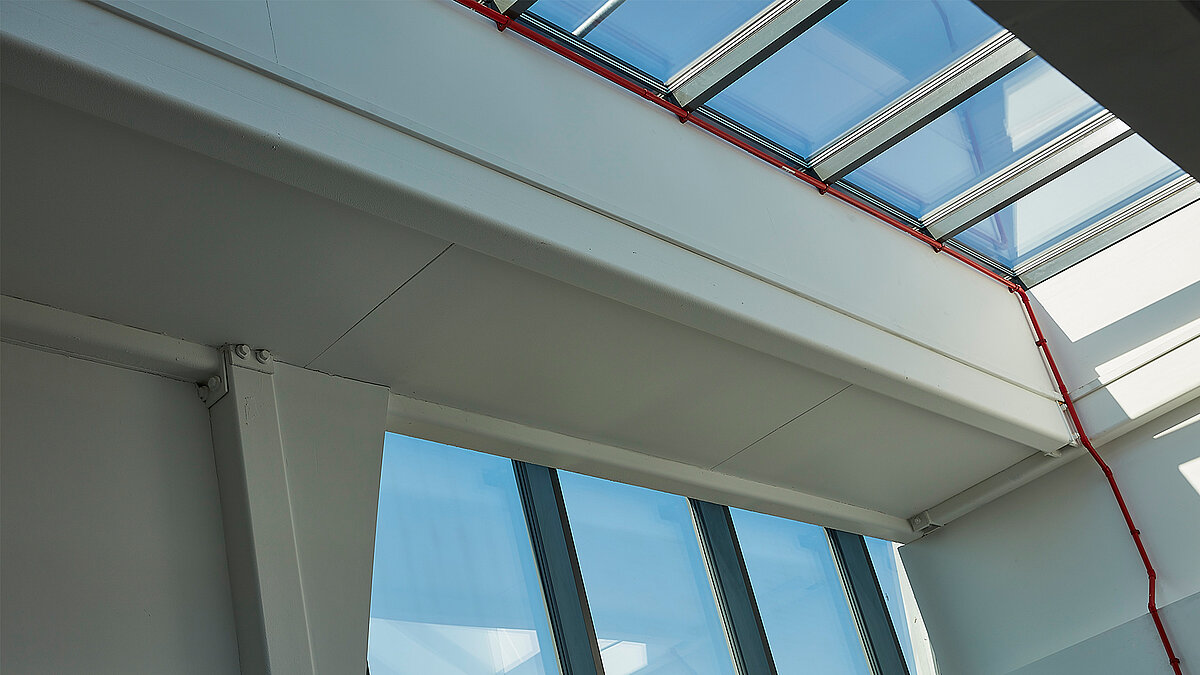
Efficiency and stability combined
The LAMILUX Glass Roof PR60 combines high energy efficiency with a slender profile design and a robust structure. Even under demanding weather conditions, reliable performance is maintained, while the slim construction maximises daylight intake and integrates harmoniously into the architecture.
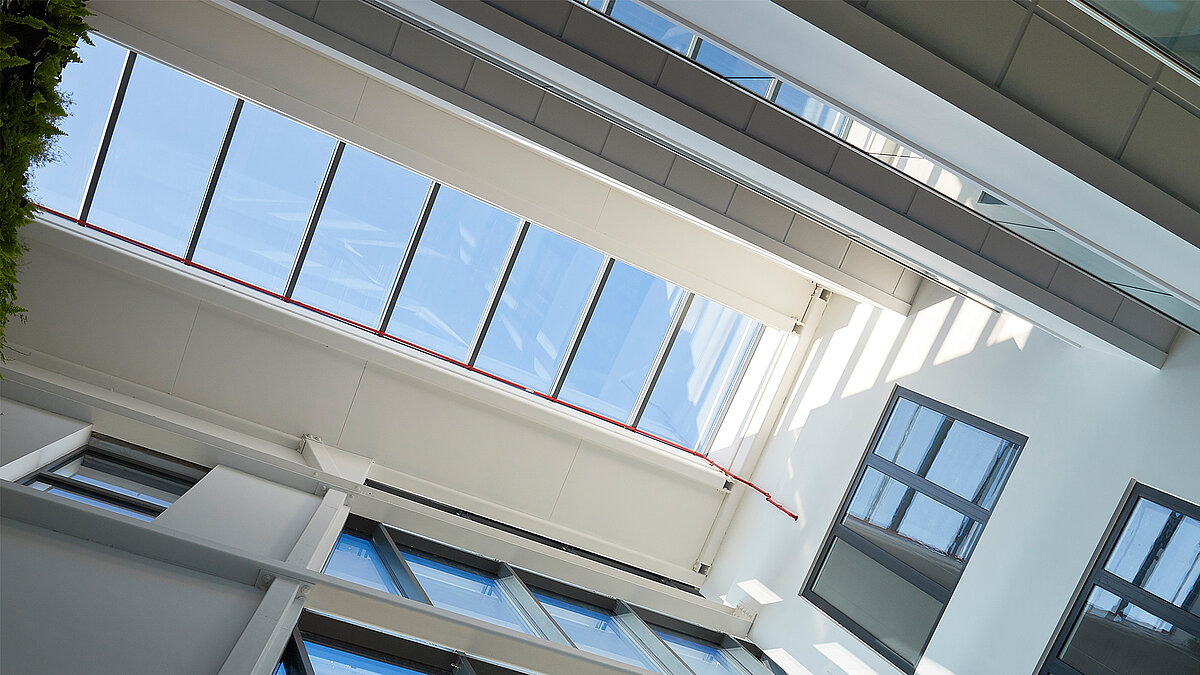
Architecture for the research of tomorrow
The project demonstrates how sustainable construction and daylight architecture can be used in a targeted way to support modern research environments. Natural light becomes an integral part of a productive working environment and contributes to a balanced indoor climate. This creates ideal conditions for innovation and collaboration.
Share this post